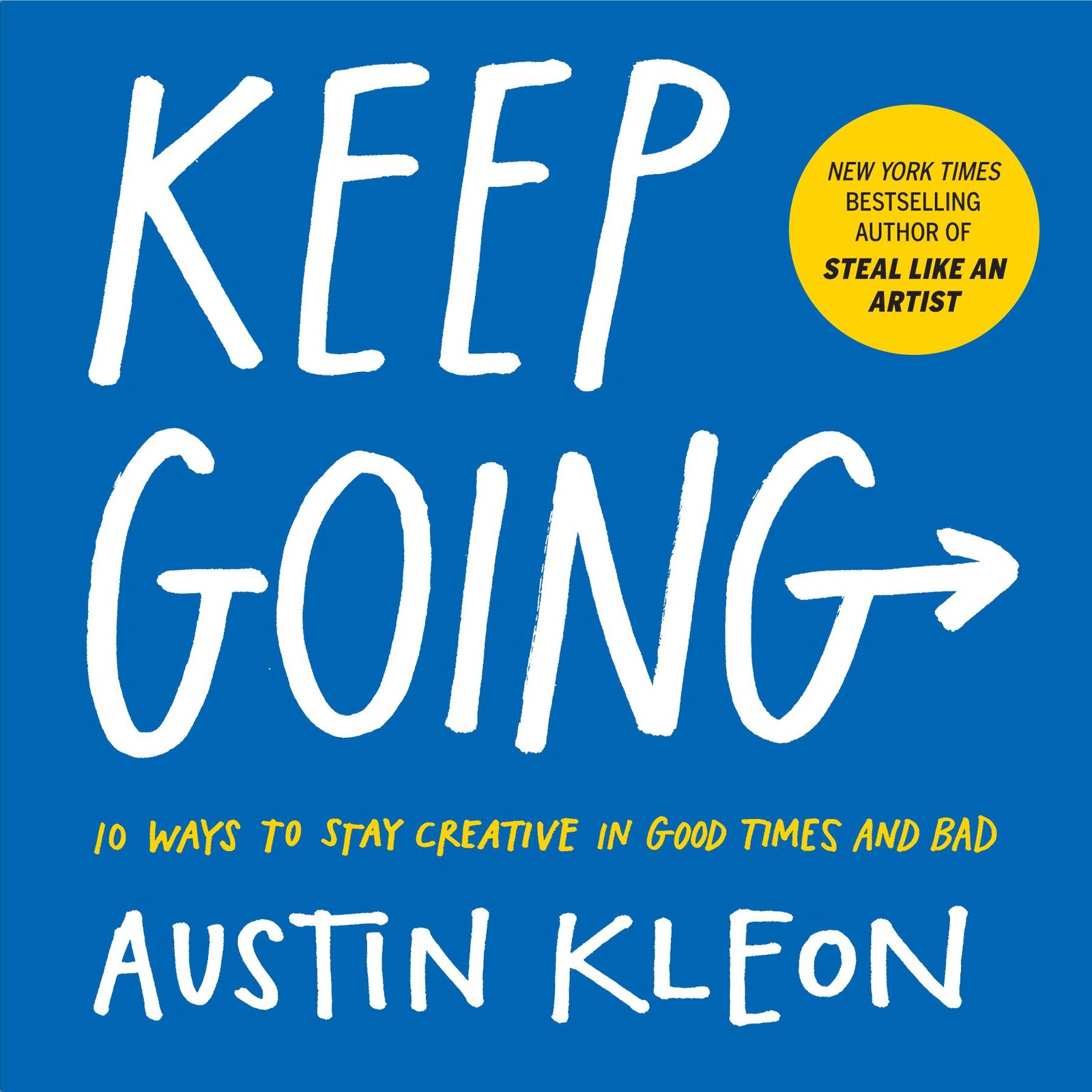
Rain slid slowly down apartment windows while unfinished projects glowed from laptop screens like tiny accusations in the dark. Somewhere, a writer stared at a blinking cursor after checking social media too many times. A designer reopened old drafts searching desperately for inspiration that refused to arrive on schedule. Across crowded cities and silent bedrooms alike, ambitious people quietly wrestled with the same terrifying realization: talent means very little if a person cannot continue through boredom, uncertainty, rejection, distraction, and emotional fatigue. In Keep Going, Austin Kleon delivers something far more valuable than motivational hype. He offers a survival philosophy for creative people trying not to disappear inside modern chaos.
The brilliance of the book sits inside its emotional realism. Kleon does not romanticize endless inspiration or pretend creativity functions like cinematic lightning striking genius at midnight. He understands the deeper truth. Most meaningful work emerges through rhythm, repetition, emotional maintenance, and stubborn continuation long after excitement fades. Keep Going reads almost like a field manual written for exhausted minds navigating overstimulation, comparison culture, and the exhausting pressure to transform every hobby into monetized performance. The message feels strangely calming because it rejects spectacle entirely. Small daily movement matters more than dramatic reinvention.
A ceramic artist named Yara Benali once spent months paralyzed after watching younger creators explode online through viral videos and algorithmic visibility. Her own work felt invisible by comparison. Instead of creating, she obsessively studied engagement metrics and trend cycles until the joy disappeared completely. During a residency in Portugal, an older sculptor quietly told her something unforgettable while cleaning clay from his hands: “Your work dies the moment your attention belongs more to reaction than process.” Yara began rebuilding tiny routines again. Morning sketches. Walks without headphones. Studio hours disconnected from analytics. Over time her work regained emotional texture because she stopped treating creativity like public competition. Kleon’s philosophy breathes through that transformation. Sustainable creativity requires protecting attention from environments designed to fragment it constantly.
The book repeatedly returns to the importance of routine, not as rigid productivity theater but as emotional scaffolding. Modern culture glorifies burnout disguised as ambition. Kleon pushes gently in the opposite direction. Take walks. Read widely. Maintain hobbies unrelated to career performance. Stay connected to physical reality. Build rituals capable of surviving emotional turbulence. These suggestions sound almost ordinary until one recognizes how revolutionary they become in a digital economy rewarding perpetual stimulation. Many people now consume more content about creativity than actual creative experience itself. Keep Going quietly restores balance by reminding readers that artistic endurance depends on nervous system stability as much as talent.
There is also a profound critique of modern internet culture hidden beneath the book’s simplicity. Online platforms train creators to mistake visibility for meaning. Every post becomes performance. Every idea risks immediate comparison against thousands of polished alternatives. Under those conditions, many people stop experimenting because public judgment arrives too quickly. Kleon encourages strategic disconnection without romanticizing isolation entirely. Protect your inner world. Curate inputs carefully. Avoid drowning inside outrage cycles and algorithmic noise. The advice feels increasingly urgent now that attention itself has become one of the most aggressively monetized resources on Earth.
A filmmaker named Daniel Okoro once described spending nearly a year trapped in creative paralysis after his previous documentary underperformed commercially despite critical praise. Investors stopped calling. Collaborators drifted away. Daniel filled the silence by consuming endless productivity podcasts and motivational content instead of making anything new. Eventually an old mentor invited him to help restore damaged archival footage for a local history project completely unrelated to career advancement. The repetitive technical work slowly brought him back into creative rhythm. Daniel later admitted the experience saved him because it reconnected him to process rather than external validation. “I remembered how to work before remembering how to dream,” he said afterward. That sentence echoes beautifully through Keep Going. Movement often returns before confidence does.
Kleon’s reflections on community also feel deeply important. Creativity isolated entirely inside self-conscious ambition eventually becomes emotionally brittle. Artists need conversation, influence, friendship, collaboration, and shared curiosity. The book repeatedly emphasizes staying around people making things sincerely rather than obsessing over fame hierarchies. That distinction matters enormously in modern creative industries where networking often replaces genuine intellectual exchange. Kleon values creative ecosystems built around mutual encouragement rather than status theater. The atmosphere surrounding his philosophy feels humane instead of extractive.
The advice about embracing ordinary life might be the book’s most radical insight of all. Many ambitious people secretly believe meaningful work requires escaping normal routines entirely. Kleon disagrees. Wash dishes. Go outside. Spend time with family. Read physical books. Notice seasons changing. These acts are not distractions from creativity. They feed it. Human imagination deteriorates when detached completely from embodied existence. Great work often grows from accumulated observation rather than dramatic revelation. A subway conversation. Rain against pavement. Children laughing outside an apartment window. Tiny details become emotional material over time.
A poet named Lena Vukovic once struggled after moving to Berlin believing artistic greatness demanded constant immersion in avant-garde culture and nightlife. Instead she became emotionally exhausted and creatively numb. One winter she started waking early simply to walk through neighborhood markets before crowds arrived. She noticed bakers arranging bread carefully, elderly couples sharing coffee silently, street cleaners humming songs beneath gray skies. Those small observations slowly reawakened her writing. Lena later described creativity as “attention surviving fatigue.” That line could live comfortably inside Kleon’s worldview because Keep Going ultimately argues that sustainable artistry depends less on dramatic genius than sustained noticing.
Late tonight another exhausted creator still wonders whether consistency matters in a world obsessed with viral explosions and instant relevance. Somewhere else, someone quietly fills a notebook page no algorithm may ever reward directly. Tea cools beside unfinished drafts. Rain taps softly against city windows while countless invisible artists continue despite doubt, loneliness, distraction, and fear. That is the quiet emotional miracle inside Keep Going. The book reminds readers that persistence is not glamorous most of the time. It is repetitive. Humble. Often invisible. Yet civilizations are built by people who continue through uncertainty long enough for meaning to accumulate slowly around their work like light returning after a difficult season.
Editorial Disclaimer: Whether a book is a work of fiction, a memoir, or inspired by real events, the ideas, actions, decisions, and behaviors discussed within are not intended to be encouraged, replicated, or endorsed in real-world situations. This review is published solely for educational, analytical, literary, and entertainment purposes, with the aim of examining the book’s themes, storytelling, characters, philosophies, and broader cultural or business insights. Any ethical or unethical viewpoints, practices, or conduct presented in the book do not necessarily reflect the views, values, or endorsements of ESYRITE.
