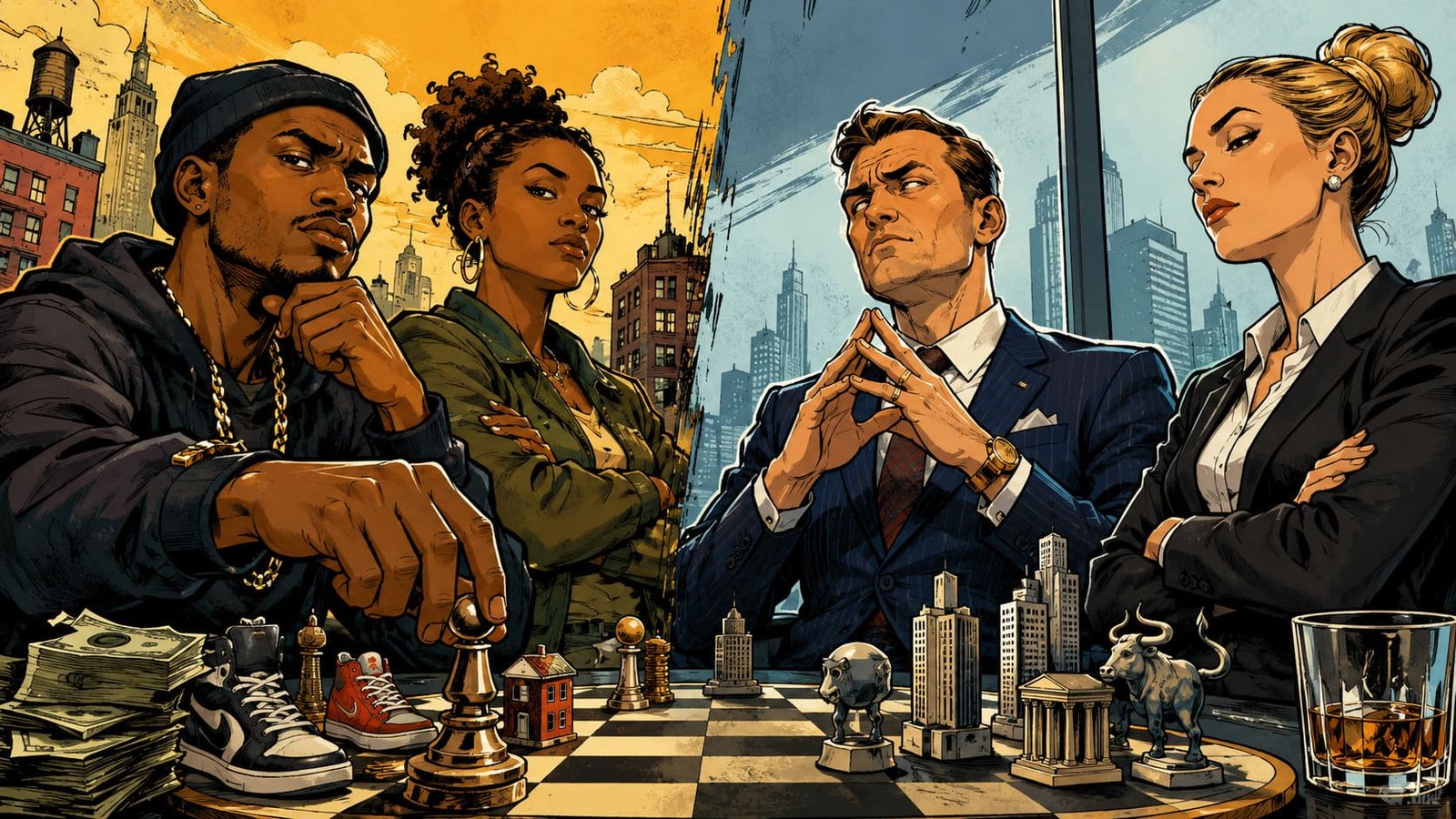
Spotlights cut through Atlanta nightlife in The Grand Hustle like search beams hunting for the next person reckless enough to gamble identity against opportunity. Expensive sneakers squeaked across polished floors. Contestants rehearsed confidence in bathroom mirrors while cameras captured every flicker of insecurity hiding beneath curated swagger. At the center stood T.I., watching hopeful entrepreneurs and creatives compete for mentorship and investment with the calm intensity of a man who understands success as both liberation and trap. The series presents itself as reality competition entertainment, yet beneath the spectacle sits something darker and more revealing: modern ambition as public performance art.
The brilliance of The Grand Hustle lies in how quickly it strips motivational language down to emotional reality. Everybody arrives talking about dreams, disruption, leadership, and legacy. Then pressure enters the room. Alliances fracture. Egos swell. Panic leaks through polished pitches. Suddenly the audience sees what many corporate environments hide behind PowerPoint slides and LinkedIn optimism. Competition changes personality. Scarcity reshapes ethics. Validation becomes addictive. The series functions less like traditional reality television and more like a compressed laboratory studying how human beings behave when status, money, and recognition collide simultaneously.
T.I. himself operates as more than celebrity host. He becomes a symbol of entrepreneurial mythology within hip-hop culture. Over the years, artists increasingly transformed from entertainers into multi-industry strategists. Music became entry point rather than destination. Branding, ownership, investment, and influence evolved into survival mechanisms within industries historically designed to exploit creators. The Grand Hustle understands this cultural evolution deeply. Contestants are not merely chasing jobs. They are chasing autonomy. In modern economies, ownership often feels like the last remaining form of dignity available to ambitious people exhausted by disposable labor culture.
A startup recruiter in Johannesburg once described interviewing candidates who sounded less like applicants and more like personal brands auditioning for relevance. “Everyone had a mission statement,” she joked softly over late-night noodles after a networking event. “Nobody wanted ordinary employment anymore. They wanted mythologies.” The Grand Hustle captures that atmosphere perfectly. Modern culture increasingly pressures individuals to become marketable narratives rather than complicated human beings. Hustle itself becomes identity. Rest begins looking suspicious. Vulnerability becomes strategic liability.
There is a fascinating tension between mentorship and manipulation throughout the series. T.I. pushes contestants aggressively because he recognizes something uncomfortable about business reality: markets rarely reward fragility gently. Yet the show also exposes how leadership environments can drift into emotional theatre where exhaustion gets mistaken for commitment. Countless startups and corporations operate similarly. Employees celebrate overwork publicly while privately collapsing from anxiety and burnout. Hustle culture markets suffering as evidence of ambition. The Grand Hustle occasionally flirts with that ideology while simultaneously exposing its psychological cost.
One contestant named Maya stood out because she carried herself with unusual restraint amid louder personalities. During a branding challenge, competitors chased attention through spectacle while she focused quietly on strategic clarity. Another contestant mocked her approach as lacking energy. By the end of the task, clients trusted Maya’s precision more than the surrounding chaos. That small moment reveals one of the show’s smartest observations. Modern environments often confuse noise for competence. Real authority frequently arrives softer than performance culture expects. The loudest room is not always the wisest one.
The visual language of the series amplifies its deeper themes beautifully. Luxury cars gleam beneath city lights while contestants sprint between tasks carrying caffeinated ambition in paper cups stained with nervous fingerprints. Atlanta itself becomes symbolic terrain. A city where music, entrepreneurship, entertainment, and survival intertwine constantly. The atmosphere feels electric but unstable, like everyone understands opportunity exists nearby yet fears missing it by seconds. Social media intensifies that tension further. Every challenge resembles content creation. Every emotional reaction risks becoming branding material. Authenticity starts behaving like currency.
One creative director named Hassan once worked inside a rapidly growing media company in Dubai where weekly pitch meetings resembled psychological gladiator matches. Employees arrived dressed immaculately while silently calculating alliances and influence. “People weren’t competing for promotions,” he explained afterward during a rooftop dinner overlooking the city skyline. “They were competing to feel visible.” That emotional hunger pulses through The Grand Hustle constantly. Recognition becomes survival instinct. Invisibility feels like failure. The show understands how deeply modern capitalism has fused personal worth with professional attention.
The series also raises deeper questions about mentorship itself. What responsibility do successful leaders carry toward ambitious people entering brutal industries? Inspiration alone rarely prepares individuals for institutional pressure. Real mentorship requires emotional honesty about sacrifice, loneliness, and compromise. T.I. occasionally gestures toward these realities, especially when contestants collapse under stress or ego. Those moments give the series unexpected humanity. Behind the glamorous language of entrepreneurship sits profound psychological uncertainty. Many ambitious people spend years pretending confidence while quietly fearing irrelevance.
Toward the final stretch, stage lights glow across exhausted faces while contestants realize success was never merely about talent. It was about emotional endurance inside systems rewarding performance relentlessly. Some participants leave sharper. Others leave exposed. A few discover ambition itself can become addictive enough to hollow out joy if left unquestioned. That is the hidden intelligence of The Grand Hustle. It understands that modern hustle culture often promises freedom while quietly manufacturing new forms of emotional captivity. Somewhere between branding exercises, mentorship speeches, and public eliminations, the series reveals a haunting truth about contemporary ambition: many people are not chasing wealth alone. They are chasing proof that their existence mattered loudly enough to be noticed before the world scrolled past.
Editorial Disclaimer: Whether a TV Show is rooted in fiction or inspired by real events, the actions, decisions, and behaviors portrayed within are not intended to be encouraged, replicated, or endorsed in real-world settings. This review exists solely to analyze the storytelling, characters, themes, and business dynamics presented in the TV Show for educational, analytical, and entertainment purposes. Any ethical or unethical conduct depicted in the TV Show does not reflect the views, values, or endorsements of ESYRITE.
