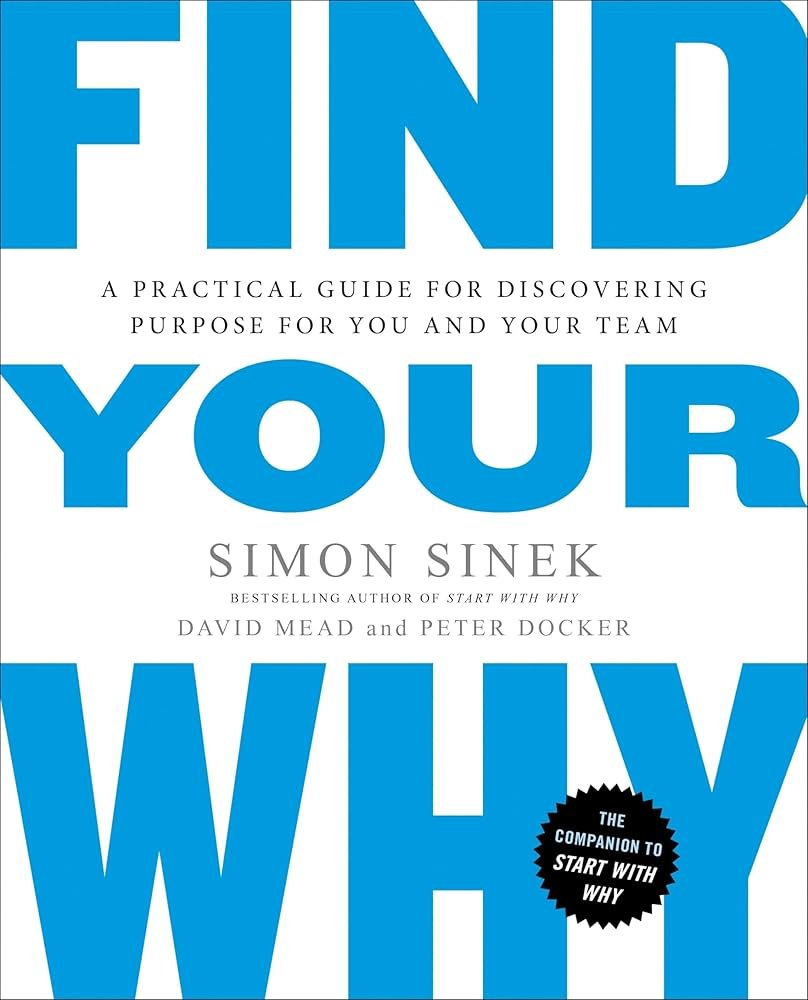
The meeting room looked immaculate in the way emotionally exhausted environments often do. Glass walls. Expensive chairs. Branded notebooks aligned with almost military precision. Outside, the city moved with relentless urgency while inside, highly accomplished professionals struggled to answer one deceptively simple question without sounding rehearsed: “Why does this work matter to you?” Silence usually arrived first. Then corporate language. Then confusion. In Find Your Why, Simon Sinek, David Mead, and Peter Docker step directly into that modern crisis of meaning and attempt something surprisingly ambitious: helping individuals and teams uncover the emotional core behind what they do before ambition hollows them out completely.
Unlike many leadership books drowning in abstraction and motivational theater, Find Your Why feels grounded in emotional excavation. The authors argue that purpose is not invented artificially through branding exercises or clever slogans. It is discovered through patterns hidden inside lived experience. That distinction matters enormously. Many organizations try to manufacture purpose after growth already stripped their culture of humanity. Individuals do the same thing. They chase achievement first and attempt emotional coherence later. The book reverses the process. It insists meaning already exists beneath recurring moments of fulfillment, struggle, service, curiosity, and emotional resonance. The challenge is learning how to identify it honestly.
The framework encourages readers to examine stories from their lives carefully rather than chasing vague inspirational fantasies. Which experiences felt energizing? When did contribution feel emotionally real? What moments created deep satisfaction beyond applause or money? These questions sound gentle on the surface yet become surprisingly confronting in practice. Many ambitious people realize they built careers around external validation while ignoring internal alignment completely. Find Your Why quietly exposes how often society rewards impressive performance while neglecting emotional truth.
A hospitality entrepreneur named Sofia Marenko once spent nearly a decade scaling luxury boutique hotels across Eastern Europe. Revenue exploded. Investors celebrated her aggressively. Yet Sofia privately felt emotionally detached from the business she supposedly loved building. During a leadership retreat, she participated reluctantly in a “why discovery” workshop similar to the process described in the book. As colleagues shared stories, Sofia suddenly remembered childhood afternoons helping her grandmother host exhausted travelers passing through a remote coastal village. What stayed with her was not the rooms or profits. It was the feeling guests carried when someone made them feel safe and welcomed far from home. That emotional thread changed everything. Sofia redesigned her entire company culture around emotional restoration instead of prestige aesthetics alone. Employee retention improved. Guest loyalty deepened. More importantly, she stopped feeling psychologically divided from her own work. The authors’ central argument breathes through transformations like that. Purpose often hides inside repeated emotional patterns people dismissed as ordinary.
The book becomes especially powerful when discussing teams because organizations frequently mistake compliance for alignment. Employees understand tasks yet feel disconnected from larger significance. Leaders distribute objectives without emotional context. Over time cultures become operationally efficient but spiritually hollow. Find Your Why argues that teams functioning with shared purpose develop resilience beyond incentive structures alone. People tolerate hardship more effectively when sacrifice connects to meaning rather than merely survival. That insight feels increasingly urgent in modern workplaces shaped by burnout, algorithmic productivity culture, and emotional fragmentation.
There is also something deeply revealing about the book’s insistence on specificity. Generic purpose statements rarely inspire anyone because they sound interchangeable. “Making the world better” means almost nothing emotionally without texture attached. The authors push readers toward language rooted in actual human experience. Help people feel understood. Create environments where curiosity thrives. Restore dignity through design. Protect vulnerable communities through education. Real purpose carries emotional fingerprints. It feels lived rather than manufactured. That distinction separates meaningful culture from motivational wallpaper pasted across office walls nobody believes anymore.
A creative strategist named Idris Holloway once consulted for a rapidly growing technology company obsessed with innovation branding. Executives described themselves as “disruptors changing humanity,” yet internal morale deteriorated constantly. During workshops, Idris noticed employees lit up emotionally only when discussing how the company’s tools helped small independent creators earn stable income without gatekeepers controlling access. That emotional reality rarely appeared in official messaging because leadership preferred futuristic corporate language instead. Idris helped the organization rebuild its internal narrative around empowerment and creative independence rather than abstract disruption rhetoric. The atmosphere shifted almost immediately because employees finally recognized themselves inside the mission again. Find Your Why understands this instinctively. Human beings need to hear their own emotional reality reflected back through the systems they devote energy toward.
The book also offers a subtle warning. Purpose cannot remain static forever. Individuals evolve. Teams change. Organizations scale beyond their original emotional architecture. Without continuous reflection, “why” becomes branding mythology disconnected from lived behavior. That tension explains why some companies begin with authentic mission-driven energy before slowly mutating into bureaucratic machines obsessed solely with growth metrics. Purpose requires maintenance through behavior, not merely language. Otherwise cynicism eventually enters the room and trust quietly leaves through another door.
A physician named Dr. Lena Okonkwo once considered abandoning medicine entirely after years of administrative overload and emotionally draining hospital bureaucracy. During an exercise reflecting on meaningful moments from her career, she remembered sitting beside frightened families during overnight emergency shifts and translating complex medical language into calm human reassurance. That was the pattern. Not prestige. Not status. Presence during fear. Lena later reshaped her practice around patient advocacy and communication training for younger doctors. She described the shift beautifully afterward: “I stopped trying to be an impressive doctor and remembered why I wanted to become a useful human being.” That sentence captures the emotional heartbeat of Find Your Why more clearly than any framework diagram ever could.
Late tonight another exhausted professional still stares at glowing spreadsheets wondering why achievement feels strangely disconnected from fulfillment. Somewhere else, a small team rediscovers energy because their work finally sounds emotionally recognizable again. Coffee cools beside unfinished strategy documents. Elevator doors open and close across towers filled with people silently craving orientation more than motivation. That is where Find Your Why leaves its deepest imprint. The book reminds readers that purpose is not a luxury reserved for idealists. It is psychological infrastructure. Without it, success becomes difficult to emotionally inhabit. With it, even ordinary work can begin carrying the rare and powerful feeling that a life is finally moving in the same direction as the soul creating it.
Editorial Disclaimer: Whether a book is a work of fiction, a memoir, or inspired by real events, the ideas, actions, decisions, and behaviors discussed within are not intended to be encouraged, replicated, or endorsed in real-world situations. This review is published solely for educational, analytical, literary, and entertainment purposes, with the aim of examining the book’s themes, storytelling, characters, philosophies, and broader cultural or business insights. Any ethical or unethical viewpoints, practices, or conduct presented in the book do not necessarily reflect the views, values, or endorsements of ESYRITE.
