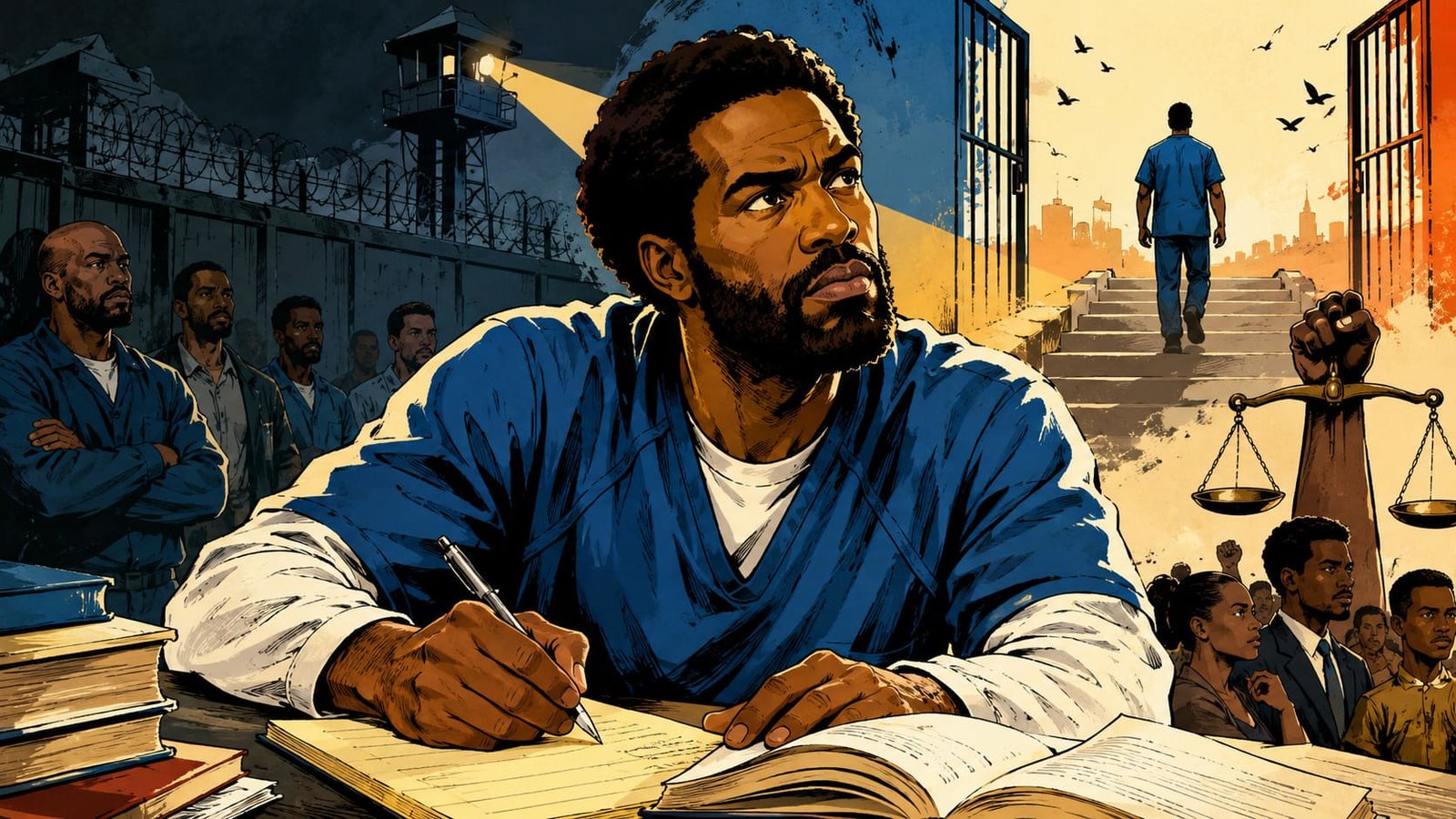
Fluorescent lights hummed above concrete corridors in For Life like tired insects trapped inside a machine built to process despair. Steel doors slammed shut with the rhythm of institutional certainty. Men walked slowly through prison hallways carrying invisible cargo: regret, rage, unfinished dreams, fractured memories of children growing older somewhere beyond razor wire. Yet beneath the suffocating architecture of incarceration, the series introduces something unexpectedly dangerous to the system surrounding it. Hope sharpened into competence. Aaron Wallace does not merely survive prison. He studies it like a hostile corporate structure. He learns its incentives, loopholes, language, and rituals. Then he begins weaponizing knowledge against the machinery itself.
Nicholas Pinnock gives Aaron a quiet intensity that feels almost surgical. He speaks carefully, as though every sentence has already survived cross-examination inside his own mind. Inspired by the real-life story of Isaac Wright Jr., the series gains unusual emotional gravity because it understands incarceration not only as punishment but as institutional identity production. Prison systems often reduce individuals into administrative categories easier to manage than complicated human beings. Aaron resists that reduction intellectually before he resists it legally. He becomes a lawyer while imprisoned, which transforms every courtroom sequence into something larger than procedural drama. The man society attempted to erase returns carrying the tools of interpretation.
The brilliance of the show lies in how it reframes justice as organizational behavior rather than abstract morality. Prosecutors protect careers. Judges protect institutional stability. Corrections officers protect hierarchy. Politicians protect narratives. Even well-meaning participants become trapped inside structures rewarding caution over truth. A public defender in Nairobi once admitted after a long hearing that “systems don’t hate innocence, they hate disruption.” That sentence hangs over For Life like smoke. Aaron’s real threat is not merely proving wrongful conviction. His real threat is exposing procedural fragility within institutions built on public trust.
Watching the prison operate feels disturbingly similar to observing certain corporations under pressure. Informal alliances determine influence. Scarcity drives conflict. Leadership performs control even when chaos leaks through every layer. One inmate negotiates favors with sharper strategic awareness than many executives managing multimillion-dollar departments. Another manipulates emotional loyalty like a seasoned political consultant. The show quietly suggests that human behavior changes less than environments do. Place people inside scarcity long enough and systems emerge naturally. Rules become currency. Information becomes leverage. Survival becomes culture.
There is a heartbreaking tenderness beneath the legal warfare. Aaron’s relationship with his wife Marie carries the exhausted ache of two people trying to preserve emotional intimacy against industrial-scale separation. Joy Bryant plays Marie with restrained vulnerability, avoiding melodrama entirely. Their conversations often feel like negotiations between memory and reality. Prison narratives frequently focus on violence because violence sells quickly. For Life understands something sadder. Time itself becomes the real antagonist. Missed birthdays. Altered routines. Emotional distance disguised as resilience. The slow erosion hurts more because it feels ordinary.
A man named Ricardo once worked night security at a distribution warehouse outside São Paulo while studying law through borrowed textbooks during lunch breaks. Management dismissed him constantly because of his uniform and accent. Years later, after becoming a labor attorney, he represented warehouse employees against the same corporation. Former supervisors reportedly struggled to meet his eyes in court. Stories like that pulse quietly beneath For Life. The series resonates because Aaron embodies a fantasy many marginalized people secretly carry: not revenge through destruction, but dignity through mastery.
The courtroom scenes deserve recognition because they reject glamorous legal theatrics. Arguments unfold through patience, detail, and psychological endurance. That realism gives victories emotional weight. Aaron does not magically overpower the system. He exhausts it strategically. There is something deeply modern about that struggle. Contemporary institutions often appear invincible because they operate through paperwork, bureaucracy, and procedural complexity rather than visible cruelty. The violence becomes administrative. Kafka would recognize the atmosphere immediately. So would millions navigating immigration offices, healthcare systems, exploitative workplaces, or underfunded public services where humanity gets filtered through policy language until suffering sounds technical.
At times, the series drifts into profound philosophical territory. What does society truly want from punishment? Rehabilitation? Revenge? Social order? Political optics? For Life never delivers simplistic answers because reality itself refuses simplicity. Some inmates seek transformation. Others weaponize chaos. Some officers display compassion. Others hide behind procedure. That ambiguity gives the show credibility. Human systems rarely divide cleanly between saints and villains. More often, they reward emotional numbness because numbness maintains efficiency.
Near the end, prison walls begin to feel less physical than psychological, as though the entire society surrounding Aaron Wallace has constructed invisible cages around class, race, opportunity, and human worth. Rain taps softly against courthouse windows while exhausted lawyers carry folders thick with lives compressed into paperwork. Somewhere inside that machinery stands a man refusing to disappear quietly. That refusal becomes the emotional heartbeat of For Life. It reminds viewers that dignity is not granted naturally by institutions. It must often be defended repeatedly against systems designed to reduce people into manageable abstractions. The haunting realization lingers afterward with uncomfortable force: a civilization reveals its deepest moral character not through speeches about justice, but through the people it finds easiest to discard.
Editorial Disclaimer: Whether a TV Show is rooted in fiction or inspired by real events, the actions, decisions, and behaviors portrayed within are not intended to be encouraged, replicated, or endorsed in real-world settings. This review exists solely to analyze the storytelling, characters, themes, and business dynamics presented in the TV Show for educational, analytical, and entertainment purposes. Any ethical or unethical conduct depicted in the TV Show does not reflect the views, values, or endorsements of ESYRITE.
