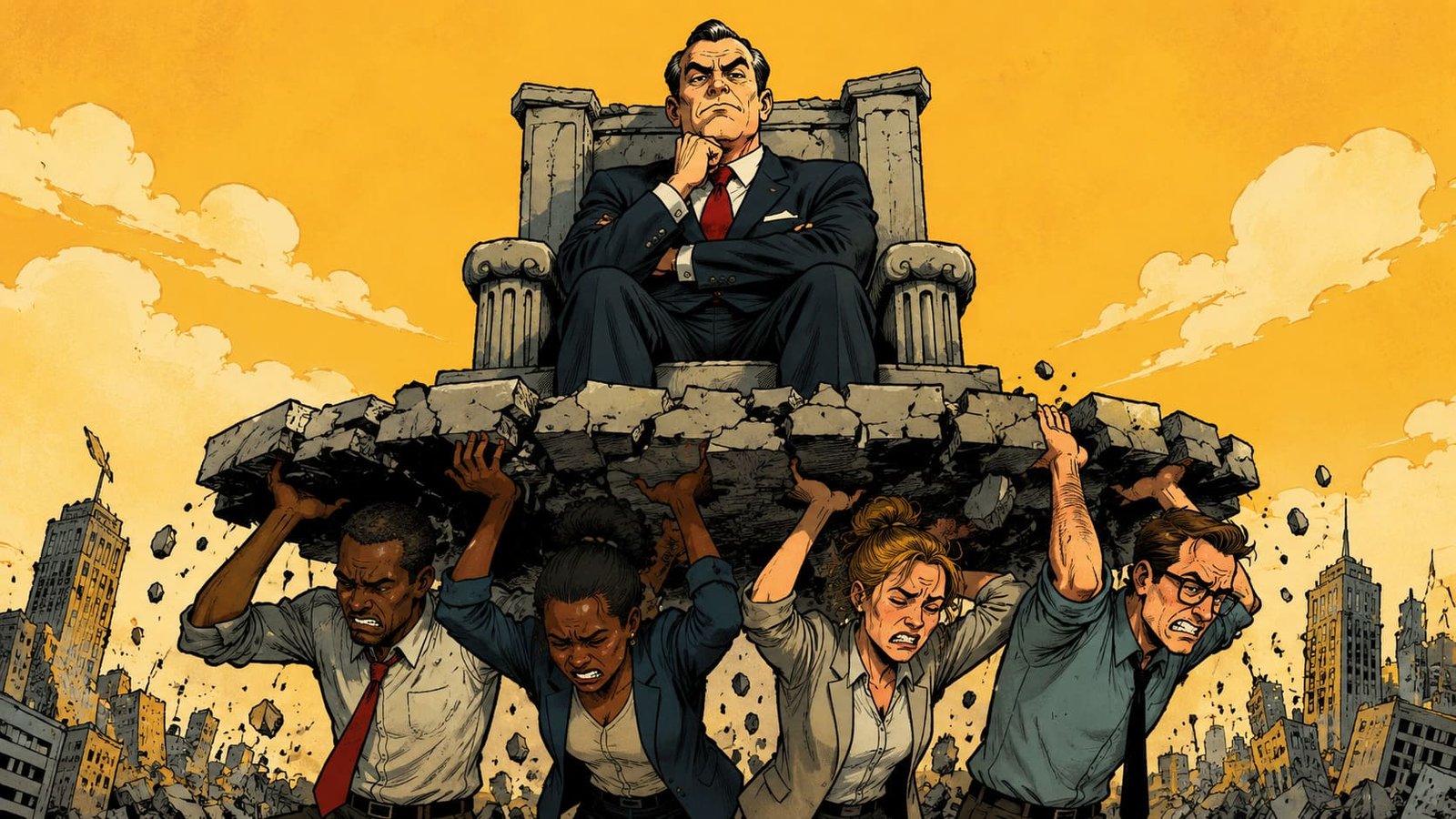
A conference room can become a small kingdom without anyone noticing. A leader sits at the head of the table, decisions descend like sealed orders, and everyone learns an ancient corporate ritual: nod first, question later. For a while, such systems can look impressively efficient because authority moves quickly and disagreement stays safely underground. Then reality changes faster than hierarchy can react. Research on command-and-control cultures has found that excessive reliance on hierarchy can weaken engagement, discourage initiative, and shift attention from solving problems toward complying with rules.
Command-control leadership was built for environments where information was scarce and decisions needed to travel downward. Factories, armies, bureaucracies, and large industrial organizations made sense of complexity by concentrating authority. A supervisor knew more than a worker, a director knew more than a supervisor, and headquarters supposedly knew enough to coordinate everyone. That logic becomes fragile when useful information sits everywhere at once. A customer service representative hears the complaint first, an engineer sees the defect first, and a junior analyst may notice the market changing before a senior executive sees it on a quarterly dashboard.
A regional sales manager named Ibrahim discovers this during a difficult quarter. His director demands daily approval for discounts, client visits, and recovery offers, convinced tighter control will prevent mistakes. Instead, the sales team begins waiting for permission while customers grow impatient. One representative finally says, “Nobody wants to make the wrong decision, so nobody is making decisions.” That sentence lands harder than the sales report. Research on self-regulation has found that internally motivated approaches to rule following can exert greater influence than command-and-control methods, suggesting that compliance built through ownership can be stronger than obedience imposed through authority.
History offers a useful warning because command-control systems rarely collapse with trumpets. They decay through tiny acts of hesitation. A nurse stops suggesting an improvement because previous ideas were rejected, an engineer keeps a concern to herself because meetings punish dissent, or a product manager waits for executive approval while a competitor moves. A major review of medical leadership research found that command-and-control cultures can create powerlessness and push managers toward compliance rather than proactive problem solving, while participatory approaches can help professionals feel their expertise is valued. The empire does not fall when everyone rebels. It falls when capable people stop bothering to speak.
That does not mean leadership should dissolve into permanent democracy. Crisis teams still need direction, accountability, clear roles, and decisive calls. Research on command-and-control teams shows that effective leaders can provide structure while also supporting constructive conflict and team learning, with structuring behavior changing as teams develop. The sharper model is not leaderless management, but leadership that knows when to command and when to release the room. Authority becomes useful when it creates clarity rather than dependence. A strong leader should be able to say, “Here is the mission. Use your judgment.”
Somewhere in a modern organization, a manager is still guarding a kingdom that no longer exists. Employees have information the hierarchy cannot see, customers move faster than approval chains, technology changes decisions overnight, and artificial intelligence is making expertise available at remarkable speed. Power is therefore becoming less about controlling every action and more about designing conditions where good decisions can emerge without constant permission. The old empire may survive on an organizational chart, but its real authority disappears when nobody trusts it enough to think aloud. What kind of leader remains powerful when people no longer need permission to be useful?
