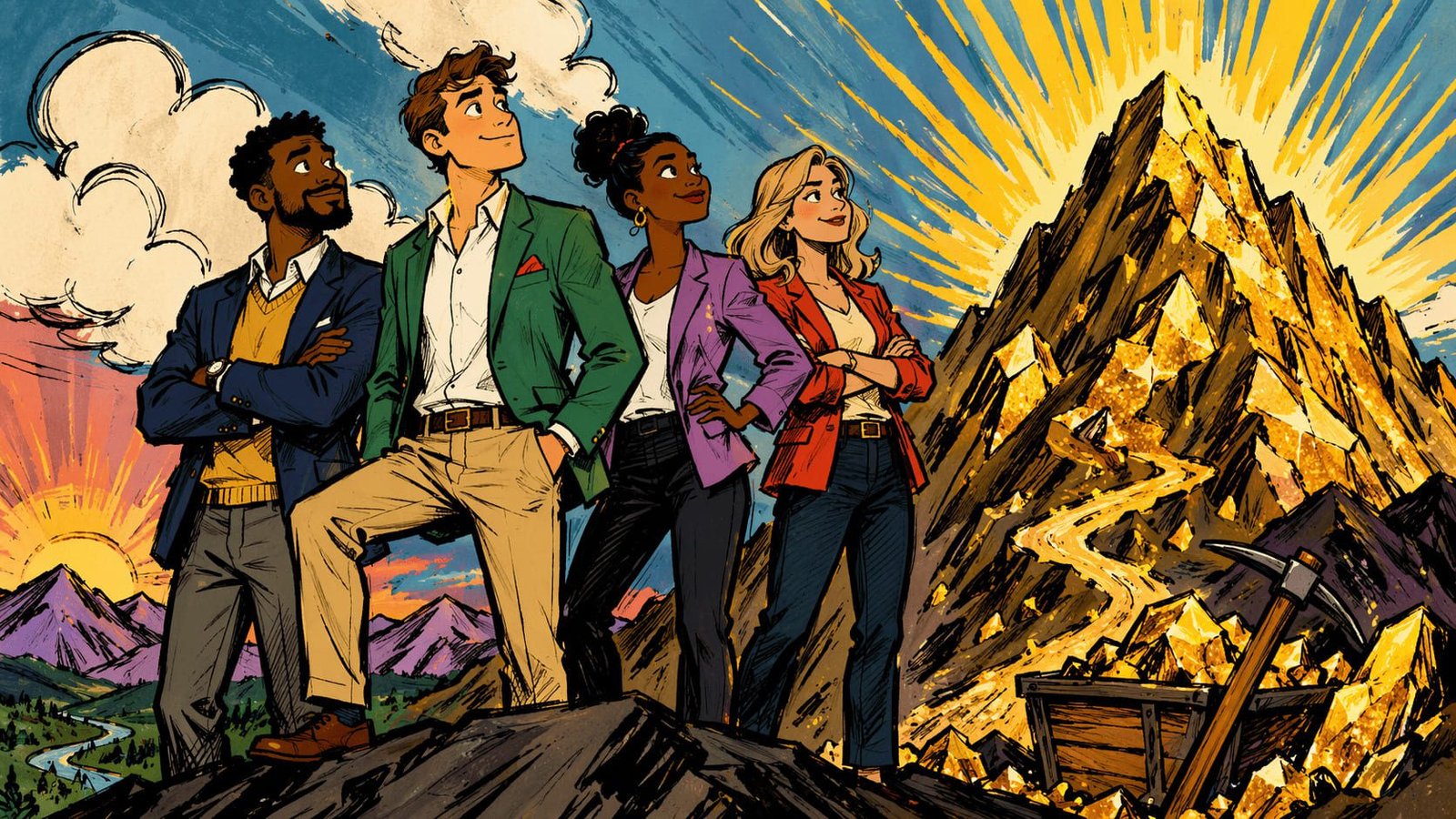
A faded sketch rested on a café napkin beside a half-finished cup of bitter coffee while commuters hurried past without a second glance. Few noticed the tiny drawing because it looked unfinished, almost ordinary, yet history has often begun with ideas that appeared too ambitious for polite conversation. Small thinking feels safe. Great companies rarely emerge from safety because remarkable businesses usually begin as unreasonable visions carried by stubborn people who refuse to shrink them for approval.
Entrepreneurs are frequently told to be realistic, yet realism has an unfortunate habit of protecting existing limits instead of discovering new possibilities. Thinking big does not mean ignoring execution or financial discipline. It means solving problems worthy of extraordinary effort. Elon Musk challenged assumptions around electric vehicles and private space exploration when both industries appeared comfortably settled. Whether admired or criticized, his ambitions forced entire sectors to reconsider what had previously seemed commercially impossible.
Amazon began as an online bookstore, yet Jeff Bezos consistently described a much larger mission centered on customer obsession rather than books alone. That distinction changed every strategic decision that followed. Amara operated a modest accounting software company serving local retailers until one conversation altered her perspective. A client remarked, “This platform could help businesses anywhere.” She redesigned the product for international markets, discovering that her greatest limitation had never been technology but imagination.
An old bridge stretching across a wide river reveals a curious truth. Engineers never build toward the middle and hope the opposite side somehow appears. They commit to crossing from the beginning because the destination shapes every calculation. NVIDIA invested patiently in graphics processing long before artificial intelligence transformed those chips into strategic infrastructure. Vision preceded demand, proving that preparation often appears irrational until the future quietly catches up with determined conviction.
Thinking big also requires accepting uncomfortable tradeoffs. Larger ambitions invite greater scrutiny, longer timelines, tougher competitors, and moments when doubt becomes louder than applause. Sofia founded a renewable materials company despite repeated investor rejections because manufacturers initially resisted unfamiliar alternatives. She refined partnerships instead of abandoning the mission. Years later those relationships became her strongest competitive advantage as customers increasingly prioritized resilient supply chains and sustainable production methods.
Night settled over a city where unfinished towers reached confidently into darkness before touching tomorrow’s skyline. Every remarkable enterprise once existed only as an idea considered unrealistic by sensible observers who measured possibility through present circumstances instead of future potential. Ambition alone never creates enduring companies, but constrained imagination almost guarantees ordinary outcomes. Think beyond today’s horizon, because businesses rarely become larger than the vision courageous enough to build them.
