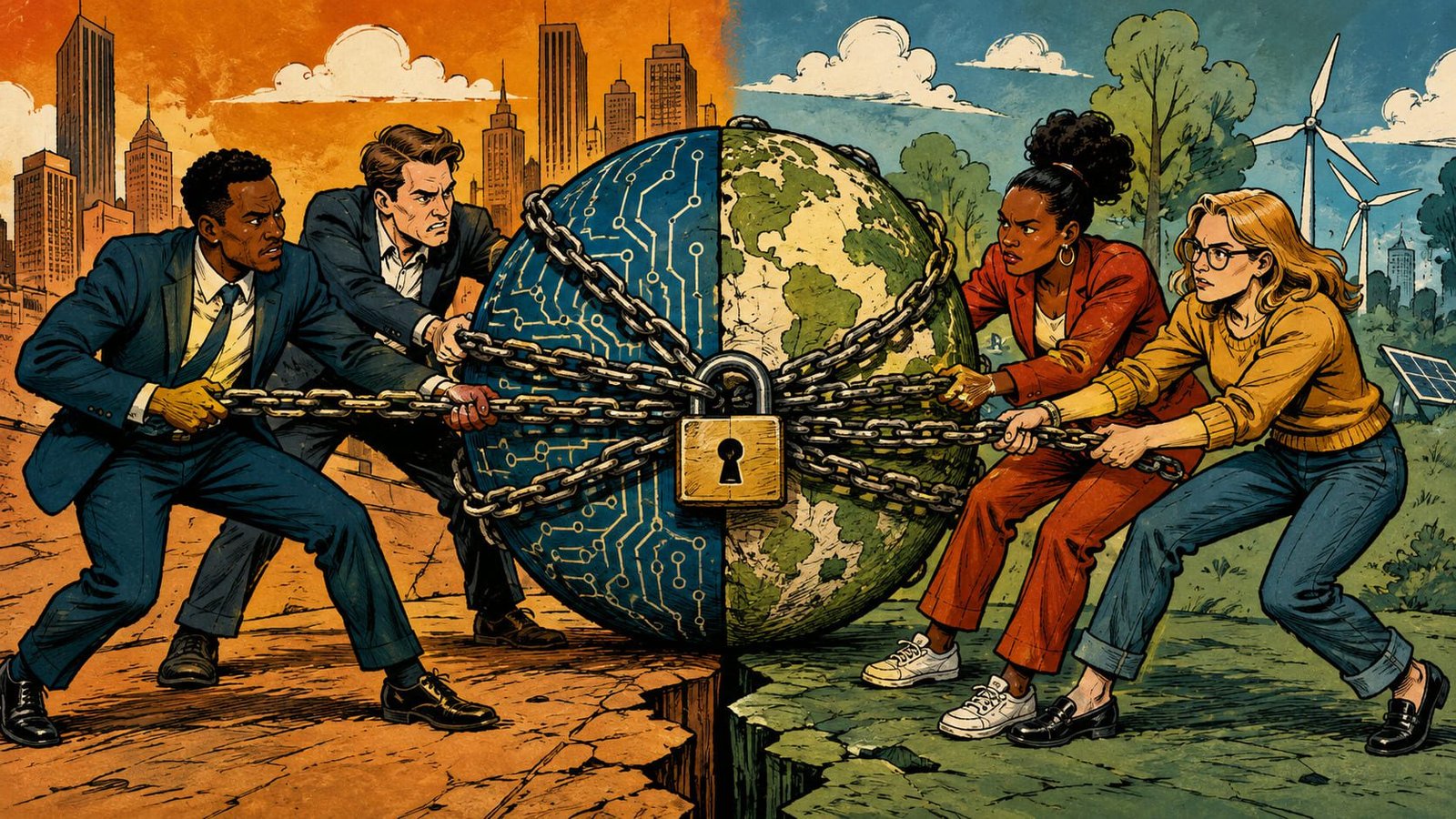
A strange argument has begun inside offices that once argued about desks, salaries, and strategy: who owns work when machines can perform more of it? A young analyst watches an AI system turn a week’s research into a polished briefing before lunch, while a veteran manager wonders whether the machine has just saved time or quietly purchased a piece of the employee’s future. Nobody announces a revolution. There is only the soft click of keyboards, the glow of screens, and a growing suspicion that ownership of work is becoming harder to define.
For generations, work offered more than wages. It gave people craft, status, relationships, stories, and a route toward becoming someone more capable than they were before. A junior lawyer learned by reading ugly contracts, a designer sharpened taste through rejected concepts, and an apprentice engineer discovered judgment by fixing things that refused to cooperate. AI can compress those experiences into astonishingly efficient outputs, but efficiency has a peculiar appetite. It can consume the struggle that created expertise. That leaves companies facing a question rarely found in technology budgets: who owns the learning hidden inside work?
Consider a consulting team preparing a difficult client proposal. An AI system produces the market analysis, drafts recommendations, and arranges a convincing presentation while three consultants sit around a conference table drinking increasingly cold coffee. Their work becomes faster, but the youngest consultant has fewer reasons to understand how the argument was constructed. At first, everyone celebrates. Six months later, a client asks an awkward question that the system cannot answer, and the room discovers a painful truth: the organization automated the practice field before deciding who would become good enough to play.
A similar tension appears in creative work. A copywriter named Noemi uses AI to generate dozens of campaign concepts before breakfast, then notices that the machine keeps circling familiar emotional territory. Her editor asks, “Which one actually understands people?” Nobody answers immediately. The problem is not whether machines can produce language, images, code, or analysis, because increasingly they can. The deeper issue is whether organizations will reward employees for generating more material or for developing the judgment required to recognize meaning, originality, danger, taste, and consequence.
That distinction changes the idea of ownership. A company may own software, data, intellectual property, and the final product, but workers carry something less visible: accumulated judgment. When AI absorbs routine tasks, that human capital can either deepen or decay depending on how work is redesigned. Leaders who treat employees as operators of increasingly capable machines may build efficient systems with shallow institutional memory. Leaders who deliberately preserve experimentation, mentorship, disagreement, and difficult assignments create something harder to automate: people capable of becoming better because technology has expanded their reach rather than narrowed their experience.
Somewhere inside this transformation sits a quiet bargain about tomorrow. Companies want AI to own the repetitive parts of work, employees want technology to remove drudgery, and both sides hope the arrangement produces greater freedom. Yet freedom without development can become a strange kind of emptiness, especially when every difficult task disappears before anyone has learned from it. A workplace is not merely a factory for outputs; it is also a machine for making people capable. If AI is going to own more of the work, who will own the responsibility for making sure humans still become wiser while doing less of it?
