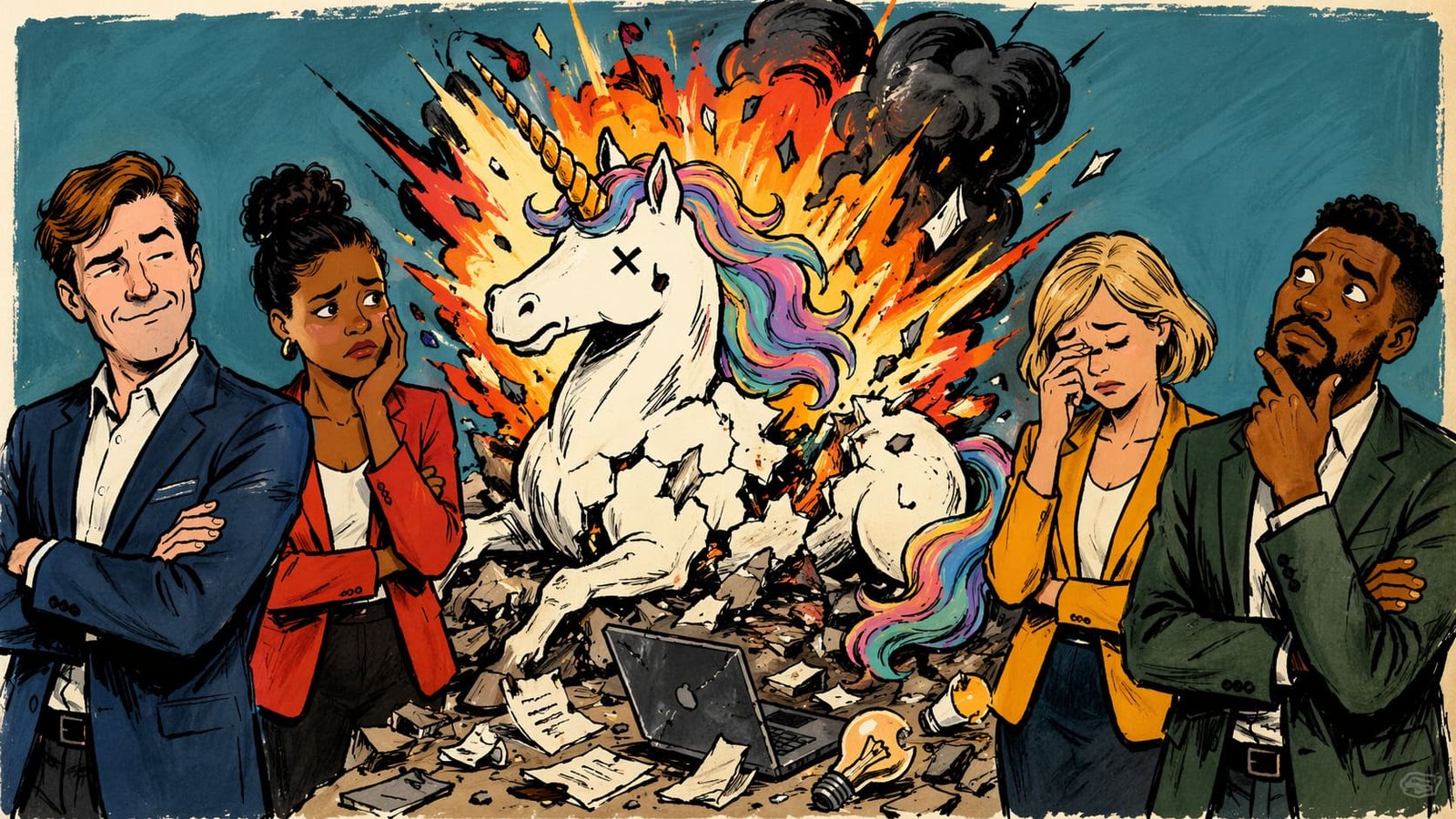
Champagne glasses clinked beneath dazzling stage lights while founders smiled for cameras celebrating another billion-dollar valuation. Investors applauded, headlines declared a new era, and ambition seemed limitless. Yet outside those glittering halls, quieter conversations unfolded between finance teams calculating shrinking cash reserves and employees wondering why extraordinary growth still demanded another painful round of layoffs. Modern startup culture has become strangely addicted to appearances, where spectacular valuations often receive louder applause than sustainable businesses, creating dangerous illusions that collapse the moment economic gravity returns.
Venture capital transformed innovation by helping ambitious entrepreneurs tackle problems too large for traditional financing. That contribution remains invaluable. Trouble begins when fundraising becomes mistaken for product-market fit or lasting business strength. WeWork illustrated this contradiction with painful clarity. Extraordinary investment created extraordinary expectations, yet governance, financial discipline, and strategic focus failed to keep pace. By contrast, Atlassian spent years emphasizing durable customer value and operational discipline, proving that sustainable growth can quietly outperform theatrical expansion over the long run.
An old mountain trail offers a useful metaphor for entrepreneurship. Climbers who sprint toward the summit often ignore changing weather until descending safely becomes harder than reaching the peak. Sofia learned that lesson after her health technology startup secured a major funding round. Hiring accelerated, offices expanded, and ambitious projects multiplied almost overnight. Revenue could not support that momentum. Months later, difficult restructuring forced painful conversations that might have been avoided had disciplined growth received equal excitement alongside investor enthusiasm.
Financial capital solves many problems, but it cannot replace strategic judgment. Amazon endured years of thin profits because every investment reinforced a coherent long-term vision centered on customers, logistics, and technology. Money amplified discipline already in place. Owen, founder of an education software company, chose a different path after declining an oversized investment offer. He expanded carefully, measured customer retention obsessively, and delayed unnecessary hiring despite external pressure to scale faster. Competitors mocked his restraint until market conditions shifted, exposing fragile business models built upon endless fundraising rather than dependable economics.
Curiously, children building towering sandcastles often celebrate highest walls while quietly ignoring waves creeping closer. Adults repeat that habit inside boardrooms. Elena accepted every opportunity to grow because saying no felt like admitting weakness. Her leadership team chased fashionable markets instead of strengthening loyal customer relationships. Across the industry, Hassan narrowed his company’s focus to solving one difficult manufacturing problem exceptionally well. His business never became a media sensation. Customers stayed, profits strengthened, and resilience quietly replaced spectacle as the company’s defining achievement.
Dawn arrived over an empty auditorium where yesterday’s applause had already faded into silence, leaving only scattered footprints across polished floors. Markets eventually forget impressive valuations, celebrated keynote speeches, and fashionable narratives. They remember businesses that consistently create value, preserve trust, and endure when excitement disappears. Unicorns may inspire dreams, yet disciplined companies build lasting legacies because they respect reality more than mythology. Before chasing the next breathtaking valuation, ask whether your business could still stand proudly after every spotlight has gone dark.
