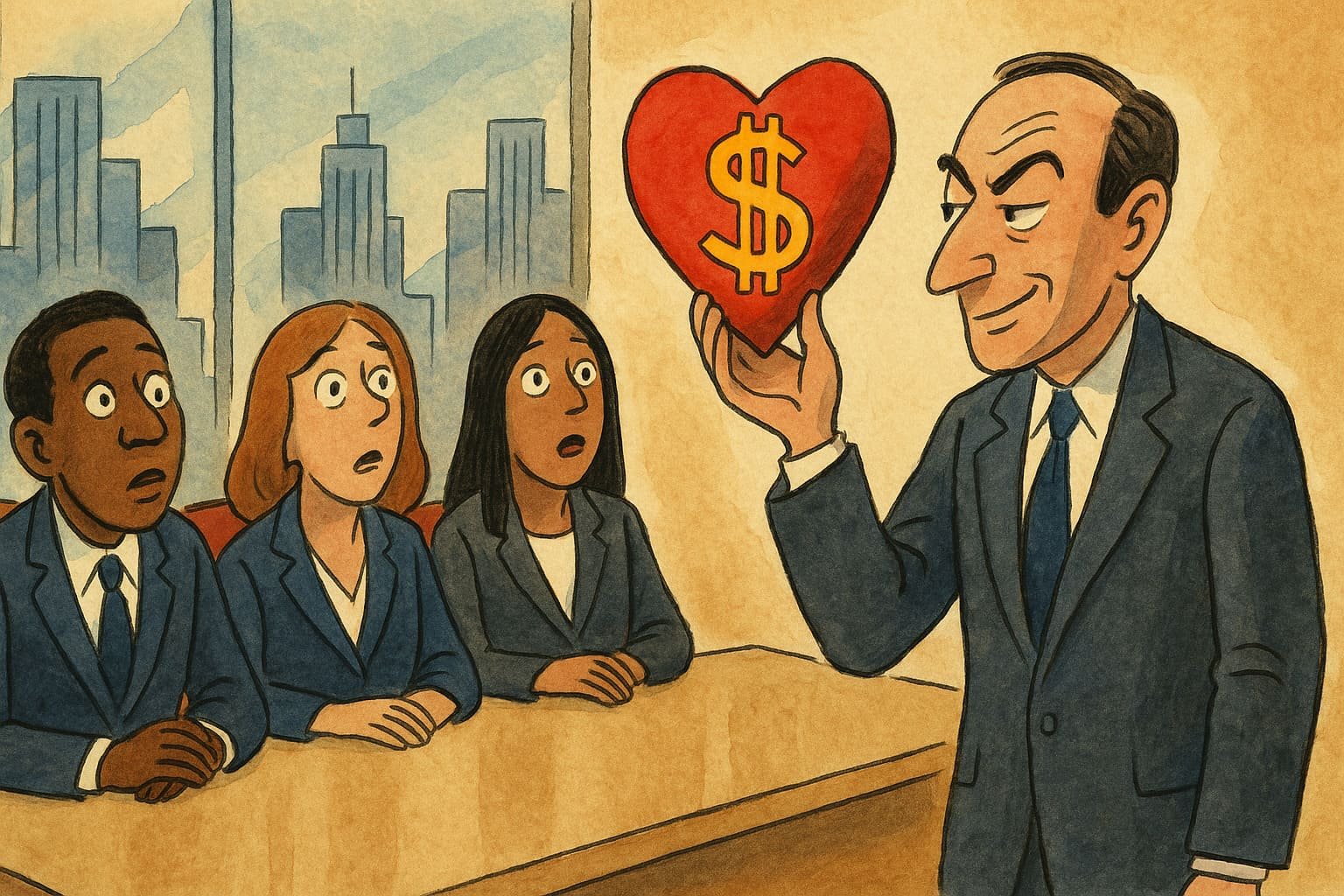
The headquarters shimmered with confidence. Awards lined the entrance, polished mission statements decorated every hallway, and executives spoke passionately about purpose during shareholder meetings. Visitors admired the success almost instantly. Employees smiled politely while moving between conference rooms, yet something invisible had already changed. Trust had become transactional. Every conversation carried a hidden calculation. Somewhere along the journey toward extraordinary profits, the organization had quietly forgotten that businesses are communities before they become financial machines. Few collapses begin with scandal. Most begin with small compromises that nobody believes matter.
Greed rarely announces itself wearing expensive suits and demanding impossible targets. It usually arrives disguised as common sense. A bonus structure rewards individual victories instead of teamwork. Cost reductions quietly replace investment in people. Short-term gains become celebrated while long-term relationships receive little attention. Every decision appears rational in isolation. Together they reshape the organization’s identity. Employees begin protecting themselves before helping colleagues. Customers become revenue sources instead of people with real needs. The business continues growing financially while shrinking morally beneath the surface.
Healthy ambition drives innovation, competition, and economic progress. Greed twists that same ambition into something far more destructive. It encourages leaders to chase endless expansion without asking what success is ultimately meant to accomplish. Companies begin measuring everything that is easy to count while ignoring what truly creates enduring value. Loyalty weakens. Curiosity fades. Psychological safety disappears. Eventually, talented employees stop offering bold ideas because preserving personal security feels wiser than challenging decisions already driven by relentless financial pressure.
Owen founded a thriving logistics company after years of building trusted relationships with clients and employees alike. Success attracted new investors eager for rapid expansion. Incentive plans shifted dramatically, rewarding aggressive sales above customer satisfaction. Managers began competing against one another instead of collaborating. Experienced drivers who once shared practical advice suddenly guarded information. Customers noticed the cultural change before executives did. Complaints multiplied despite record revenue. Owen finally realized the company had not lost operational excellence. It had lost the generosity that originally made growth possible.
Corporate history offers countless reminders that trust generates remarkable economic strength. Johnson & Johnson’s response during the Tylenol crisis remains widely respected because leadership prioritized consumer safety above immediate financial concerns. Patagonia earned lasting customer loyalty by consistently aligning commercial decisions with environmental values rather than treating ethics as advertising material. Those organizations demonstrated that integrity is not separate from business strategy. It is business strategy. When values remain visible during difficult decisions, confidence compounds across employees, customers, partners, and investors alike.
Modern culture often celebrates relentless hustle, endless scaling, and constant disruption as though bigger automatically means better. That narrative overlooks an uncomfortable reality. Many organizations fail not because competitors become stronger but because internal relationships quietly deteriorate. Teams burdened by distrust cannot innovate consistently. Customers who feel manipulated rarely remain loyal forever. Financial success achieved through fear often proves surprisingly fragile. Lasting enterprises understand that sustainable growth depends less on extracting maximum value and more on creating meaningful value for everyone connected to the business.
Management thinker Charles Handy once observed that organizations exist to accomplish something worthwhile beyond making money. Profit remains essential because businesses cannot survive without it. Yet profit works best as fuel rather than destination. Leaders who remember this distinction build cultures capable of weathering uncertainty without sacrificing their principles. Employees willingly contribute discretionary effort when they believe their work serves something meaningful. Communities embrace businesses that improve lives instead of merely extracting wealth. Purpose quietly becomes one of the strongest competitive advantages available.
Night eventually settles over the office towers while glowing logos continue reflecting across empty glass walls. Annual reports celebrate another successful year, but another ledger remains invisible to investors. It records every promise honored, every relationship strengthened, and every moment when character outweighed convenience. Those entries determine whether a company becomes admired or merely profitable. Greed may fill accounts for a season, yet generosity fills legacies for generations. The most valuable asset any organization will ever own is the heart it refuses to sell.
