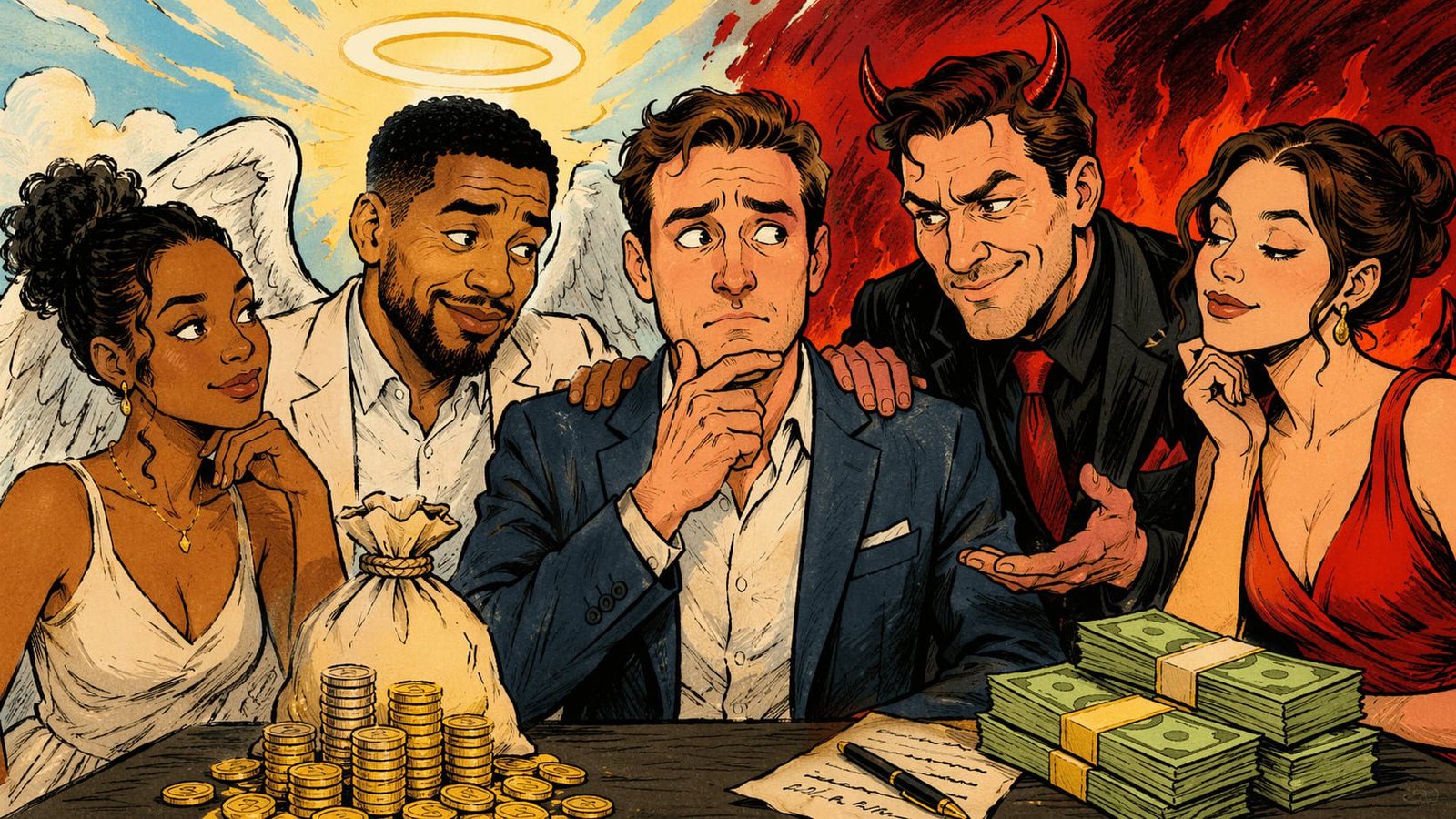
Coins clattered across an antique auction table while founders smiled with rehearsed confidence, yet every raised paddle carried invisible strings. Excitement drifted through polished corridors like perfume hiding smoke. One investor whispered, “Money always arrives wearing a costume.” That single remark exposed an uncomfortable truth that echoes through every entrepreneurial generation. Angel investment often looks like salvation, but every handshake quietly asks a difficult question: is fresh capital opening a door toward lasting freedom, or locking ambitious founders inside somebody else’s vision before they even realize the price?
Entrepreneurs often celebrate funding announcements as if victory has already arrived. Reality behaves differently. Cash solves immediate pressure but magnifies every existing weakness because larger expectations accompany every transferred dollar. Airbnb survived repeated rejection before patient believers offered early backing that aligned with a bold vision rather than demanding quick shortcuts. Contrast that with promising startups that accepted impatient investors, only to discover boardroom tension replacing creative energy, turning exciting ventures into endless negotiations instead of meaningful progress.
One overlooked founder named Mara built sustainable packaging from agricultural waste after years of quiet experimentation. Her first angel investor demanded aggressive expansion across unfamiliar markets within months. Customers loved her products, yet operations fractured beneath unrealistic speed, exhausting employees and weakening quality. Later another investor entered with fewer promises but greater discipline, encouraging careful regional growth instead of reckless conquest. Revenue strengthened steadily because trust became capital too. Strange enough, slower movement delivered faster resilience, revealing that timing often outperforms urgency.
Business history repeatedly demonstrates that successful investment resembles partnership rather than rescue. Reid Hoffman has argued that entrepreneurship means jumping from a cliff while assembling an airplane during descent. Angel investors sometimes provide valuable tools for that impossible construction, including networks, experience, credibility, and emotional steadiness during uncertainty. Pixar flourished because creative talent received patient support instead of relentless interference. Capital accelerated imagination rather than replacing judgment. Healthy investors recognize that founders usually understand customers more intimately than spreadsheets ever can.
Curiously, crowded cafés often reveal more about entrepreneurship than expensive conference stages. Listen closely. A young founder nervously rehearses tomorrow’s investor meeting while untouched coffee grows cold beside an ambitious pitch deck. Nearby, another entrepreneur quietly celebrates declining an attractive offer because ownership mattered more than immediate comfort. Outsiders may applaud whichever headline sounds larger. Businesses rarely reward applause. Durable companies emerge when founders understand exactly which compromises strengthen purpose and which ones quietly erode identity beneath attractive valuations.
Storm clouds rarely announce whether rain will nourish fertile fields or flood fragile foundations. Angel money carries that same beautiful uncertainty. Every investment agreement reflects character before mathematics, relationships before returns, and judgment before optimism. Enterprises remembered for generations seldom chase funding alone. They choose alignment, patience, and shared conviction because remarkable businesses are built through disciplined partnerships rather than oversized bank balances. Ask one unsettling question before signing anything: will this capital help build your vision, or slowly rewrite it?
