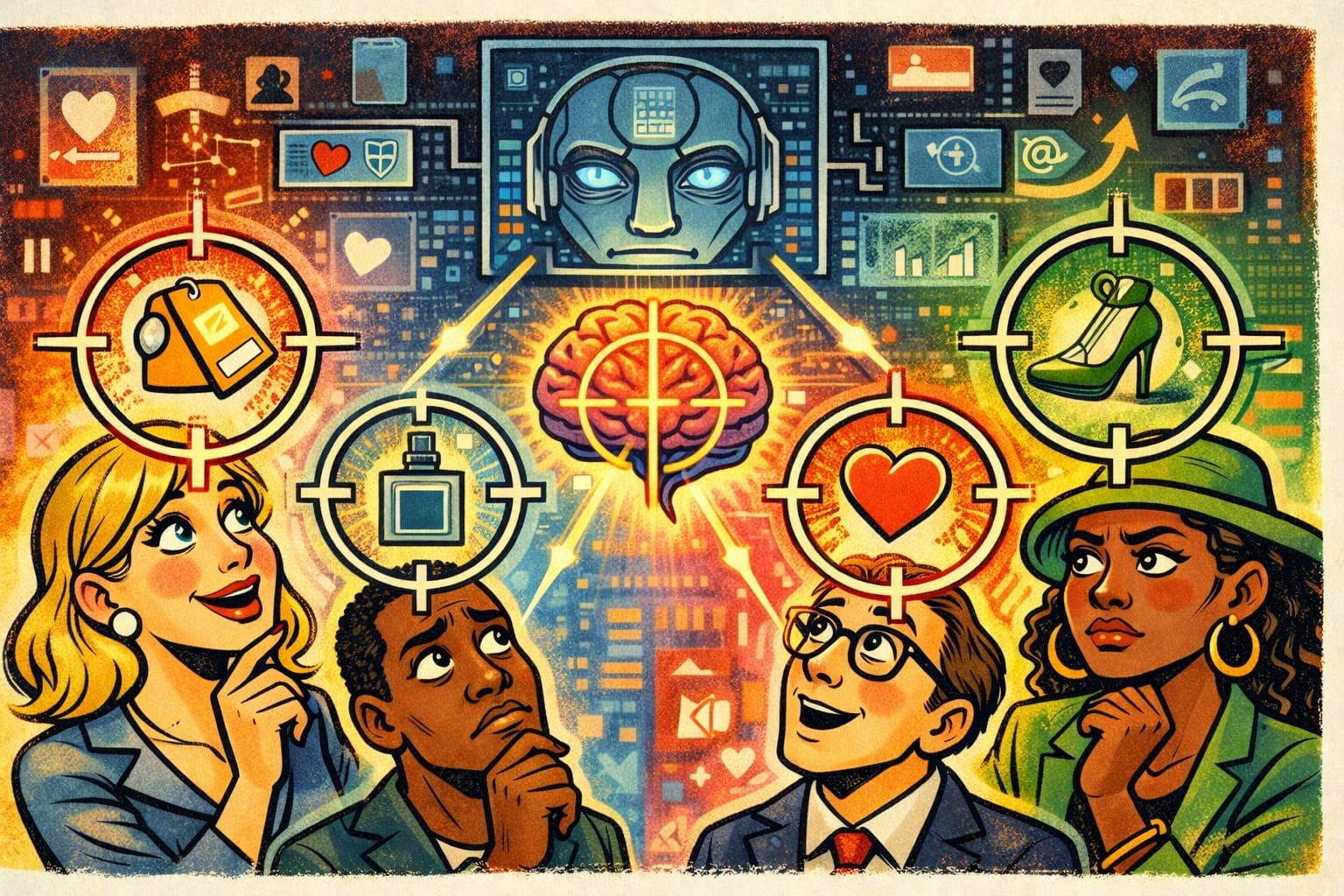
Footsteps echoed across a spotless shopping mall long before doors officially opened, yet invisible shelves were already arranging themselves around millions of unseen customers. No employee moved a single product. No display changed by human hands. Decisions happened elsewhere, inside algorithms quietly guessing which dreams deserved another invitation and which ambitions should remain invisible. Marketing has entered a stranger era than many executives admit, because artificial intelligence no longer merely predicts desire. Increasingly, it participates in creating it.
Marketers often describe artificial intelligence as objective because machines lack emotions, prejudices, and personal histories. Reality proves far messier. AI systems learn from historical behavior, purchasing records, search habits, and engagement patterns, meaning yesterday’s human biases frequently become tomorrow’s automated recommendations. Amazon has repeatedly refined recommendation engines to improve relevance, yet every recommendation still reflects previous consumer behavior instead of untouched possibility. That distinction matters. Systems trained on existing choices can quietly reinforce familiar preferences instead of encouraging unexpected discoveries.
Camila directed marketing for an online education platform determined to attract more women into cybersecurity programs. Early campaigns relied heavily on automated audience optimization because conversion rates looked impressive. Weeks later, performance reports revealed an uncomfortable surprise. Most advertising had concentrated overwhelmingly on men because historical enrollment data influenced future targeting. After deliberately broadening creative messaging and manually expanding audience selection, enrollment became noticeably more balanced. Growth slowed briefly, although long-term demand strengthened because marketing stopped mistaking history for destiny.
A curious contradiction appears almost everywhere algorithms operate. People insist they want originality while repeatedly rewarding familiarity through daily decisions. Behavioral economists describe this tendency through concepts like confirmation bias and availability bias, explaining why repeated exposure often shapes preference without conscious awareness. TikTok illustrates this beautifully. Endless personalized feeds create astonishing engagement, yet they can also narrow cultural discovery by repeatedly serving comfortable patterns. Familiarity becomes addictive. Discovery quietly shrinks while consumers believe endless choice surrounds them.
Unilever has increasingly explored inclusive marketing practices because representation influences both commercial performance and cultural relevance. Inclusive campaigns do more than improve public perception. They widen the data flowing back into intelligent systems, allowing future recommendations to reflect broader human experiences instead of inherited limitations. Ravi, leading growth for a regional fashion retailer, noticed automated promotions consistently favored established customer segments while overlooking emerging communities with growing purchasing power. Fresh creative partnerships expanded those overlooked audiences, producing stronger brand loyalty than conventional optimization models had predicted.
Crowds will continue walking through marketplaces where every recommendation feels uncannily personal and every advertisement seems perfectly timed. Yet invisible assumptions travel alongside those predictions, quietly deciding who gets invited into possibility and who remains outside familiar boundaries. Artificial intelligence can magnify remarkable insight, but it can also amplify yesterday’s blind spots with breathtaking efficiency. Before celebrating perfect targeting, consider a more unsettling thought: are your choices reflecting your desires, or merely echoing someone else’s expectations?
