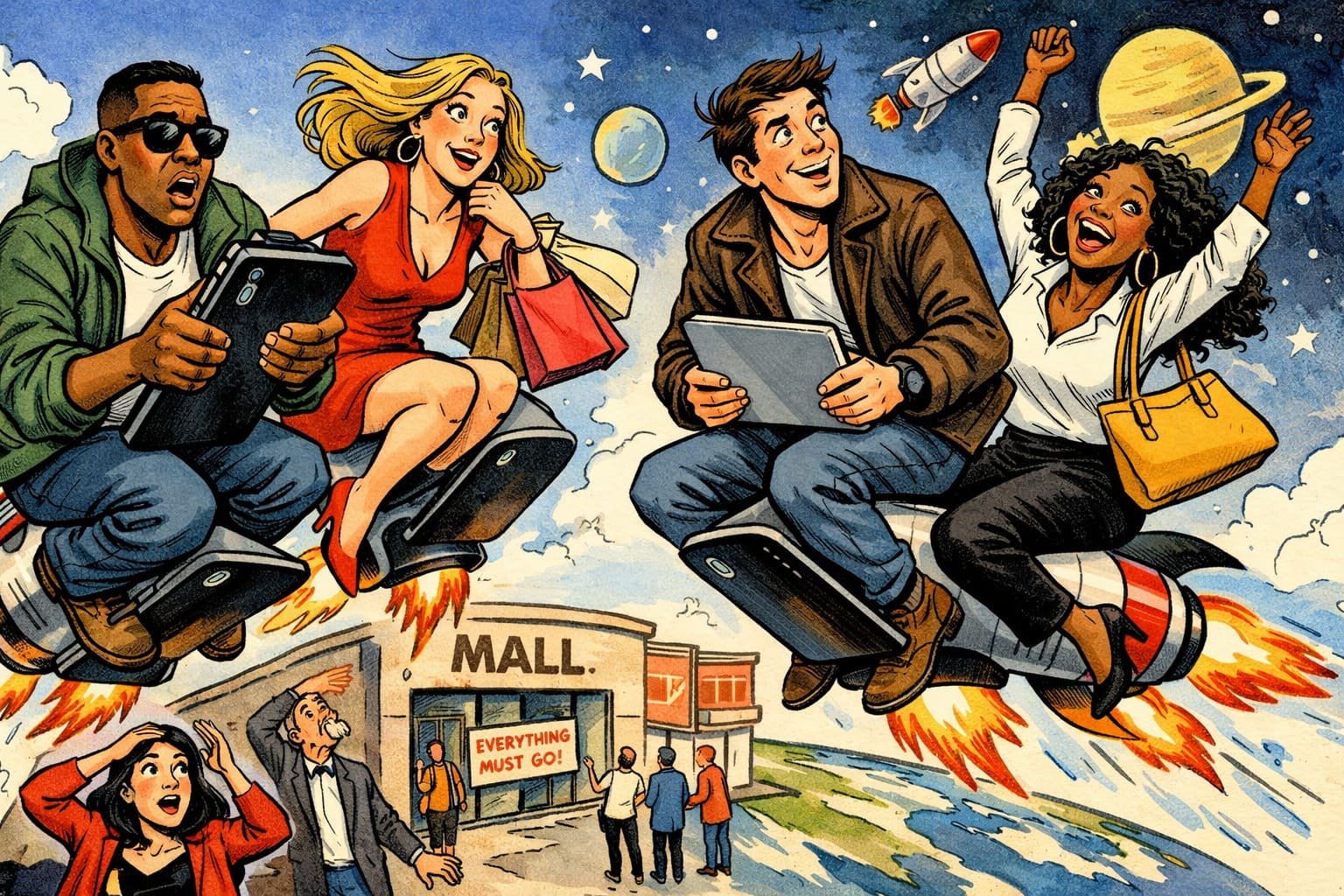
Salt drifted through the entrance of a restored warehouse where shoppers wandered without carrying baskets, hardly noticing they had crossed from a café into a clothing boutique and then into a recording studio. Nothing announced where one business ended and another began. Purchase decisions emerged almost accidentally, wrapped inside experiences that felt worth remembering. Retail has slipped free from its old geography. Digital brands are no longer asking where stores should exist. They are asking whether stores should feel like stores at all.
Traditional retail rewarded location, shelf space, and predictable customer traffic. Digital commerce overturned those assumptions, yet online convenience soon became ordinary instead of remarkable. That forced brands to compete on imagination rather than access alone. Glossier expanded by turning devoted online communities into physical spaces where visitors could touch products, photograph discoveries, and participate in the brand itself. Warby Parker followed a similar path, proving that physical locations still matter when they deliver experiences impossible to compress into a shopping cart icon.
Nadia launched a premium tea company after years selling entirely through digital channels. Revenue looked healthy, but returning customers described every purchase with identical language because nothing memorable happened after checkout. She rented a modest corner inside an independent bookstore and began hosting evening tasting sessions where strangers debated flavors as passionately as novels. Friends started bringing friends. Online orders quietly increased because physical conversations created stories that digital advertising alone had never managed to inspire.
An abandoned railway station often attracts photographers long before investors notice commercial potential. Retail behaves much the same way. Places succeed when they create emotional gravity rather than transactional efficiency. Apple understood this years ago by designing stores that encouraged exploration instead of hurried purchasing. Visitors arrived to solve problems, learn creative skills, or simply spend time among products. Sales followed naturally because belonging often precedes buying, even in markets obsessed with conversion rates and customer acquisition metrics.
Gymshark offers another revealing case. Born online, the fitness brand transformed temporary pop-up events into community celebrations where athletes, creators, and customers gathered long before entering checkout lines. Aaron managed growth for a furniture startup that struggled against larger marketplaces competing aggressively on price. Instead of opening another conventional showroom, he converted an industrial workshop into a space where customers watched craftspeople restore aging tables alongside newly built pieces. Visitors lingered. Purchases became conversations, and conversations became enduring loyalty that algorithms alone could never replicate.
Streetlights reflected across rain-soaked pavement as storefront windows glowed less like displays and more like invitations into unfolding stories. Commerce continues escaping gravity because value increasingly travels through memory, identity, and shared experience instead of simple physical inventory. Artificial intelligence will reshape discovery, logistics, and personalization with astonishing speed, yet places that awaken curiosity remain stubbornly human. Before designing another retail strategy, consider one uncomfortable possibility: perhaps customers are no longer searching for products, but for places where products finally become meaningful.
