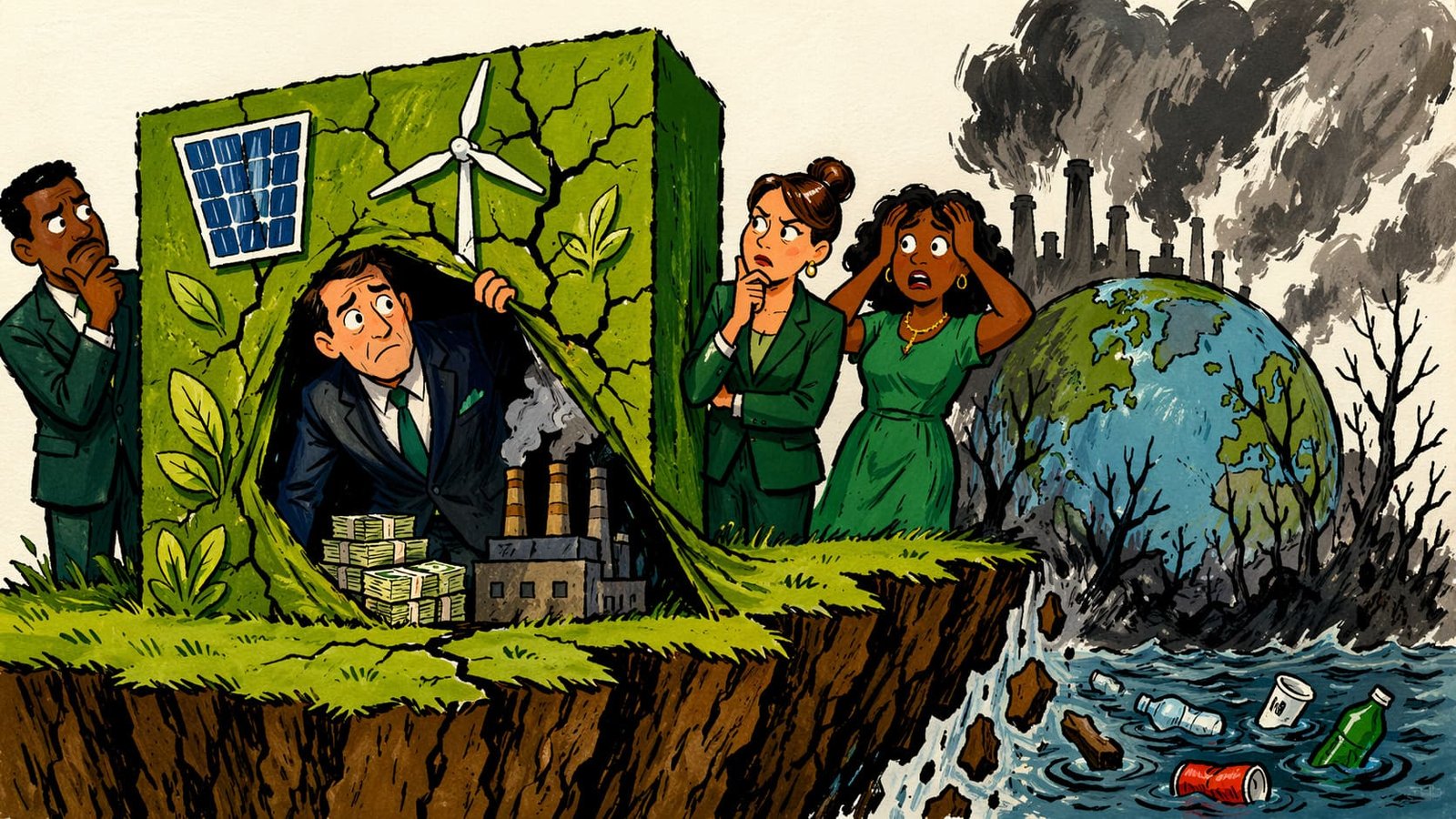
Smoke curled above a factory skyline while glossy sustainability reports rested untouched inside polished reception areas. Visitors admired recycled furniture, carefully chosen slogans, and walls painted reassuring shades of green. Outside the gates, suppliers wrestled with rising costs, changing regulations, and customers demanding proof instead of promises. A quiet reckoning had begun. Businesses were discovering that environmental responsibility was no longer a marketing accessory. It had become a test of strategic credibility, exposing companies that confused polished storytelling with meaningful operational change.
For years, many executives treated sustainability as a public relations exercise rather than a business discipline. That approach is becoming increasingly expensive. Consumers, investors, and regulators now expect transparency throughout supply chains instead of carefully edited narratives. Patagonia built enduring trust because environmental commitments consistently shaped business decisions rather than advertising campaigns. Interface transformed its manufacturing philosophy by redesigning products, reducing waste, and treating sustainability as innovation instead of compliance. Authentic action quietly became a competitive advantage that rivals struggled to imitate convincingly.
A weathered vineyard offers an unexpected lesson about corporate strategy. Farmers understand that exhausting fertile soil may increase one harvest while quietly destroying future seasons. Businesses face a remarkably similar choice. Rafael operated a furniture company dependent on inexpensive timber from unreliable suppliers. Short-term profits looked impressive until shortages disrupted production. He shifted toward certified sourcing, redesigned products to minimize material waste, and strengthened supplier partnerships. Margins recovered gradually, yet resilience replaced constant uncertainty, proving disciplined stewardship often protects profitability rather than weakening it.
Markets rarely reward symbolism forever. Companies increasingly compete on measurable impact, operational efficiency, and long-term resilience instead of attractive environmental slogans alone. Unilever demonstrated that sustainability initiatives could align with commercial performance by embedding responsible practices across product development and supply chains. Meanwhile, Clara led a regional packaging manufacturer through difficult operational changes that reduced waste while improving manufacturing efficiency. Employees initially resisted unfamiliar routines. Customers later rewarded those improvements because responsible practices enhanced reliability alongside environmental credibility.
Curiously, experienced hikers leave campsites cleaner than they found them, not because rules demand perfection but because respect preserves future journeys. Organizations thrive through the same philosophy. Malik dismissed sustainable manufacturing as an unnecessary expense while chasing immediate quarterly gains. Across the industry, Mei invested patiently in circular production methods and transparent reporting long before competitors recognized shifting customer expectations. Her reputation expanded beyond product quality. Buyers increasingly viewed her company as a dependable long-term partner capable of navigating uncertain markets with uncommon discipline.
Clouds gathered above distant wind turbines while another entrepreneur studied tomorrow’s strategy with fewer comforting assumptions than yesterday. Sustainability had quietly evolved from moral conversation into commercial necessity, reshaping competition without dramatic announcements or theatrical declarations. Businesses that adapt will discover fresh opportunities hidden inside responsible innovation. Those clinging to appearances alone may find markets delivering harsher verdicts than regulators ever could. Enduring companies protect both tomorrow’s resources and tomorrow’s relevance because survival always belongs to builders who think beyond the next quarter.
