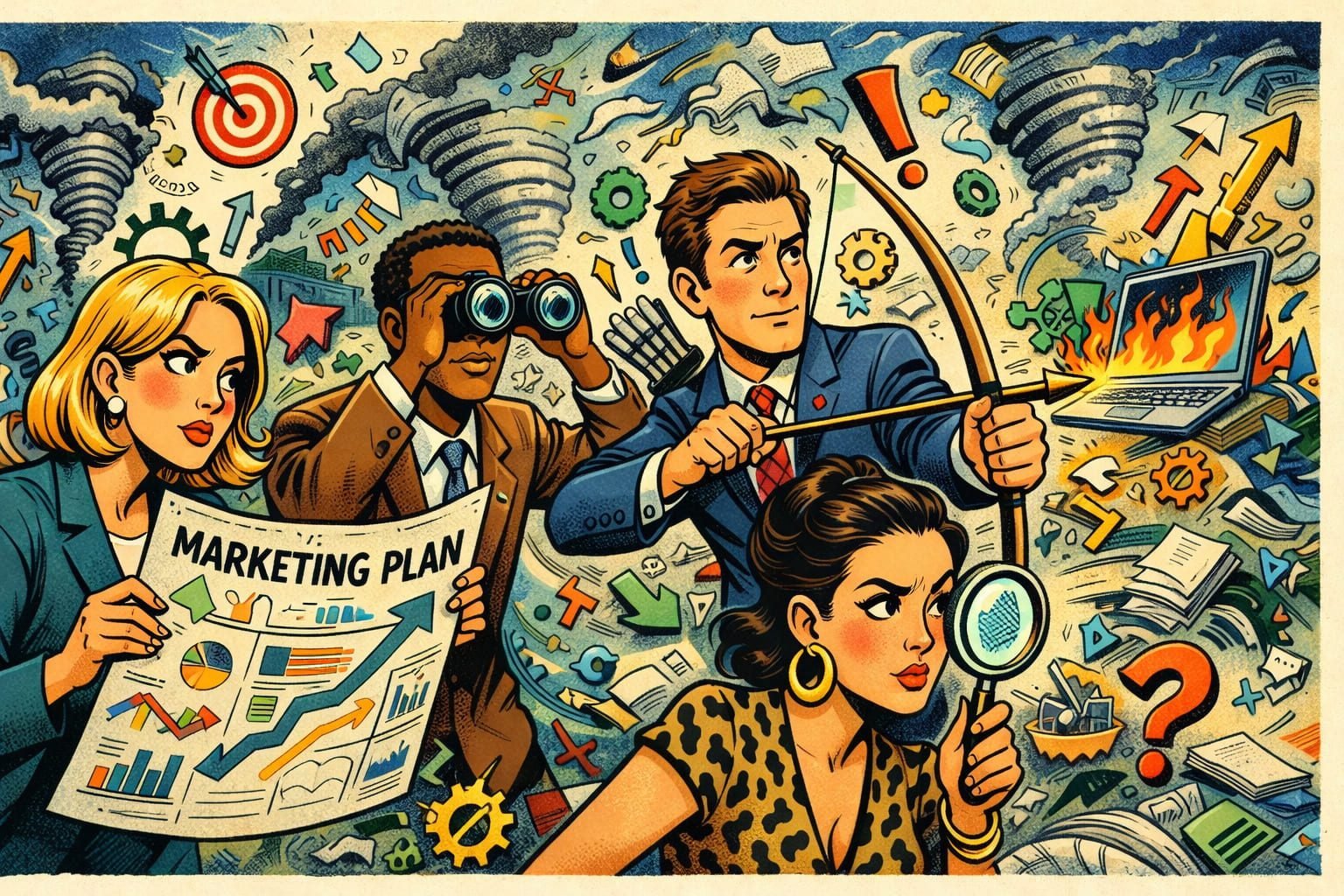
Maps covered a weathered conference table while competing arrows pointed toward impossible destinations, each promising certainty despite storms gathering just outside the window. That uneasy picture resembles modern marketing more than polished boardroom presentations ever admit. Markets rarely collapse because businesses stop working hard. They unravel because activity quietly replaces direction until motion feels productive even when progress has disappeared.
Organizations often confuse marketing plans with static documents that gather dust after annual meetings. Effective strategy behaves more like navigation than prediction. It adapts without abandoning purpose. Southwest Airlines built decades of competitive strength by protecting a clear operating philosophy instead of chasing every fashionable opportunity. IKEA made similar choices, resisting the temptation to become everything for everyone. Discipline looked boring from a distance, yet consistency quietly became their greatest competitive advantage.
Nadia managed a growing specialty tea company that celebrated every new marketing trend with infectious enthusiasm. One month focused on influencer partnerships. Another revolved around short-form videos. Then came podcasts, newsletters, contests, and discount campaigns, all competing for limited attention and limited resources. Results barely moved. A mentor challenged her to write one sentence describing the company’s promise before launching another campaign. That uncomfortable exercise changed every decision that followed because clarity finally replaced constant reaction.
History offers similar reminders. Netflix shifted from DVD rentals to streaming because leadership recognized changing customer behavior without abandoning the broader mission of delivering convenient entertainment. Kodak understood photography but hesitated when its own innovations threatened existing profits. Strategy is rarely about collecting more ideas. It is about deciding which attractive opportunities deserve rejection. Michael Porter captured this elegantly by arguing that strategy means choosing what not to do, a lesson still ignored surprisingly often.
Behavioral patterns reinforce the same conclusion. Customers rarely experience businesses through organizational charts or marketing calendars. They notice consistency, reliability, and recognizable purpose across countless interactions. A regional home improvement retailer stopped launching disconnected promotions and instead organized every campaign around helping first-time homeowners gain confidence. Sales improved steadily because every message reinforced the previous one. Repetition stopped feeling repetitive. It became reassuring, creating familiarity that competitors struggled to replicate.
Dust settles differently after a carefully planned expedition than after a frantic escape. Businesses leave similar footprints. Companies driven by reaction spend years chasing markets already moving elsewhere, while disciplined organizations quietly shape expectations before competitors realize change has begun. Marketing plans matter because they protect judgment when excitement clouds perspective and panic demands shortcuts. Before approving another campaign, ask whether every decision strengthens a single destination or merely creates fresh paths toward nowhere.
