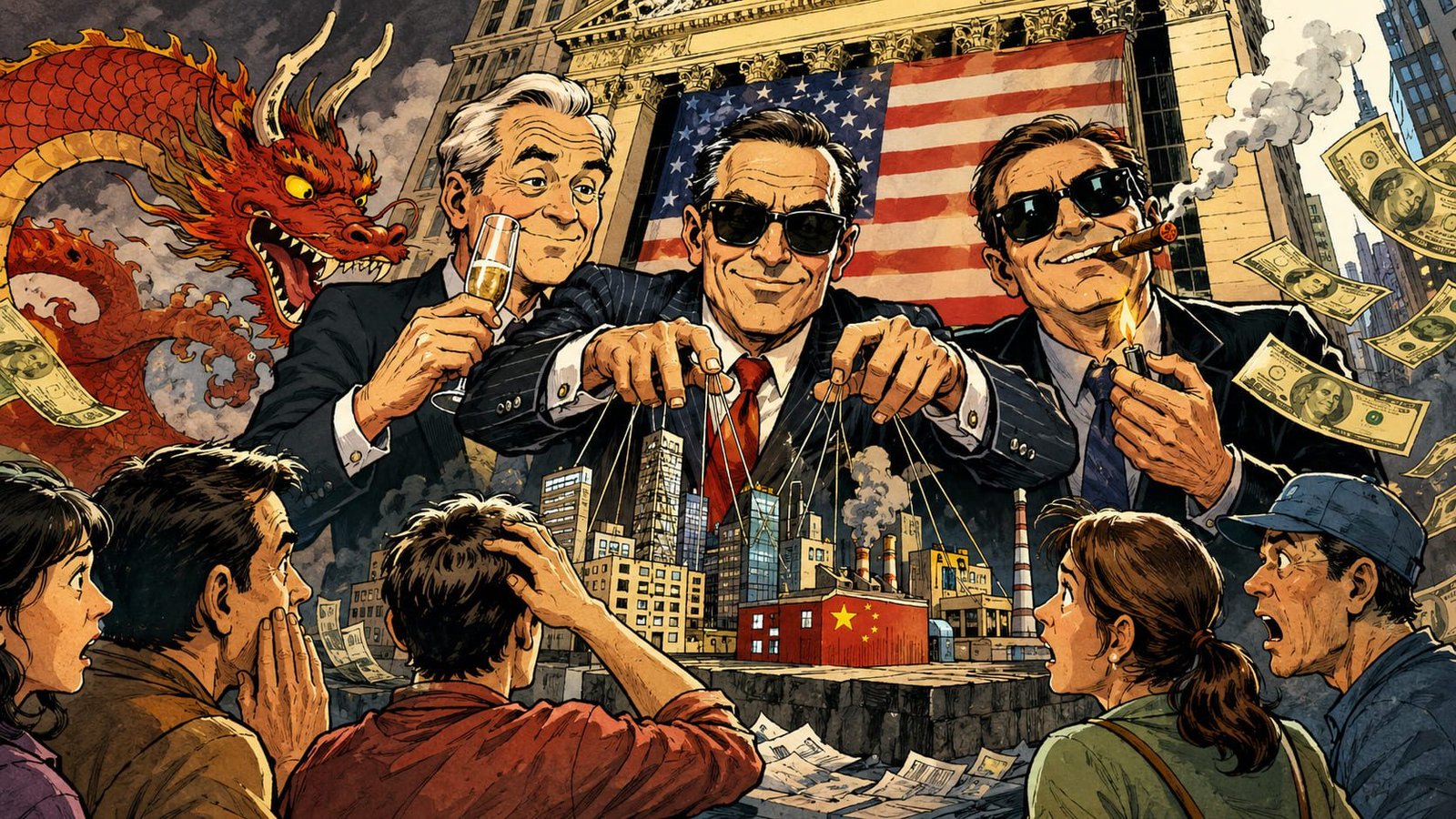
The trading floor glowed like a cathedral devoted to greed. Screens flashed green numbers across exhausted faces while expensive suits moved through the room with the choreography of gamblers pretending mathematics had purified their addictions. Somewhere between investor optimism and corporate spectacle, billions of dollars quietly drifted into illusions nobody truly wanted to inspect too closely. The China Hustle unfolds less like a documentary and more like a forensic examination of modern capitalism’s moral nervous system. Jed Rothstein does not simply expose financial fraud. He reveals a deeper cultural pathology where institutions become so addicted to growth narratives that skepticism itself starts feeling socially inappropriate. The film stares directly into the machinery of global finance and discovers something unsettling: the system often rewards confidence faster than truth.
What makes the documentary so unnerving is its emotional familiarity. The frauds exposed throughout the film did not succeed because investors lacked intelligence. They succeeded because modern financial culture incentivizes selective blindness. Hedge funds, investment banks, analysts, media networks, and regulators all depended on maintaining momentum. Once enough people profit from optimism, doubt becomes economically inconvenient. A portfolio manager named Victor Hale once described attending a private investor dinner in Hong Kong where executives toasted a rapidly expanding education company despite internal whispers that enrollment figures looked suspicious. Nobody pressed harder because the stock kept rising and everyone feared appearing negative in a euphoric room. The China Hustle captures that psychological contagion brilliantly. Financial bubbles often behave less like economic phenomena and more like emotional cults.
The documentary’s central revelations about fraudulent Chinese reverse-merger companies expose structural weaknesses far beyond one country or market. The deeper issue involves incentive architecture itself. Entire industries become vulnerable once short-term gains outweigh long-term accountability. A consulting executive named Marissa Venn once admitted during a compliance seminar that many firms quietly treated regulatory penalties as operational expenses rather than ethical warnings. The room reportedly laughed with uncomfortable recognition. That atmosphere saturates The China Hustle. Corruption rarely survives through secrecy alone. More often it survives because too many participants benefit emotionally, politically, or financially from avoiding scrutiny.
There is something almost theatrical about the way corporate fraud operates throughout the film. Fake factories. Inflated revenue numbers. Carefully orchestrated investor tours. Executives delivering polished presentations inside gleaming conference rooms while reality quietly decays behind the curtains. Modern capitalism increasingly rewards narrative engineering alongside actual value creation. Founders learn storytelling before governance. Branding often outruns substance. Elizabeth Holmes became the most famous example through Theranos, though the emotional pattern extends much wider. A logistics startup founder named Elias Moreau once convinced investors his company possessed revolutionary warehouse automation technology. Internal engineers later revealed many demonstrations relied heavily on manual human labor hidden behind temporary walls during presentations. The company still secured additional funding because investors feared missing the next big thing more than they feared deception itself.
The documentary also functions as a devastating portrait of institutional cowardice. Analysts who uncovered fraud faced intimidation. Whistleblowers risked careers. Regulators moved slowly while markets rewarded aggression. Human beings inside powerful systems often recognize problems long before public collapse occurs. Yet speaking openly threatens belonging, reputation, and financial security. A compliance officer named Renata Doyle once resigned from a multinational investment firm after repeatedly raising concerns about questionable overseas partnerships. Colleagues privately agreed with her analysis while publicly remaining silent. “Everyone wanted someone else to say it first,” she later explained during an industry panel discussion. That sentence echoes throughout The China Hustle like a moral indictment of modern professional culture.
Jed Rothstein wisely avoids reducing the story into simplistic nationalism. The documentary never argues that corruption belongs uniquely to China. The real target is global financial opportunism itself. American institutions eagerly enabled questionable practices because enormous profits floated nearby. Greed globalizes faster than ethics. That truth gives the film unusual intellectual weight. Economic systems increasingly operate through interconnected incentives where accountability disperses until nobody feels fully responsible anymore. Investment banks blame auditors. Auditors blame executives. Executives blame market pressure. Eventually moral responsibility evaporates into procedural fog. The China Hustle exposes how easily sophisticated systems become emotionally detached from the human consequences of financial manipulation.
The pacing remains gripping because the documentary understands suspense fundamentally as a crisis of trust. Viewers start questioning every polished corporate presentation they have ever seen. Earnings calls begin sounding like scripted theater. Investor confidence starts resembling collective hypnosis. One scene involving investigators physically visiting suspicious company locations lands with startling force because reality itself becomes evidence against institutional storytelling. A private equity associate named Dominic Krauss once traveled to inspect a manufacturing partner promoted heavily in acquisition materials. The site turned out to be nearly abandoned except for a handful of workers and flickering fluorescent lights. Executives later described the discrepancy as “temporary operational misalignment.” Modern business language possesses endless euphemisms for dishonesty.
By the final moments, The China Hustle reveals itself as something larger than a documentary about financial scams. It becomes a portrait of a civilization increasingly unable to distinguish between valuation and value. Markets reward persuasion with astonishing speed while punishing caution as weakness. Entire careers rise through confidence theater before collapsing under forensic scrutiny years later. Somewhere between glowing stock tickers and empty corporate facilities sits a devastating realization: systems designed around infinite growth eventually create emotional conditions where truth itself becomes negotiable. The documentary leaves behind the metallic taste of expensive deception, like standing inside a luxury boardroom after midnight while discarded investor brochures slide quietly across polished floors. And beneath every balance sheet, quarterly report, and motivational keynote, one dangerous question keeps waiting in silence: when profit becomes the highest language a society speaks, what truths eventually become too expensive to tell?
Editorial Disclaimer: Whether a film is rooted in fiction or inspired by real events, the actions, decisions, and behaviors portrayed within are not intended to be encouraged, replicated, or endorsed in real-world settings. This review exists solely to analyze the storytelling, characters, themes, and business dynamics presented in the film for educational, analytical, and entertainment purposes. Any ethical or unethical conduct depicted in the film does not reflect the views, values, or endorsements of ESYRITE.
