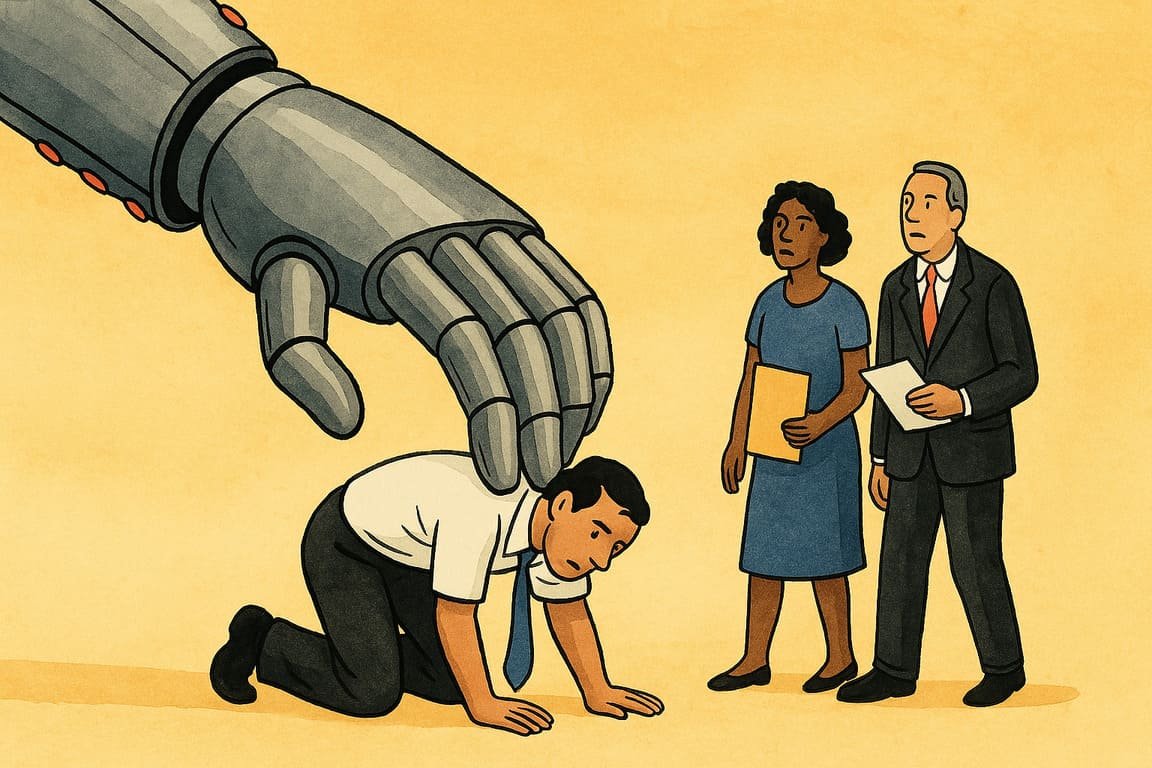
Dust floated through a vast railway station where departure boards changed faster than anxious travelers could read them. One platform emptied while another filled without warning, and the crowd slowly realized the destination had shifted before anyone announced it. Modern work now feels strikingly similar. Artificial intelligence is not simply introducing new tools, it is quietly redrawing the map of human value, leaving yesterday’s assumptions waiting on the wrong platform.
Every technological revolution changes jobs before it changes employment. Steam power rewarded factory organization, computers elevated information work, and artificial intelligence now amplifies judgment, creativity, adaptability, and emotional intelligence. Microsoft has integrated AI into workplace software because routine tasks consume time better spent solving meaningful problems. Naomi, a project coordinator buried beneath endless meeting notes, watched automated summaries reclaim hours each week, giving her space to mentor colleagues and resolve conflicts that no algorithm could untangle.
Many headlines predict a contest between humans and intelligent machines, yet history points toward a different outcome. Technology consistently removes repetitive work while increasing demand for capabilities requiring trust, curiosity, negotiation, and imagination. Manufacturing transformed through industrial robots, but successful factories still depend upon engineers, technicians, designers, and leaders capable of improving complex systems. Javier managed a production team where automation reduced manual inspection, allowing experienced employees to focus on quality improvement instead of repetitive checking.
Work has never been defined solely by tasks. Careers grow through relationships, context, ethical judgment, and the ability to navigate uncertainty when rules become unclear. Economist David Autor has long argued that technology often complements human expertise rather than replacing it outright, especially when work involves solving unpredictable problems. Healthcare illustrates this balance clearly because diagnostic software may detect patterns with astonishing speed, yet patients still seek reassurance, compassion, and confidence from another human being.
Organizations preparing for the future increasingly invest in learning instead of simply purchasing software. Skills such as communication, critical thinking, systems analysis, leadership, and adaptability become more valuable as automation expands across industries. LinkedIn’s workplace research consistently highlights that durable human skills remain central to long-term career resilience despite rapid technological progress. Businesses thriving through digital transformation recognize that successful technology strategies always include people, culture, and continuous development rather than software licenses alone.
Stars emerged above an open landscape where familiar trails faded into unfamiliar ground, inviting every traveler to choose direction instead of comfort. Work is changing because civilization keeps inventing better tools, yet purpose has never belonged to machinery. Intelligent systems may reshape professions with breathtaking speed, but character, wisdom, and courage still determine who leads meaningful change. Every career ultimately becomes a story about the human choices made after technology opens the next door.
