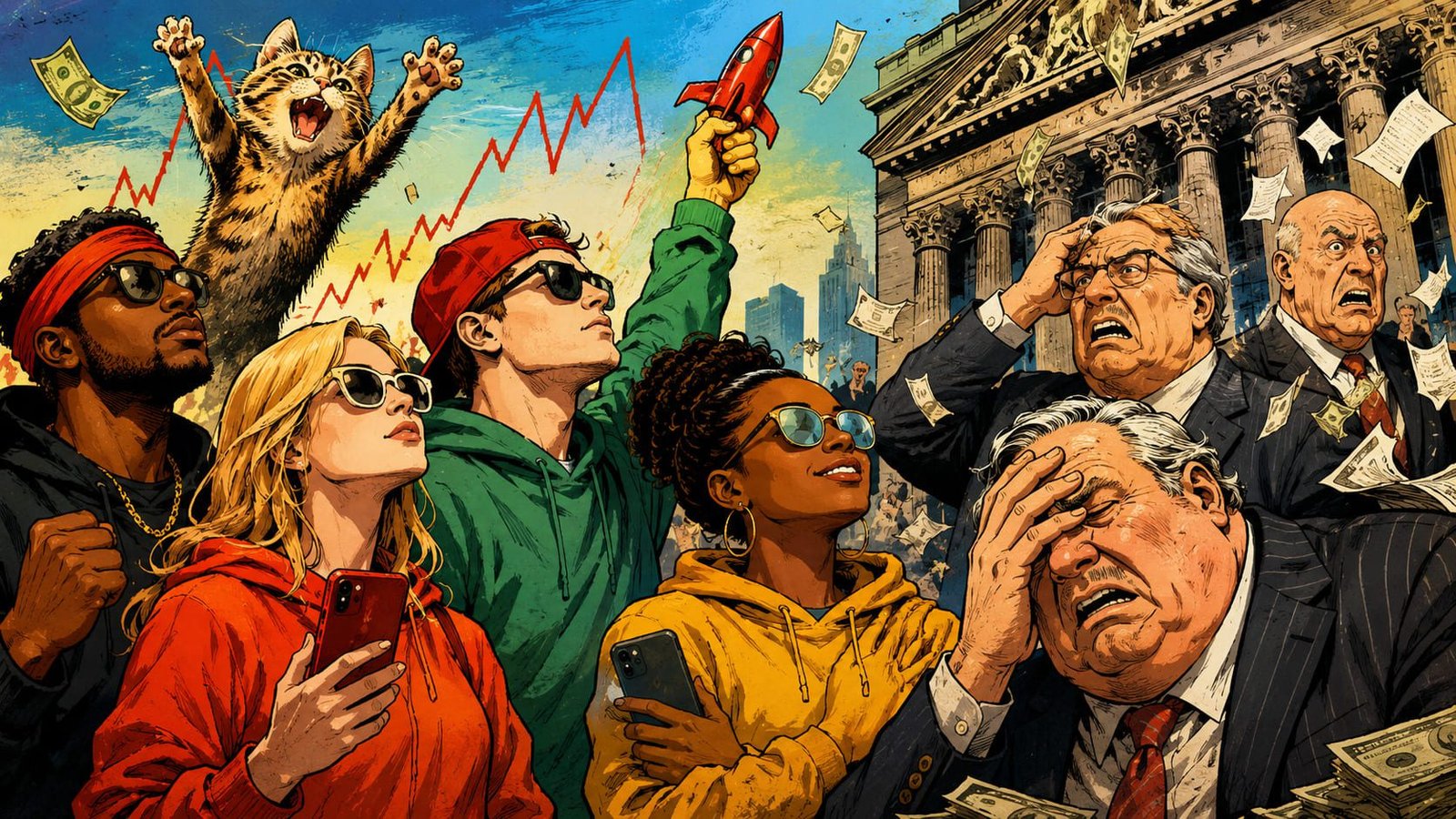
Computer screens glowed across cramped bedrooms in Eat the Rich: The GameStop Saga while exhausted retail workers, students, coders, bartenders, and restless night owls refreshed stock charts with the intensity of gamblers watching roulette wheels spin against destiny itself. Empty pizza boxes stacked beside keyboards. Discord notifications exploded like digital fireworks. Somewhere between internet memes, rocket emojis, and collapsing hedge fund confidence, modern finance accidentally revealed its deepest insecurity: ordinary people were no longer willing to remain spectators in a game rigged behind polished conference room doors.
The brilliance of the documentary lies in how it captures financial markets not as rational systems, but as emotional theatres disguised by spreadsheets and expensive suits. Wall Street has long marketed itself as the kingdom of intelligence. Precision. Sophistication. Yet the GameStop saga exposed something almost embarrassingly human beneath the algorithms and Bloomberg terminals. Fear. Ego. Tribal loyalty. Revenge fantasies. Collective hysteria. Suddenly, billionaire fund managers looked less like omniscient architects and more like nervous aristocrats realizing the crowd outside the palace gates had discovered where the keys were hidden.
Keith Gill, widely known online as Roaring Kitty, emerges as one of the most fascinating cultural figures in recent economic history. Not because he behaved like a revolutionary mastermind, but because he looked so ordinary. Headbands. Casual language. Basement-office energy. He resembled thousands of financially curious internet users rather than a polished financial titan. That image mattered enormously. Modern culture trusts authenticity faster than authority now. Institutions still rely on credentials and hierarchy while digital communities increasingly rally around relatability and conviction. The documentary understands this instinctively. The meme became more powerful than the press release.
A junior analyst in Lagos once admitted after the GameStop frenzy that watching hedge funds panic felt “like seeing school principals lose control of the hallway for the first time.” That observation captures the emotional electricity perfectly. The saga was never only about stock prices. It became symbolic rebellion against financial elitism. Millions of ordinary people carried quiet resentment toward systems that privatized profits during good years and socialized pain during crises. Then suddenly, an online swarm weaponized collective attention against institutional overconfidence. The internet transformed boredom into market pressure.
The documentary smartly avoids romanticizing everyone involved. Some retail traders genuinely believed they were challenging structural inequality. Others chased adrenaline and viral excitement. Many simply wanted quick profits. That contradiction gives the series credibility. Revolutions rarely emerge from pure motives. They emerge from overlapping frustrations. Occupy Wall Street understood this. So did cryptocurrency movements. So do populist political waves globally. Shared anger often matters more than ideological coherence in the early stages of collective action.
There is an extraordinary irony running beneath the entire story. Hedge funds themselves frequently profit through aggressive speculative behavior. Risk-taking becomes celebrated when conducted inside Manhattan skyscrapers by people wearing tailored suits. Yet when internet communities coordinate emotionally charged investment strategies through Reddit threads and memes, suddenly financial morality becomes urgent public concern. Eat the Rich exposes this hypocrisy elegantly. The rules of capitalism often shift depending on who is winning. Markets celebrate freedom until outsiders begin using that freedom effectively.
One freelance designer named Mateo, living in São Paulo, invested modestly during the frenzy after months of pandemic isolation and economic uncertainty. He described the experience less like trading and more like joining a digital uprising. Strangers encouraged one another through memes, screenshots, jokes, and emotional declarations of solidarity. “Nobody cared if someone had ten dollars or ten thousand,” he recalled during a podcast interview later. “For a moment it felt like people were finally laughing at the same gods together.” That emotional belonging explains far more about the phenomenon than finance textbooks ever could.
Visually, the documentary captures internet culture with chaotic intimacy. Screens flicker endlessly. Comment threads move faster than traditional journalism can process. Online avatars become political actors. Memes carry ideological force. The atmosphere feels like Fight Club rewritten by Reddit moderators and cryptocurrency traders running on caffeine and existential exhaustion. Financial language collides with internet absurdity until the distinction between satire and reality dissolves completely. One moment viewers laugh at crude jokes. The next, billions evaporate from institutional portfolios. Modern culture increasingly operates through that strange collision between entertainment and systemic consequence.
The deeper philosophical question haunting the documentary concerns legitimacy itself. Who deserves influence over economic systems shaping billions of lives? Traditional finance insists expertise matters. Internet populism insists access matters more. Both positions contain uncomfortable truths. Expertise without accountability breeds arrogance. Collective energy without discipline breeds chaos. The GameStop saga became unforgettable because it forced both realities into direct confrontation under global visibility. Wall Street could no longer pretend ordinary people lacked power. Internet crowds could no longer pretend volatility carried no casualties.
Near the end, glowing monitors illuminate exhausted faces long after midnight while television anchors scramble to explain a financial rebellion born partly from memes and partly from accumulated cultural resentment. Billion-dollar institutions wobble beneath pressure from usernames, inside jokes, and decentralized conviction. Somewhere inside that surreal collision, the documentary reveals a defining truth about modern society: technology has redistributed attention faster than wisdom. Power now moves through networks unpredictably, sometimes intelligently, sometimes recklessly, always emotionally. The old gatekeepers still possess enormous influence, yet the gates themselves no longer close properly. And once ordinary people glimpse the machinery behind the curtain, they rarely return quietly to the audience.
Editorial Disclaimer: Whether a TV Show is rooted in fiction or inspired by real events, the actions, decisions, and behaviors portrayed within are not intended to be encouraged, replicated, or endorsed in real-world settings. This review exists solely to analyze the storytelling, characters, themes, and business dynamics presented in the TV Show for educational, analytical, and entertainment purposes. Any ethical or unethical conduct depicted in the TV Show does not reflect the views, values, or endorsements of ESYRITE.
