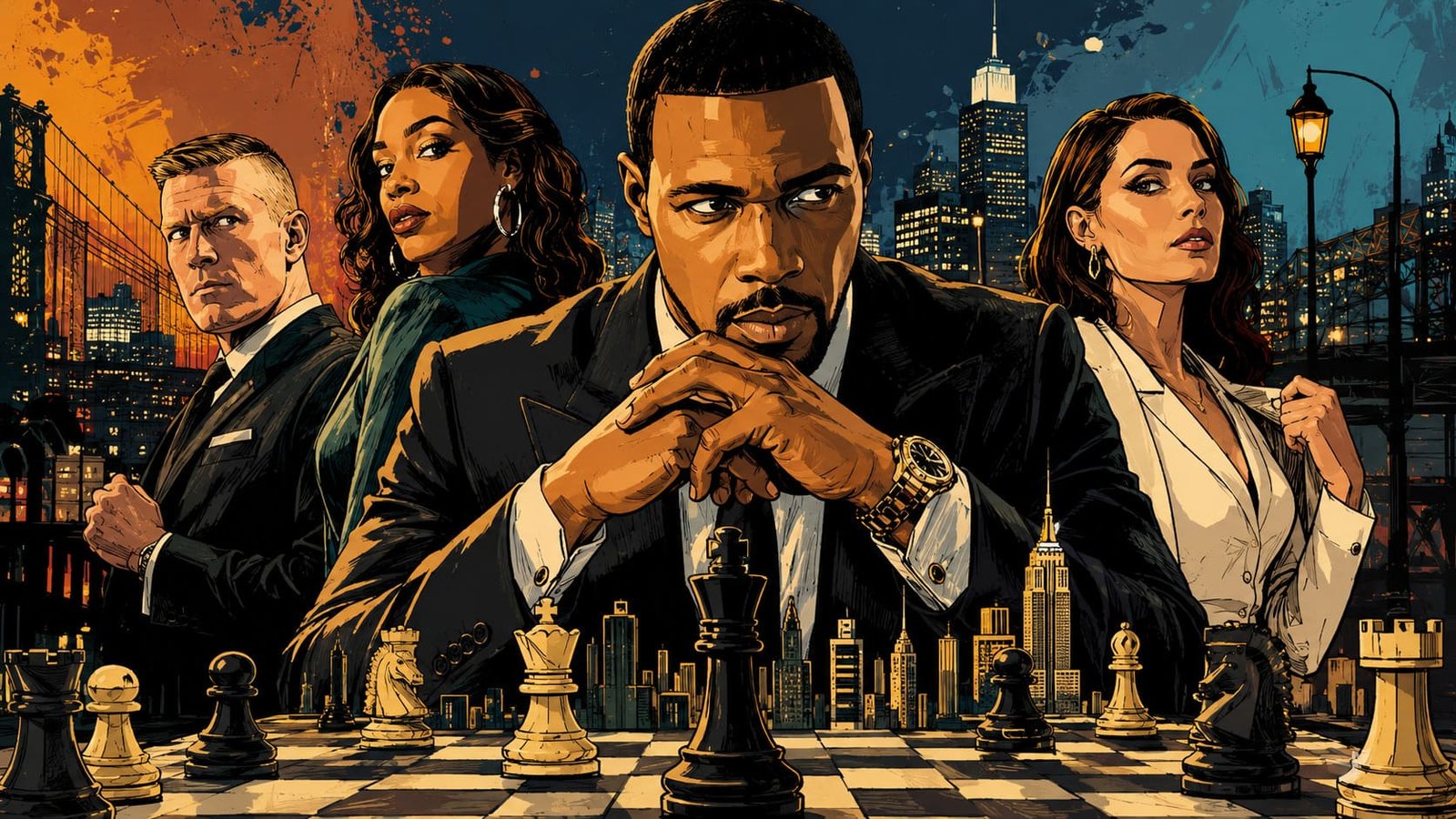
The city in Power never truly sleeps. It stalks. Glass towers glow like giant casino machines rigged by invisible gods while expensive whiskey slides across rooftop bars where ambition smells faintly of cedarwood, cigar smoke, and panic. Somewhere beneath the polished seduction of Manhattan nightlife, James “Ghost” St. Patrick moves through rooms with the terrifying elegance of a man trying to outrun his own reflection. He owns clubs filled with music loud enough to erase guilt for an evening. Yet every handshake carries the tension of a loaded weapon hidden beneath velvet. This series does not merely tell a crime story. It performs an autopsy on the modern obsession with reinvention. The dream is seductive: escape the past, become legitimate, build an empire. The nightmare arrives quietly afterward. The past still knows your address.
Omari Hardwick gives Ghost the emotional density of a Shakespearean executive trapped inside a hip-hop fever dream. One moment he speaks like a disciplined entrepreneur pitching investors. The next, rage flashes across his face with the exhausted honesty of someone who understands the cost of pretending too long. That duality powers the entire series. America loves redemption stories until redemption threatens existing power structures. Ghost wants legitimacy, but legitimacy itself behaves like an exclusive country club. Entry requires more than money. It demands ritual humiliation, social camouflage, and strategic forgetting. The cruel joke is obvious: the same ruthlessness that helped him dominate the streets becomes poison inside elite society. Different buildings. Same predator logic.
There is an extraordinary scene involving business expansion that feels more revealing than any gunfight. Ghost discusses nightclub ownership with polished confidence while hidden criminal pressures tighten around him like piano wire. It mirrors countless real executives who project certainty during quarterly meetings while privately drowning in operational chaos. A venture capitalist in Lagos once confessed after a failed fintech launch that leadership often feels like “hosting a luxury dinner party while the kitchen burns behind you.” Power understands this instinctively. Every character performs stability while quietly negotiating collapse. The audience keeps watching because the tension feels disturbingly familiar.
Tommy Egan deserves recognition as one of television’s sharpest embodiments of emotional loyalty colliding with strategic reality. Joseph Sikora plays him like a live electrical current wearing leather jackets and unresolved childhood trauma. Tommy believes loyalty should be absolute. Ghost believes adaptation ensures survival. That conflict transforms the series into something larger than organized crime entertainment. It becomes a study of how institutions fracture under competing philosophies. One side worships brotherhood. The other worships evolution. History repeatedly shows the same pattern. Steve Jobs and John Sculley. Zuckerberg and Saverin. Ancient kingdoms. Startup culture. Political revolutions. Human systems rarely implode because enemies attack from outside. They collapse because loyalty and ambition eventually stop speaking the same language.
The women in Power refuse decorative existence. Tasha St. Patrick, portrayed by Naturi Naughton, carries the psychological intelligence of someone forced to master emotional weather patterns inside dangerous ecosystems. She understands survival as deeply as any strategist in the series. Her marriage to Ghost resembles a hostile corporate merger disguised as romance. Affection exists, certainly, but so does leverage, resentment, sacrifice, and image maintenance. Watching them interact often feels like observing two governments negotiating peace treaties while secretly preparing sanctions. That complexity elevates the show far above standard gangster mythology. It understands that relationships shaped by ambition eventually become political structures.
One media executive in Johannesburg once described his company culture with eerie resemblance to the world of Power. Employees competed with smiles sharp enough to cut glass. Promotions arrived through invisible alliances rather than competence alone. The office gym became networking territory. Birthday dinners doubled as intelligence gathering. By the time layoffs came, nobody felt shocked. They felt confirmed. That same atmosphere saturates Power. Characters monitor loyalty constantly because unstable environments transform trust into luxury. The series quietly exposes a brutal truth about contemporary culture: many people no longer seek peace. They seek positioning.
Curtis “50 Cent” Jackson’s Kanan Stark enters the story like a wildfire wrapped in human skin. His presence changes the emotional temperature instantly. Kanan represents what happens when systems create monsters then act surprised by their appetite. He is not chaos without reason. He is neglected consequence returning home with interest. Modern societies do this repeatedly. Broken neighborhoods. Exploitative labor systems. Abandoned institutions. Then comes public confusion when rage finally acquires strategy. Power refuses simplistic morality because reality itself rarely operates cleanly. Even the most dangerous characters carry recognizable wounds. Even the most respectable institutions hide blood beneath polished branding.
Toward the end, the series begins to feel less like a television drama and more like a long confession whispered inside a luxury penthouse after midnight. Champagne glasses shimmer beneath soft lighting while entire lives unravel beneath conversations about ownership, legacy, and freedom. Ghost keeps reaching toward legitimacy as though success itself might erase memory. Yet memory lingers like cologne trapped inside expensive fabric. That is the devastating brilliance of Power. It understands that ambition often begins as hunger and slowly mutates into exile. A man can build an empire large enough to impress strangers while becoming emotionally homeless inside it. The final truth lands with frightening clarity: the most dangerous prison is the version of yourself the world rewards too heavily to abandon.
Editorial Disclaimer: Whether a TV Show is rooted in fiction or inspired by real events, the actions, decisions, and behaviors portrayed within are not intended to be encouraged, replicated, or endorsed in real-world settings. This review exists solely to analyze the storytelling, characters, themes, and business dynamics presented in the TV Show for educational, analytical, and entertainment purposes. Any ethical or unethical conduct depicted in the TV Show does not reflect the views, values, or endorsements of ESYRITE.
