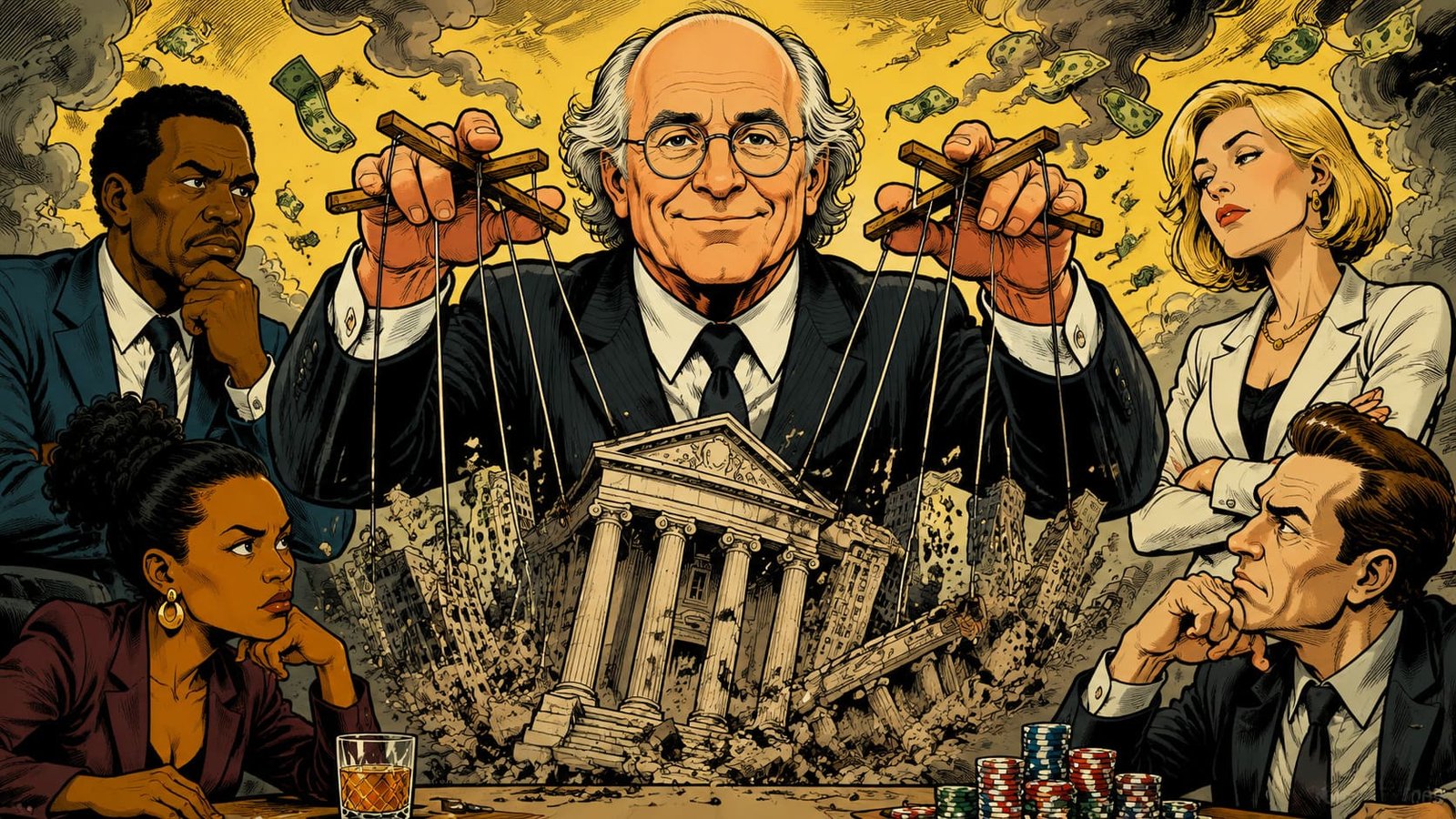
Manhattan looked strangely holy from a distance. Glass towers reflected gold across the Hudson while chauffeurs idled beside restaurants where powerful men discussed “vision” over rare wine and undercooked ambition. Inside those buildings, assistants moved with the speed of emergency surgeons. Phones vibrated endlessly. Elevators swallowed exhausted analysts by the dozen. Somewhere between the polished conference tables and the billion-dollar smiles, trust itself had become a tradable asset. That was the real currency. Not money. Belief.
The Wizard of Lies does not behave like a traditional financial drama. It feels closer to a psychological excavation of modern power and collective self-deception. Directed by Barry Levinson and anchored by a chilling performance from Robert De Niro as Bernard Madoff, the film studies one of the largest financial frauds in modern history without turning the scandal into cheap spectacle. That restraint matters. Real corruption rarely announces itself with villainous laughter. It arrives wearing calm confidence, tasteful suits, and impeccable manners.
Madoff’s greatest talent was not financial intelligence. It was emotional architecture. He understood that wealthy people desperately want certainty disguised as sophistication. Investors trusted him because he projected stillness inside volatile markets. He looked safe. Familiar. Elite. Entire rooms relaxed when he entered. That dynamic reaches far beyond finance. Modern society rewards people who perform competence convincingly enough for others to stop asking difficult questions. Institutions collapse when charisma replaces scrutiny. The terrifying part is how often intelligent people volunteer for the illusion.
A private equity consultant in Geneva named Sabine once described elite business networking as “a masquerade where everyone rents confidence from one another.” She recalled attending a luxury retreat where startup founders discussed disruption beside heated pools while junior staff quietly panicked about payroll. One celebrated investor gave a speech about visionary leadership, then screamed at a waiter moments later because sparkling water arrived without lemon. Nobody confronted him. The performance mattered more than the truth. Months afterward, his fund imploded under hidden debt. Sabine admitted the collapse surprised nobody privately, yet almost everyone publicly pretended shock. Systems built on image become allergic to honesty.
The Wizard of Lies slices directly into that cultural pathology. Madoff did not merely exploit greed. He exploited social aspiration. Wealthy clients wanted proximity to exclusivity as much as returns themselves. Being chosen by Madoff became a status symbol, like membership inside a secret aristocracy of intelligence. That detail feels especially relevant today. Social media transformed prestige into a public performance where perception often outranks substance. Followers become proof of authority. Branding replaces character. Entire industries now monetize curated trust while quietly avoiding transparency.
The film also examines family dynamics with uncomfortable precision. Michelle Pfeiffer’s portrayal of Ruth Madoff feels painfully human because it avoids simplistic condemnation. Michelle Pfeiffer plays her less like a caricature of denial and more like someone emotionally trapped inside a collapsing mythology. That distinction deepens the tragedy. Fraud rarely destroys only balance sheets. It corrodes identity itself. Children inherit shame. Marriages become crime scenes without visible blood. Dinner conversations transform into interrogations disguised as concern. One son in the film carries exhaustion across his face like a permanent bruise.
There is a particularly devastating insight buried beneath the financial mechanics. People often confuse access with wisdom. If someone appears connected to powerful circles, audiences assume legitimacy automatically. Madoff weaponized that instinct masterfully. He cultivated scarcity. He made clients feel lucky to participate. Luxury brands do this constantly. Tech founders do it. Political movements do it. Even modern influencer culture thrives on controlled exclusivity. Humans remain vulnerable to environments that make them feel specially selected. The film understands this with frightening clarity.
One former hedge fund employee from Toronto named Karim recalled the exact moment he stopped trusting his own industry. His firm celebrated a record quarter with champagne towers and imported oysters flown in overnight. Hours later, he overheard executives joking casually about pension holders who would never understand the risks attached to their investments. The laughter bothered him more than the deception itself. “They sounded bored,” he admitted during a late-night diner conversation years later. That emotional numbness echoes throughout The Wizard of Lies. Financial collapse becomes horrifying not because greed exists, but because repeated success slowly anesthetizes conscience.
The atmosphere grows heavier as the film moves forward. Offices feel colder. Hallways stretch longer. Madoff himself begins resembling a man trapped inside a luxury prison built from his own mythology. Even silence sounds expensive. Reporters gather outside buildings like wolves circling wounded royalty. Yet the movie refuses easy moral satisfaction. The deeper horror lies in recognizing how many people benefited emotionally from the illusion while it lasted. Fraud on this scale requires collective participation, active or passive. Entire ecosystems choose comfort over skepticism because truth threatens status, relationships, and identity simultaneously.
By the final moments, the city still glitters with wealth and appetite. Traders still rush through revolving doors carrying coffee and concealed panic. New visionaries still promise impossible certainty wrapped in elegant language. Somewhere in another conference room, another charming figure explains why this time the rules no longer apply. The Wizard of Lies leaves behind a truth sharp enough to unsettle anyone chasing influence: civilizations rarely collapse because deception exists. They collapse because too many people discover that believing the lie feels better than questioning the performance. And once that hunger takes hold, even the smartest rooms begin applauding their own destruction.
Editorial Disclaimer: Whether a film is rooted in fiction or inspired by real events, the actions, decisions, and behaviors portrayed within are not intended to be encouraged, replicated, or endorsed in real-world settings. This review exists solely to analyze the storytelling, characters, themes, and business dynamics presented in the film for educational, analytical, and entertainment purposes. Any ethical or unethical conduct depicted in the film does not reflect the views, values, or endorsements of ESYRITE.
