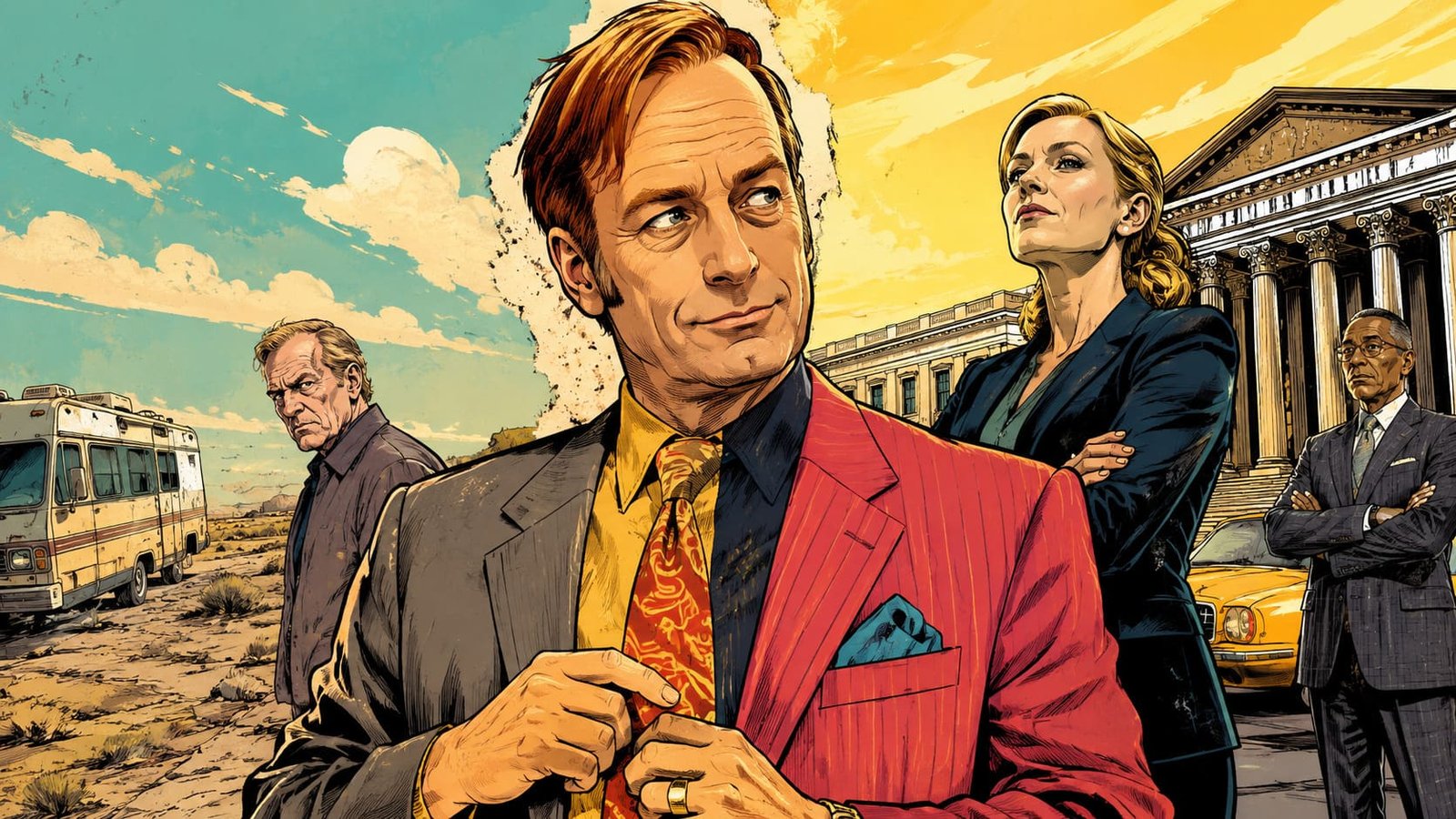
The strip mall parking lot shimmered beneath unforgiving desert heat while a tired lawyer adjusted a cheap tie inside a dented Suzuki Esteem that sounded permanently one breakdown away from surrender. Somewhere nearby, fluorescent lights buzzed inside nail salons and insurance offices where ordinary people carried invisible disappointments through painfully ordinary afternoons. Better Call Saul begins in these forgotten corners of American life, then slowly transforms into one of television’s most devastating studies of identity, compromise, and the quiet seduction of reinvention. The tragedy arrives so gradually it almost feels polite.
Jimmy McGill enters the story carrying restless intelligence trapped inside systems unwilling to trust him fully. Charming, resourceful, emotionally perceptive, he survives through improvisation because legitimacy always seems slightly out of reach. That emotional tension gives the series extraordinary depth. Jimmy does not wake up dreaming of corruption. He wants recognition. Respect. Belonging. Yet every institution around him reminds him of his past mistakes, pushing him toward shortcuts the same systems claim to condemn. The show understands a brutal organizational truth many workplaces quietly reproduce every day: people often become the identities institutions repeatedly assign to them.
The relationship between Jimmy and Chuck McGill operates like a psychological chess match wrapped inside family grief. Chuck believes rules preserve civilization. Jimmy believes rules are often manipulated by elites already benefiting from them. Neither man is completely wrong. That complexity elevates the series far beyond ordinary legal drama. Chuck’s intellectual arrogance masks insecurity and emotional rigidity. Jimmy’s warmth and creativity coexist beside manipulation and moral flexibility. Watching them collide feels painfully human because the conflict is not merely legal or professional. It is philosophical. The show asks whether talent without trust eventually mutates into resentment, and whether institutions mistake conformity for integrity more often than they admit.
A junior attorney named Sofia Mendel once spent years working inside a prestigious corporate law firm in Chicago where senior partners praised discipline while quietly rewarding ethically aggressive behavior behind closed doors. Sofia noticed something strange during negotiations. Associates who bent rules strategically received promotions faster than those who followed procedures rigidly. One colleague manipulated contract language to trap a smaller client in unfavorable terms, then received applause for “creative legal thinking.” Sofia later admitted the experience reshaped her understanding of professional ethics forever. Organizations often celebrate outcomes first and examine morality only after public consequences emerge. Better Call Saul captures this contradiction with frightening accuracy.
Kim Wexler becomes the emotional soul of the series because she understands discipline yet remains drawn toward rebellion’s dangerous electricity. Her relationship with Jimmy feels deeply authentic because it is built on emotional recognition rather than fantasy. Kim sees Jimmy’s brilliance clearly. Jimmy sees the exhaustion beneath Kim’s controlled exterior. Together they create a bond fueled by ambition, intimacy, and mutual self-deception. The scams they run begin playfully before evolving into something darker. That progression mirrors many real-world ethical collapses. People rarely cross catastrophic lines immediately. Small compromises become normalized rituals. Excitement disguises erosion.
The visual language of the series reinforces this emotional architecture beautifully. Empty parking garages. Flickering office lights. Cheap coffee cups beside expensive legal documents. Albuquerque itself feels spiritually exhausted, full of wide-open landscapes hiding claustrophobic emotional lives. The pacing frustrates viewers expecting constant spectacle because the show prioritizes psychological accumulation over dramatic shortcuts. Every silence matters. Every glance carries emotional history. Watching Jimmy slowly drift toward Saul Goodman resembles observing erosion carve through stone over years rather than seconds. The transformation hurts precisely because it feels preventable for so long.
A business consultant named Marcus Venter once advised a rapidly growing retail company where a charismatic sales director repeatedly bent compliance rules to secure major accounts. Leadership ignored warning signs because revenue numbers looked spectacular. Employees privately joked about his “creative ethics” while continuing to celebrate quarterly success publicly. Eventually regulators intervened. The company survived financially but the internal culture fractured permanently. Marcus later reflected that the damage began long before investigations arrived. It started the moment people decided charm justified compromise. That insight lives at the heart of Better Call Saul. Jimmy’s charisma becomes both survival tool and self-destruction mechanism.
Mike Ehrmantraut adds another haunting layer to the series. Calm, methodical, emotionally restrained, Mike operates according to his own code despite working inside violent criminal systems. He represents the seductive illusion that professionalism can sanitize morally compromised environments. Mike believes discipline separates him from chaos. Yet the show quietly demonstrates how competence alone cannot protect the soul indefinitely. His scenes carry the melancholy of a man who understands consequences deeply but keeps moving forward anyway because survival already narrowed his emotional options years earlier.
Late at night, neon signs still flicker above empty parking lots while another exhausted professional rehearses explanations for compromises that once seemed temporary. Somewhere, a lonely office printer hums beside documents capable of reshaping lives for better or worse. Cheap suits hang beside expensive regret. That is the lingering ache beneath Better Call Saul. The series reveals how easily human beings drift away from themselves while trying desperately to be seen, respected, and chosen by systems that often reward performance more than character. Jimmy McGill never disappears all at once. He fades gradually beneath the costume of Saul Goodman until even the audience starts wondering how much of the original man still survives underneath the noise. The terrifying part is how familiar that transformation quietly feels.
Editorial Disclaimer: Whether a TV Show is rooted in fiction or inspired by real events, the actions, decisions, and behaviors portrayed within are not intended to be encouraged, replicated, or endorsed in real-world settings. This review exists solely to analyze the storytelling, characters, themes, and business dynamics presented in the TV Show for educational, analytical, and entertainment purposes. Any ethical or unethical conduct depicted in the TV Show does not reflect the views, values, or endorsements of ESYRITE.
