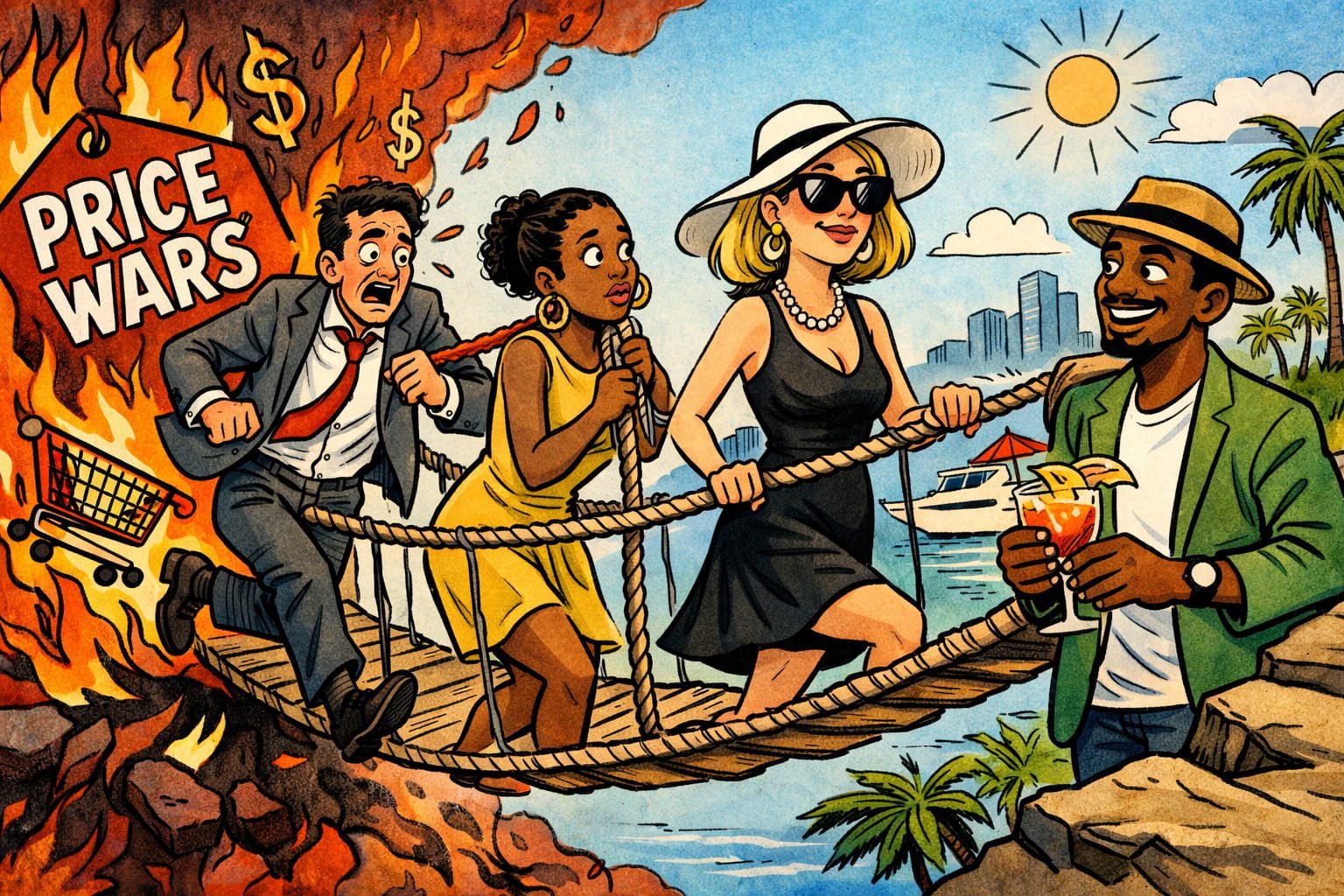
A countdown clock glowed crimson above a crowded electronics aisle while shoppers hovered with almost theatrical patience, waiting for another price cut. Every flashing discount felt like a tiny explosion, drawing applause that faded almost as quickly as receipts printed. Across the room, a quieter store barely changed its prices, yet customers wandered inside carrying calm expressions instead of hunting instincts. Strange, because excitement often disguises exhaustion before anyone notices the difference.
Price wars seduce leaders because cheaper numbers create visible movement. Movement feels comforting. Yet repeated discounts slowly teach customers that waiting is wiser than buying today, quietly shifting power from businesses to hesitation itself. Retail history has offered this lesson repeatedly, from airlines battling over seats to supermarkets trimming margins until victories resembled expensive defeats. Revenue may still arrive, but confidence quietly slips away, leaving brands trapped inside a contest that rewards survival instead of distinction.
Apple rarely competes through dramatic discounts, preferring product experience, ecosystem design, and emotional attachment that soften attention toward price comparisons. Costco follows another path, building loyalty around membership value rather than endless promotional fireworks. Mira, who managed a regional furniture company, once watched competitors slash prices every weekend until panic became routine conversation. She redesigned delivery, customer service, and product guarantees instead. Sales stabilized while rival stores continued racing toward thinner margins that nobody truly celebrated.
An odd lesson appears inside neighborhood bakeries. Customers often remember warm greetings more vividly than yesterday’s receipt. One family-owned café quietly raised prices after introducing handwritten thank-you notes, slower conversations, and fresher pastries displayed where aromas escaped toward pedestrians. Nearby competitors answered with coupons instead. Months later, familiar faces still lined up outside the café because belonging had become part of every purchase, proving emotional memory frequently defeats mathematical temptation.
Behavioral science explains this surprising pattern through perceived value rather than objective cost. People rarely evaluate offers inside perfect spreadsheets because emotion, habit, identity, and social proof quietly influence judgment long before calculators appear. Patagonia demonstrates this beautifully by encouraging repairs instead of unnecessary replacement, reinforcing trust rather than chasing transaction volume. That decision strengthens reputation while competitors struggle to recover profits sacrificed during relentless promotional campaigns that quietly weaken long-term customer expectations.
Crackling speakers finally fell silent inside that imaginary discount arena, leaving bright banners fluttering without applause because lower prices alone rarely create lasting affection. Another business across town kept serving familiar faces with confidence instead of desperation, quietly collecting relationships that competitors could never place inside shopping carts. Markets always reward value before vanity, although patience often disguises that reward until much later. Ask yourself whether customers remember your discount, or whether they remember why choosing your brand simply felt right.
