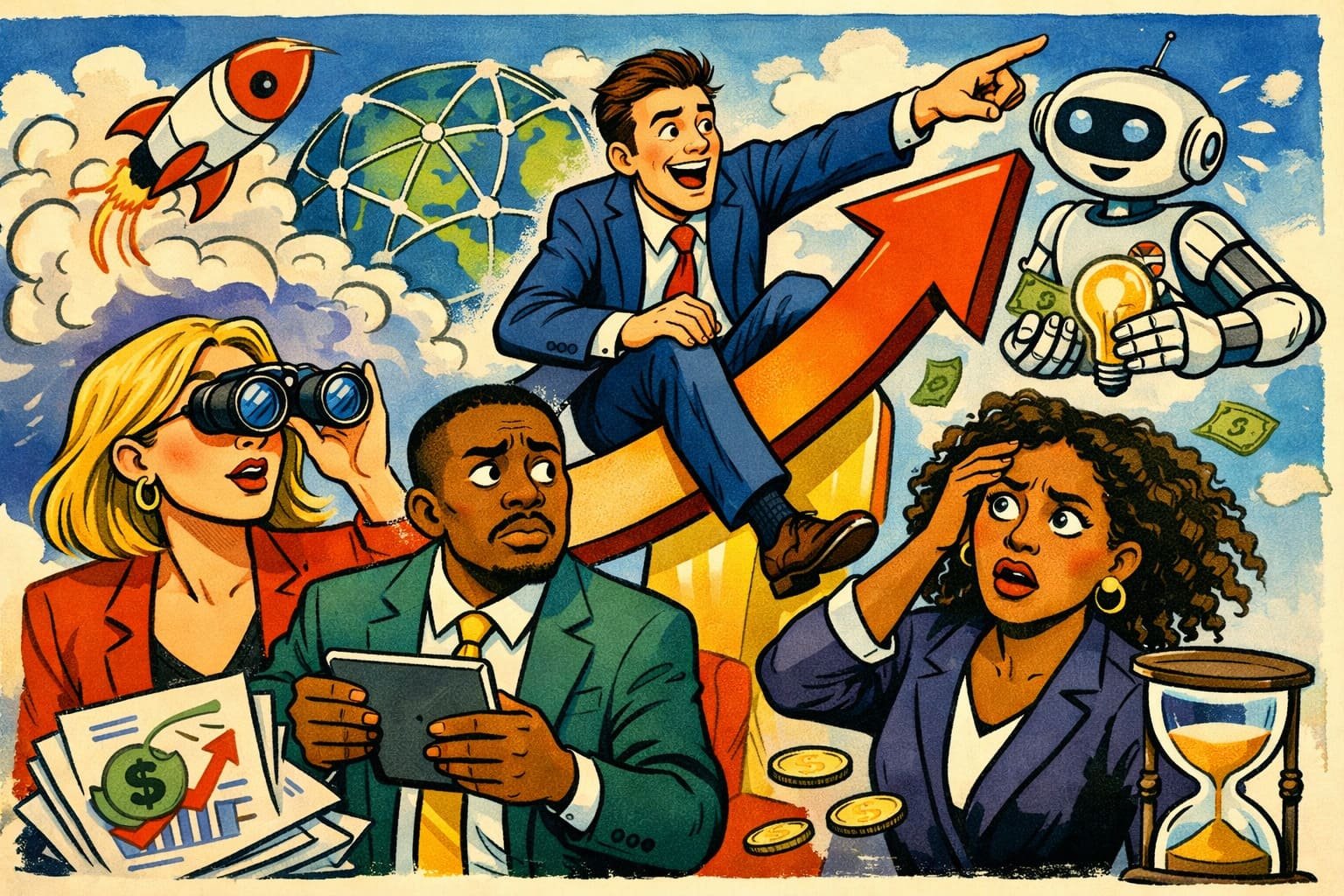
The conference room looked strangely ordinary until the screens began answering questions before anyone finished asking them. Executives glanced at one another with equal parts excitement and unease. A strategy session that once demanded weeks of preparation now unfolded in minutes. The room felt less like a corporate meeting and more like a scene from science fiction where the future had quietly arrived without asking permission. Consulting had entered a new chapter, and the old rules suddenly felt like dusty maps in an unfamiliar city.
For decades, consulting revolved around experience, analysis, and carefully crafted recommendations. Those foundations still matter, but they no longer guarantee relevance. Businesses now expect faster insights, continuous collaboration, and measurable outcomes instead of impressive presentations alone. Clients are buying confidence in execution rather than beautifully designed reports. The consultant who simply delivers information is becoming less valuable than the one who helps organizations adapt to constant change. Knowledge has become abundant. Judgment remains scarce.
A powerful trend is reshaping the profession from the inside. Artificial intelligence, automation, predictive analytics, and digital collaboration tools are handling routine analysis with astonishing speed. That reality has frightened many professionals. It should also inspire them. Technology removes repetitive work, allowing consultants to spend more time solving complex human problems that algorithms cannot easily understand. Trust, negotiation, leadership, and organizational culture remain stubbornly human. Those qualities are becoming even more valuable as software grows increasingly capable.
A transformation consultant named Sofia experienced this shift firsthand while advising a manufacturing company struggling with supply chain disruptions. Her team used advanced analytics to identify operational bottlenecks within hours. The software delivered remarkable insights. The breakthrough came elsewhere. Factory supervisors resisted every proposed change because previous restructuring efforts had damaged morale. Sofia stopped presenting charts and started listening. Honest conversations rebuilt confidence, and implementation accelerated almost immediately. Technology found the problem. Human leadership unlocked the solution.
The consulting industry itself reflects this evolution. Organizations such as Deloitte continue investing heavily in artificial intelligence, cloud transformation, cybersecurity, and digital strategy because clients increasingly demand integrated solutions rather than isolated recommendations. At the same time, experienced advisors consistently emphasize that successful transformation depends upon people embracing change, not merely purchasing sophisticated technology. Digital capability has become essential, but emotional intelligence continues to separate outstanding consultants from average ones.
Another emerging trend is quietly changing how expertise is delivered. Independent specialists, niche advisory firms, and global virtual teams now compete alongside traditional consulting giants. Clients assemble experts with remarkable precision instead of automatically hiring one large organization to solve every challenge. The consulting marketplace increasingly resembles a streaming platform rather than a television network. Flexibility has replaced scale as the defining advantage. Smaller firms with specialized knowledge often outperform larger competitors because they move faster and adapt more easily.
The next generation of consultants will also think differently about learning. Professional development no longer ends with certifications or university degrees. Markets evolve too quickly for static expertise. Curious consultants study behavioral psychology alongside finance, storytelling beside data science, and leadership together with emerging technologies. They connect disciplines that once existed in separate worlds. That ability to synthesize ideas creates original thinking that clients cannot easily replace with software or standardized frameworks. Adaptability becomes the profession’s most valuable currency.
Somewhere inside a quiet office, a consultant closes one laptop and opens another, not because yesterday’s tools failed, but because tomorrow has already rewritten the assignment. The future rarely announces itself with fireworks. It arrives disguised as an ordinary workday asking unfamiliar questions. Those willing to remain curious will discover opportunity where others see disruption. The next wave will not reward those who defend old methods. It will belong to those brave enough to reinvent themselves before the market demands it.
