Dust floated through a forgotten university lecture hall where chalk formulas still clung to a weathered blackboard. Outside, millions of people consumed content every minute, yet very little of it lingered beyond the next swipe. A faded equation seemed oddly connected to that restless stream. Ideas survive when they explain human behavior, not when they merely decorate headlines, because attention follows meaning long after novelty fades.
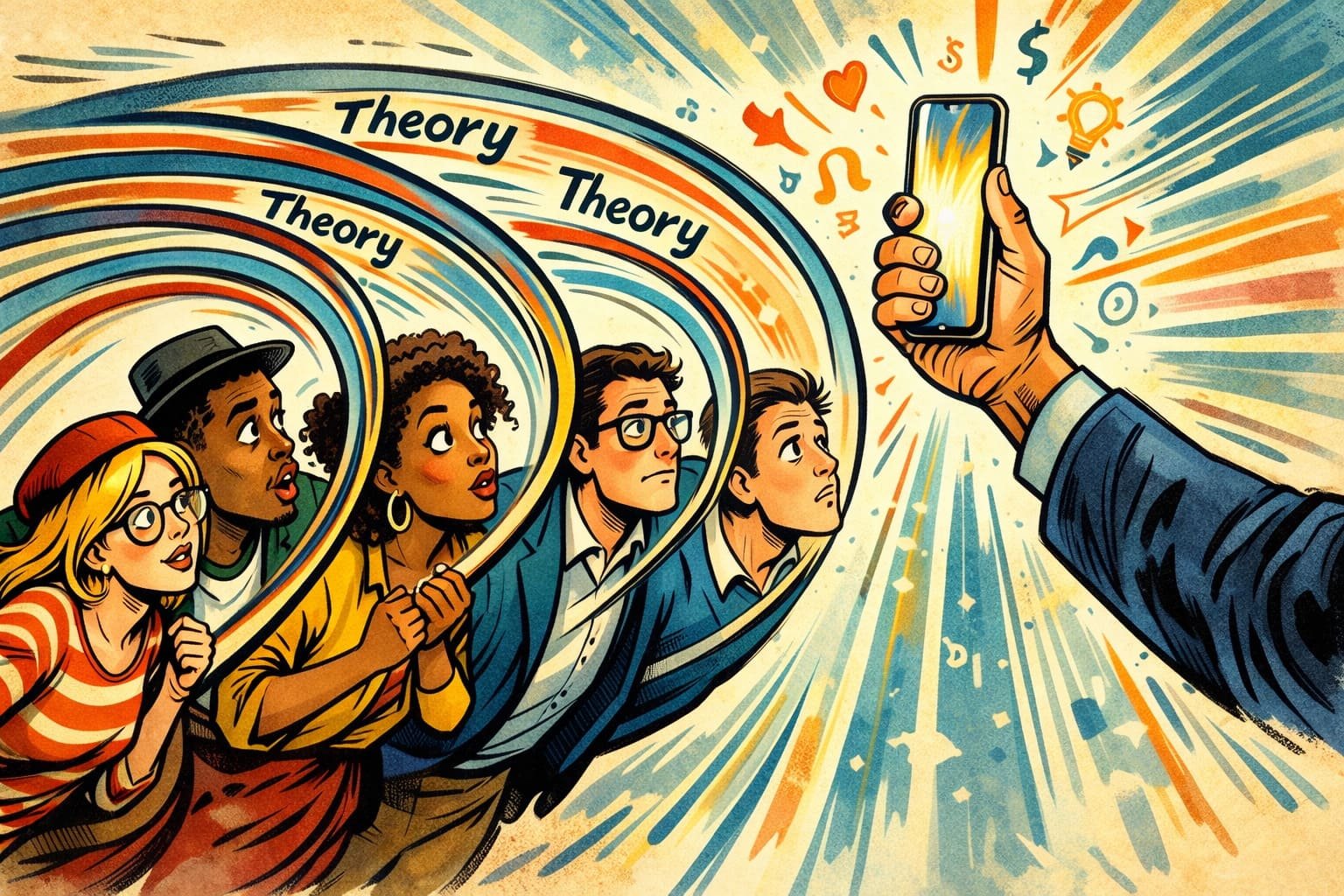
Many creators chase trends without understanding the invisible forces shaping audience decisions. That approach resembles navigating an unfamiliar city by following random headlights instead of studying a map. Strong content is rarely accidental. It borrows from psychology, economics, sociology, and communication theory to explain why people care before deciding what they should say. Theory sounds academic until it quietly transforms ordinary observations into stories that feel inevitable once readers encounter them.
Simon Sinek’s work on purpose resonated because it echoed established ideas about motivation while translating them into everyday language leaders could immediately apply. Daniel Kahneman changed business thinking by revealing how predictable mental shortcuts shape decisions that once appeared rational. Nia, who led content for a nonprofit education platform, stopped publishing inspirational slogans after studying cognitive bias. Her articles began anticipating reader objections instead, creating deeper engagement because understanding replaced assumption.
An elderly chess instructor rarely opened lessons by moving pieces across the board. Instead, he asked students why they believed a certain move looked obvious. Those conversations often mattered more than the game itself. Months later, beginners improved because they learned principles rather than memorizing patterns. Content behaves similarly. Readers remember ideas that reveal hidden structures beneath familiar experiences, not endless collections of disconnected tips waiting to be forgotten.
Behavioral theories become especially powerful when blended instead of treated like isolated academic concepts. Social proof explains popularity. Scarcity creates urgency. Narrative transportation draws audiences into stories where resistance quietly disappears. Companies such as Airbnb succeeded by understanding that belonging influences purchasing decisions as deeply as convenience or price. Their messaging reflected emotional identity rather than functional features, proving that human behavior offers stronger strategic guidance than fashionable marketing tactics alone.
Old library lamps continued glowing after every reader had quietly left, illuminating shelves filled with ideas that had outlived generations, technologies, and passing trends. Powerful content carries a similar endurance because enduring principles outlast changing platforms. Algorithms evolve, formats shift, and audiences migrate, yet human nature remains remarkably familiar beneath fresh technology. Study the forces shaping attention instead of chasing attention itself, because timeless ideas always outlive temporary trends.
