The pawn shop sat beneath a flickering streetlight like a confession booth for exhausted ambition. Gold chains rested beside wedding rings. Old guitars leaned against dusty walls carrying the fingerprints of abandoned dreams. Outside, a delivery rider balanced fast food orders in the rain while listening to a billionaire podcast about “mindset.” Modern capitalism had developed a peculiar sense of humor. The loudest people discussing hustle often started several floors above survival itself.
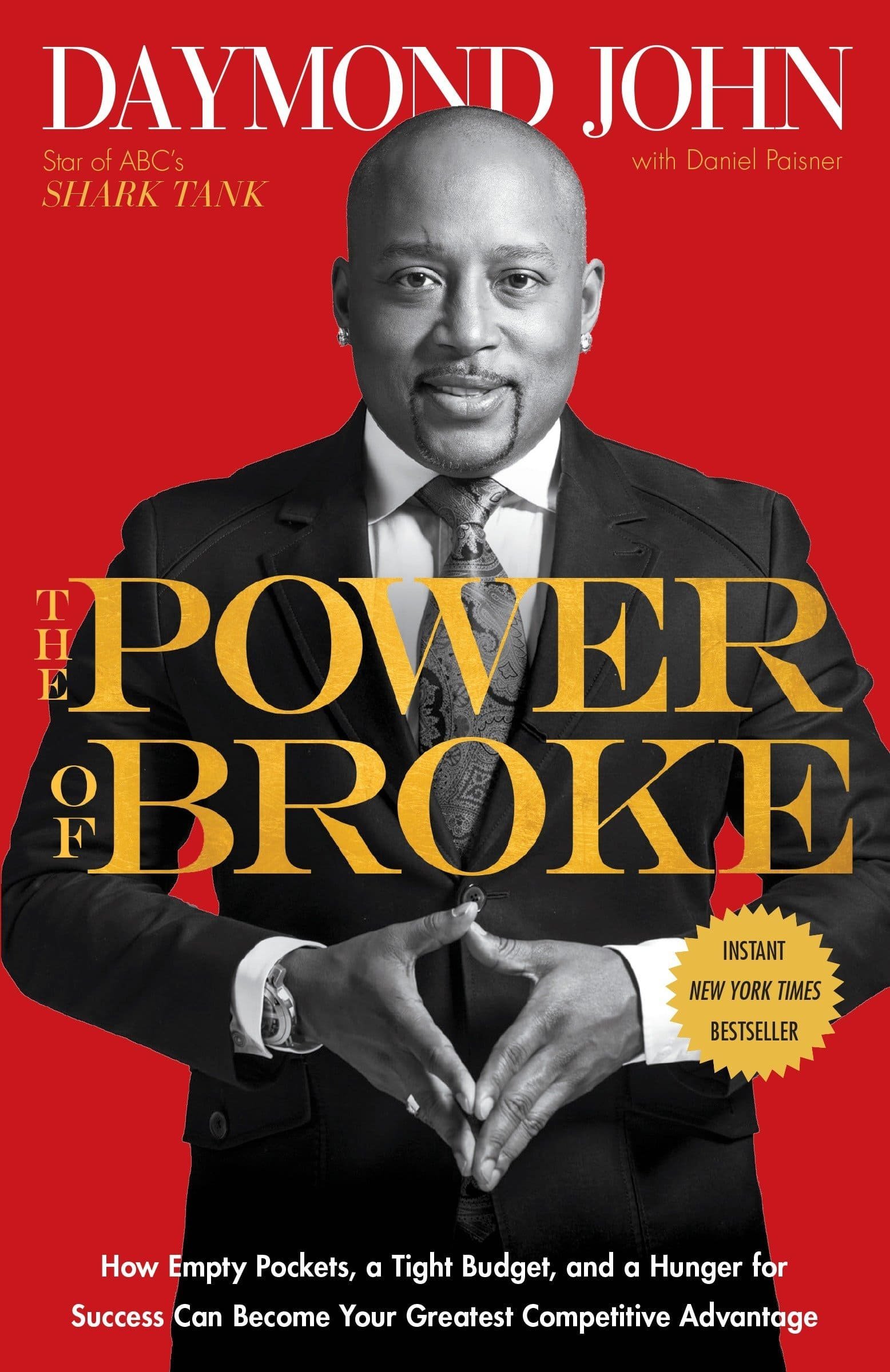
Then The Power of Broke: How Empty Pockets, a Tight Budget and a Hunger for Success Can Become Your Greatest Competitive Advantage arrives with a different energy entirely. Daymond John does not romanticize poverty. That distinction matters. Many motivational books flirt with struggle aesthetically, treating hardship like cinematic seasoning sprinkled onto eventual triumph. John approaches scarcity like a pressure chamber that reshapes behavior, instincts, creativity, and emotional resilience. The book argues something deeply unfashionable in a culture addicted to abundance: comfort can quietly rot ambition from the inside.
That idea feels almost offensive within modern business culture where founders raise massive funding rounds before validating basic demand. John built FUBU from constrained resources, neighborhood hustle, and relentless improvisation. The scarcity was not decorative. It forced clarity. When money disappears, excuses lose oxygen. Every move becomes painfully visible. Every mistake has teeth. Readers quickly sense the book’s hidden thesis: desperation, when disciplined properly, sharpens perception more effectively than luxury ever will.
A young designer named Keoni learned this while launching a streetwear label from a cramped apartment above a noisy laundromat. Fabric rolls blocked the kitchen entrance. Shipping labels covered the refrigerator like battlefield scars. Wealthier competitors flooded social media with glossy campaigns and influencer partnerships. Keoni could not afford any of it. Instead, he spent evenings talking directly with customers at underground music events, studying what people actually wore rather than what fashion blogs celebrated. Months later his brand developed fierce loyalty because it reflected real communities instead of trend forecasts manufactured in glass conference rooms.
That pattern echoes throughout John’s worldview. Resource constraints often produce intimacy with reality. Wealth can create insulation thick enough to distort judgment. Corporate history overflows with bloated companies collapsing because executives became too distant from ordinary consumer behavior. Kodak ignored digital shifts. Blockbuster underestimated convenience culture. Expensive institutions frequently mistake scale for invincibility. Meanwhile smaller operators survive because survival itself forces attention. Scarcity becomes a brutal but effective teacher.
The book also carries a deeper psychological undercurrent about identity and pride. People without financial safety nets often develop heightened sensitivity toward opportunity because failure carries heavier consequences. That pressure can become destructive. It can also generate uncommon intensity. John repeatedly frames hunger not as theatrical motivation but as emotional necessity. Some readers may find that uncomfortable because it challenges the sanitized language surrounding entrepreneurship. Ambition rarely emerges from pure inspiration alone. Often it grows from humiliation, exclusion, frustration, rejection, or the refusal to remain invisible.
A nightclub promoter named Soraya experienced this tension after watching wealthier rivals dominate her city’s entertainment scene with extravagant venues and celebrity endorsements. Her budget barely covered sound equipment and basic lighting. One chaotic evening during a power outage, she transformed a parking garage into an improvised event space using portable speakers, candles, and local DJs abandoned by larger venues. The atmosphere became legendary precisely because it felt raw and alive. Guests later described the night like stumbling into a secret society hidden beneath the polished surface of the city. Constraint had accidentally created authenticity.
That emotional texture gives The Power of Broke: How Empty Pockets, a Tight Budget and a Hunger for Success Can Become Your Greatest Competitive Advantage unusual credibility. The book understands something consultants often overlook: many breakthrough businesses emerge from people solving problems they know intimately because they have personally suffered through them. The founder who has struggled to pay rent understands urgency differently than executives discussing “consumer pain points” beside catered lunches. Experience creates instinct. Instinct creates timing.
John’s perspective also exposes the strange moral contradictions inside modern success culture. Society praises resilience after victory arrives while often ignoring or mocking people during the struggle itself. Entrepreneurs become inspirational only retroactively. Before success, many simply look unstable, obsessive, or reckless. The same behavior interpreted as visionary afterward often appears irrational beforehand. That paradox runs through nearly every major startup story. Steve Jobs was dismissed repeatedly. Oprah Winfrey faced rejection early in broadcasting. Even cultural icons once looked inconvenient to established systems protecting existing power.
A warehouse supervisor named Malik understood this intimately after launching a side business restoring vintage furniture from discarded office spaces. Friends quietly questioned his judgment. Relatives urged safer career paths. Investors ignored him completely. Yet Malik noticed something larger competitors missed: younger buyers craved objects carrying texture, flaws, and visible history because modern consumer culture felt emotionally sterile. His workshop smelled of sawdust, engine oil, and old leather. Customers began traveling across cities for pieces carrying scars instead of perfection. What looked small eventually became culturally magnetic.
The book becomes most powerful when it dismantles entitlement disguised as strategy. Many organizations collapse because abundance weakens urgency. Endless funding encourages wasteful experimentation disconnected from reality. Comfortable teams hold meetings about innovation while lean competitors quietly build survival intelligence through direct customer contact. John repeatedly suggests that adversity creates operational toughness impossible to simulate artificially. That insight stretches beyond business. Relationships, creativity, leadership, and personal growth often deepen through friction rather than ease.
There is also a strangely philosophical dimension hidden beneath the entrepreneurial advice. Scarcity strips identity down to essentials. Without status symbols, inherited networks, or financial cushioning, people eventually confront a frightening question: what remains when external validation disappears? John’s framework implies that true leverage often begins there. Not in abundance, but in exposure. Not in safety, but in uncomfortable proximity to consequence. The broke entrepreneur becomes dangerous precisely because little remains to lose psychologically.
Late at night inside a nearly empty subway station, a food vendor named Amara counted crumpled bills beside the fading smell of roasted spices and train smoke. Her catering startup had failed months earlier. Debt collectors kept calling. Investors vanished instantly once optimism stopped looking profitable. Yet somewhere between exhaustion and stubbornness, she began rebuilding differently. Smaller menus. Better margins. Direct relationships with customers instead of flashy branding. Years later her company quietly supplied luxury hotels across multiple regions. Success arrived looking less like a miracle and more like accumulated resilience hardened through humiliation.
That is the unsettling brilliance behind The Power of Broke: How Empty Pockets, a Tight Budget and a Hunger for Success Can Become Your Greatest Competitive Advantage. It reframes struggle not as noble suffering but as informational advantage. Broke people notice things comfortable people overlook. They adapt faster. They improvise harder. They respect value differently because consequence lives closer to the skin. The world often mistakes polish for capability when survival itself frequently produces sharper operators.
Somewhere tonight, another exhausted entrepreneur is staring at unpaid invoices beneath fluorescent kitchen light, wondering whether ambition was simply another elegant scam sold by people who already escaped risk. Perhaps. Yet history keeps producing strange rebels from impossible conditions. Not despite the pressure, but because pressure revealed instincts luxury could never teach. And maybe the real danger of becoming too comfortable is not laziness. Maybe it is forgetting how alive human beings become when necessity sharpens every decision into something brutally real.
Editorial Disclaimer: Whether a book is a work of fiction, a memoir, or inspired by real events, the ideas, actions, decisions, and behaviors discussed within are not intended to be encouraged, replicated, or endorsed in real-world situations. This review is published solely for educational, analytical, literary, and entertainment purposes, with the aim of examining the book’s themes, storytelling, characters, philosophies, and broader cultural or business insights. Any ethical or unethical viewpoints, practices, or conduct presented in the book do not necessarily reflect the views, values, or endorsements of ESYRITE.
