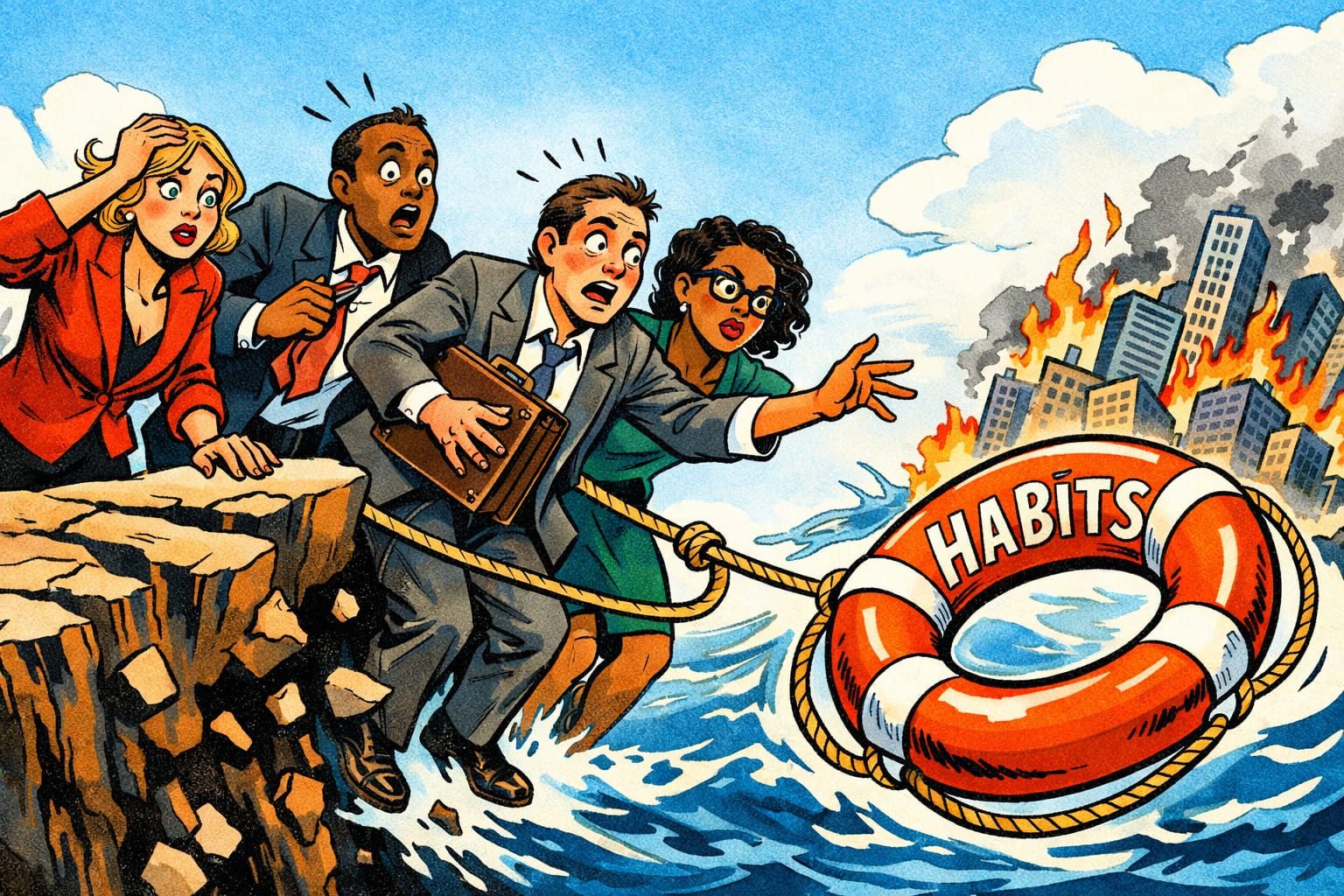
The warning signs rarely arrive wearing bright colors. They slip quietly into ordinary mornings, hidden inside unanswered emails, delayed decisions, shrinking enthusiasm, and meetings where everyone nods but nobody believes. The office still opens on time. Customers still arrive. Revenue may even look respectable. Yet something invisible has begun to fracture beneath the surface. Businesses seldom collapse in a single dramatic moment. They drift toward failure through ordinary habits repeated so often that nobody notices the danger until recovery feels almost impossible.
Executives often search for extraordinary solutions when familiar routines are causing the damage. They commission expensive strategy reviews, redesign organizational charts, or chase fashionable management trends. Meanwhile, small disciplines quietly disappear. Teams stop giving honest feedback. Leaders postpone difficult conversations. Customers receive slower responses. Tiny compromises accumulate until mediocrity feels normal. Success has always depended less on spectacular breakthroughs than on everyday behaviors practiced with relentless consistency. Habits quietly shape outcomes long before financial statements reveal the consequences.
Healthy organizations protect simple routines with remarkable discipline. Leaders arrive prepared. Meetings finish with clear decisions instead of endless discussion. Customers receive prompt communication even when answers are incomplete. Managers walk through operations instead of managing exclusively through dashboards. Those habits seem ordinary. Their combined effect becomes extraordinary over time. Business resilience is rarely built during moments of crisis. It is built during ordinary weeks when nobody is watching and discipline still chooses consistency over convenience.
Operations director Helena inherited a manufacturing company facing declining profits and frustrated employees. Consultants expected sweeping restructuring. Helena noticed something smaller. Production meetings started late, maintenance schedules were routinely delayed, and supervisors rarely spoke with frontline teams. She refused to launch dramatic reforms. Instead, she rebuilt the daily rhythm. Meetings began on time. Equipment inspections became non-negotiable. Managers spent time listening on the factory floor every afternoon. Within months, productivity improved because the organization had repaired its habits before attempting to transform its strategy.
Business history repeatedly reinforces this lesson. James Clear popularized the idea that lasting improvement comes from small, consistent actions rather than dramatic bursts of motivation. Similar thinking appears inside enduring organizations such as Toyota Motor Corporation, where continuous improvement depends upon disciplined daily practice rather than occasional heroic effort. Great businesses are rarely rescued by one brilliant decision. They are strengthened through thousands of ordinary choices repeated faithfully.
Popular culture offers an unexpected mirror. In Rocky, victory is shaped less by the championship fight than by countless early mornings, exhausting training sessions, and invisible moments when discipline defeated comfort. Business follows the same pattern. Markets reward organizations that master consistency while competitors chase shortcuts. Customers notice reliability long before they notice innovation. Trust grows through repeated experiences rather than memorable marketing campaigns.
The strongest leaders understand that culture is simply habit made visible. Employees copy what executives consistently tolerate, celebrate, and ignore. A leader who values punctuality, accountability, curiosity, and humility quietly creates an organization reflecting those same behaviors. The reverse is equally true. Carelessness spreads with surprising speed when left unchallenged. Every habit, whether intentional or accidental, becomes part of the company’s operating system. The future begins taking shape inside today’s smallest routines.
Late at night, after the final office lights fade and the building falls silent, tomorrow’s success is already being decided. It lives inside the habits nobody applauds, the disciplines nobody posts about, and the choices that appear too ordinary to matter. Those quiet routines become invisible architects of extraordinary organizations. Businesses rarely survive because they are lucky. They survive because someone protected excellence when it still looked small. Ask yourself this: what habit inside your business is quietly writing tomorrow’s story today?
