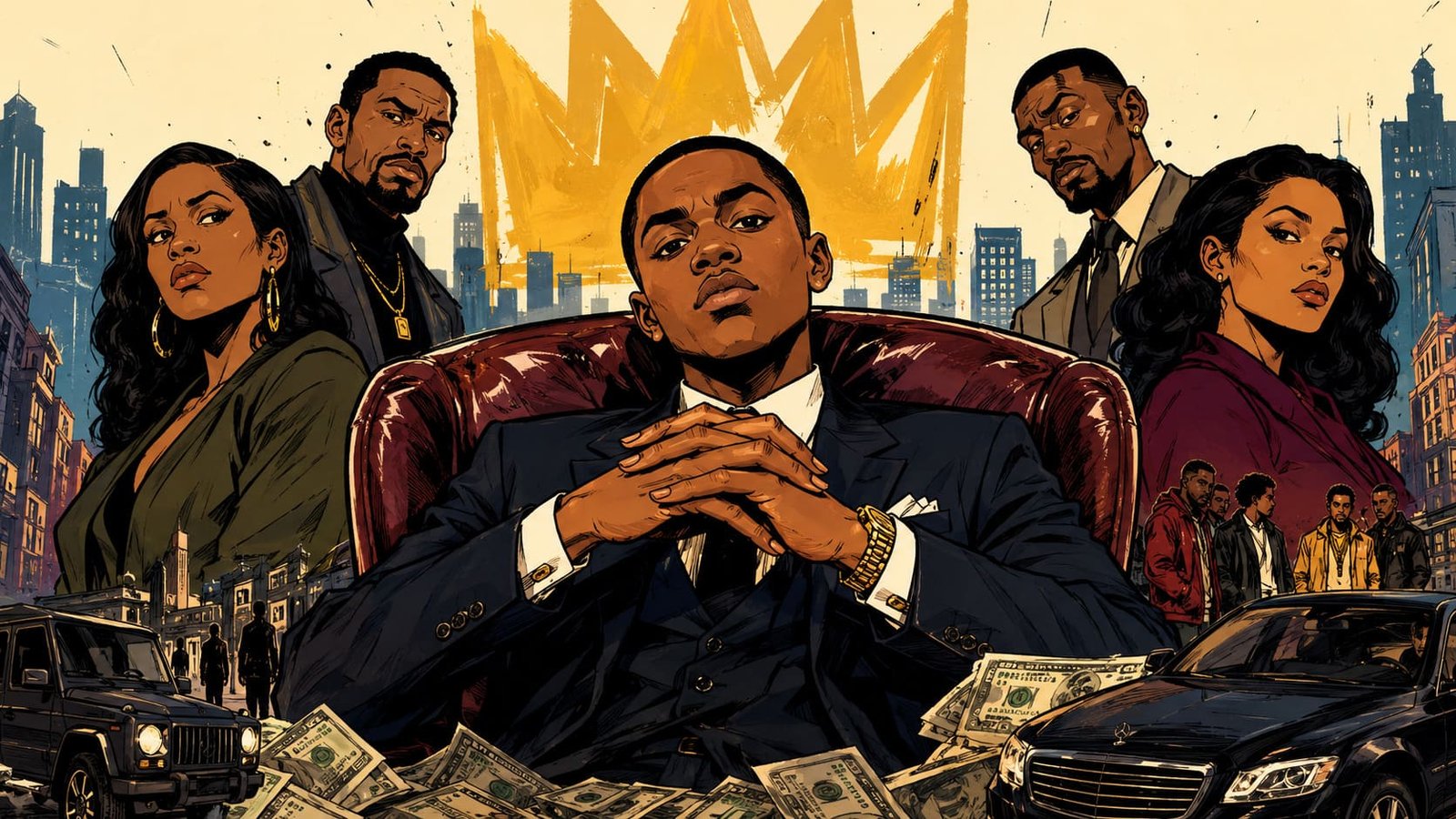
Rain pressed itself against the windows of Manhattan like a mob accountant trying to erase fingerprints before dawn. Inside the cold geometry of luxury penthouses and candlelit restaurants, everyone in Power Book II: Ghost moved as though chased by invisible creditors. The remarkable trick of this series is not its violence, though there is plenty of that, nor its betrayals, which arrive with the calm precision of a banker sliding foreclosure papers across polished oak. Its true obsession is inheritance. Not money alone. Not power alone. Inheritance as psychological debt. A son inherits enemies before wisdom. A mother inherits survival instincts before peace. Entire institutions inherit corruption and then rename it professionalism. The show understands something modern culture rarely admits aloud: many people do not become adults, they become continuations.
Tariq St. Patrick walks through the series like a young executive wearing a suit stitched from borrowed myths. One part Ivy League aspiration. One part street legend. One part frightened child still trying to decode his father’s shadow. Michael Rainey Jr. plays him with a strange emotional elasticity, as if confidence and panic are arm wrestling beneath every sentence. Around him, classrooms discuss ethics while drug organizations negotiate logistics with cleaner operational discipline than many Fortune 500 firms. That contradiction gives the series its pulse. Universities promise enlightenment while rewarding strategic manipulation. Criminal enterprises punish weakness faster than corporate boards ever could. Somewhere between both worlds, Tariq discovers that intelligence without moral architecture becomes a beautifully sharpened knife left unattended on a crowded kitchen counter.
A strange thing happens while watching the show late at night. The viewer starts recognizing real boardroom behavior hiding beneath cartel dialogue. Monet Tejada runs her family operation with the exhausted vigilance of a founder protecting a company from incompetent successors. Mary J. Blige gives her the emotional texture of someone who learned leadership through catastrophe rather than mentorship. There is a moment when she studies her children across a dinner table that feels less like family drama and more like a succession crisis at a collapsing empire. Rupert Murdoch would probably recognize the atmosphere immediately. So would any exhausted entrepreneur whose children inherited access before discipline. The series quietly suggests that dynasties rarely collapse because of enemies. They decay from internal entitlement.
One consultant in Nairobi once described a failed logistics startup with eerie similarity to Tariq’s world. The founder, Kamau, built the company through relentless improvisation. Sleepless nights. Cheap coffee. Aggressive instincts. When investors arrived, polished graduates entered leadership with vocabulary but no scar tissue. Meetings became theatre. Nobody wanted ugly truths in the room anymore. Within months, operational leaks swallowed the business whole. Watching Power Book II: Ghost feels uncomfortably close to stories like that. Every character confuses performance for mastery at least once. The punishment arrives quickly. Sometimes in blood. Sometimes in silence. Often in loneliness.
The brilliance of the show sits inside its understanding of modern identity. Tariq does not merely hide secrets. He fragments himself into marketable versions. Student. Son. Dealer. Friend. Strategist. Witness. This is not far removed from digital culture itself. LinkedIn profiles radiate disciplined optimism while private despair leaks into encrypted group chats at midnight. Instagram rewards image management more aggressively than honesty. Corporate language sanitizes predatory behavior with terms like optimization and disruption. Power Book II: Ghost strips away the expensive perfume from that performance economy. Underneath, survival still governs everything. Hobbes wearing designer sneakers.
Method Man’s Davis MacLean deserves special attention because he embodies one of the show’s most dangerous observations: charisma often outruns ethics in systems obsessed with winning. His courtroom maneuvers feel less like justice and more like venture capital negotiations disguised as morality plays. There is a slickness to him that resembles certain Silicon Valley founders who speak about changing humanity while quietly torching employee stability behind closed doors. Elizabeth Holmes from The Dropout would fit naturally into this universe. So would disgraced crypto evangelists who sold digital salvation before vanishing into lawsuits and podcasts. The show captures how modern society repeatedly rewards confidence before character, then acts shocked when institutions collapse under the weight of cultivated illusion.
At its most unsettling, the series becomes a meditation on emotional capitalism. Every relationship contains negotiation. Love competes against leverage. Affection gets audited against utility. Even grief carries transactional undertones. Cane Tejada storms through scenes like a man permanently allergic to vulnerability because weakness inside his ecosystem carries consequences. Woody McClain plays him with volcanic unpredictability. Yet beneath the aggression sits a painfully recognizable hunger: the need to matter inside systems that only respect dominance. That emotional contradiction explains why the series resonates far beyond crime drama audiences. Many viewers recognize themselves inside quieter versions of these battles. Offices become kingdoms. Families become negotiations. Achievement becomes camouflage for fear.
Near the end, the world of Power Book II: Ghost begins to resemble a cathedral built entirely from mirrors. Everyone sees reflections. Nobody sees truth. Neon lights bounce across empty corridors while ambition keeps consuming oxygen faster than conscience can replenish it. Somewhere in that shimmering psychological maze, a young man keeps searching for freedom while repeating the architecture of the prison he inherited. That is the haunting genius of the show. It understands that power rarely arrives looking monstrous. It usually arrives dressed as opportunity, speaking softly about destiny while teaching people how to betray themselves in increments small enough to justify. The frightening question lingers long after the credits disappear: when survival finally becomes identity, what part of the soul remains untouched enough to remember who it once wanted to become?
Editorial Disclaimer: Whether a TV Show is rooted in fiction or inspired by real events, the actions, decisions, and behaviors portrayed within are not intended to be encouraged, replicated, or endorsed in real-world settings. This review exists solely to analyze the storytelling, characters, themes, and business dynamics presented in the TV Show for educational, analytical, and entertainment purposes. Any ethical or unethical conduct depicted in the TV Show does not reflect the views, values, or endorsements of ESYRITE.
