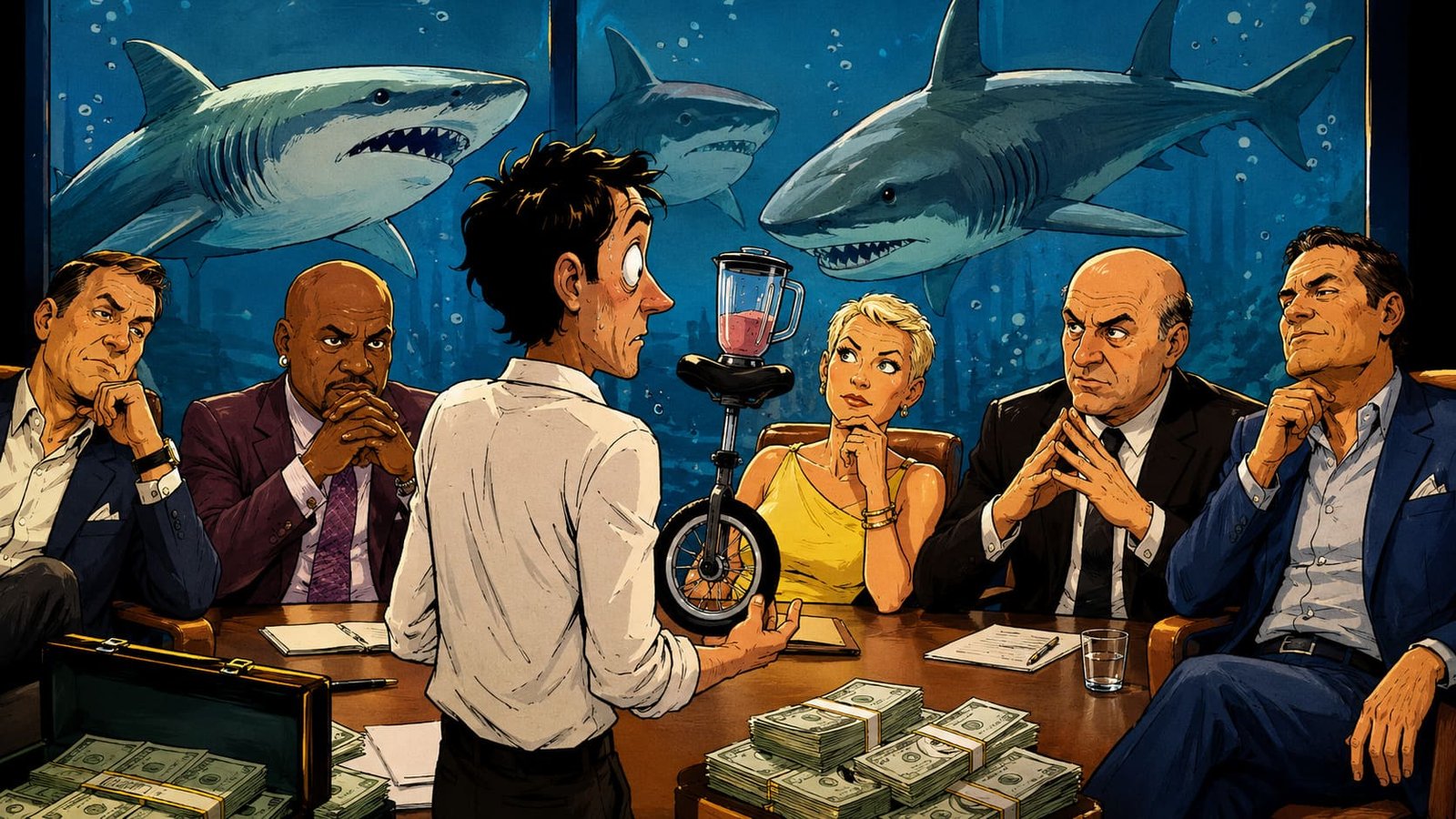
The carpet inside the studio looked almost unnaturally clean, the kind of polished surface designed to hide desperation. Bright lights bounced off glass tables while entrepreneurs stood frozen between hope and humiliation, clutching prototypes like sacred artifacts smuggled through a collapsing empire. In Shark Tank, capitalism stops pretending to be abstract. It becomes physical. Nervous hands. Dry mouths. Forced smiles. The show transforms entrepreneurship into public theater where ambition is interrogated under the glow of televised scrutiny. Every pitch carries the emotional charge of a courtroom drama because the entrepreneurs are not merely selling products. They are selling belief in themselves.
The brilliance of Shark Tank sits inside its psychological honesty. Most business culture sells entrepreneurship as freedom wrapped in motivational slogans and curated Instagram posts. This show understands something rawer. Building a company often begins with obsession bordering on irrationality. A mother maxes out credit cards to launch a kitchen gadget. A former mechanic risks retirement savings on a fitness product nobody asked for yet. A founder spends years hearing polite rejection before finally stepping onto national television wearing borrowed confidence and exhausted optimism. The tanks themselves resemble modern coliseums. Investors smile warmly one moment, then dismantle flawed business models with surgical brutality the next. That tension creates the addictive electricity of the series.
Kevin O’Leary became the symbolic executioner of bad arithmetic, delivering ruthless lines with the precision of a banker reading obituaries. Mark Cuban operates differently, less like an emperor and more like a competitive athlete who sees business as controlled warfare. Barbara Corcoran often notices emotional instincts others miss. Daymond John recognizes hunger because he remembers building fashion brands without elite connections or inherited privilege. The dynamic works because each shark represents a different philosophy of power. Some prioritize control. Others chase vision. Some bet on charisma over spreadsheets. The audience begins realizing something important about leadership itself: successful people rarely agree on why success happens.
A bakery owner named Mireille Laurent once entered a regional investor competition carrying handmade dessert boxes wrapped in gold ribbon. Her numbers looked fragile. Her margins worried everyone. One investor mocked her projections publicly and suggested licensing the recipes instead of building stores. Another investor quietly tasted the pastries again before offering mentorship rather than capital. Years later Mireille’s small luxury dessert chain became a favorite among boutique hotels across Europe. She later admitted the investor who believed in her did not invest in pastries. He invested in emotional experience. Shark Tank repeatedly reveals that business decisions are rarely rational alone. Human beings invest in energy, conviction, timing, narrative, and instinct just as much as balance sheets.
The show also demolishes the fantasy that hard work automatically guarantees reward. Some entrepreneurs arrive with heartbreaking stories and excellent intentions, yet their businesses remain structurally weak. Others possess mediocre products but extraordinary sales instincts. That imbalance unsettles viewers because society prefers cleaner moral equations. Reality rarely cooperates. One founder can possess discipline, resilience, intelligence, and still fail because distribution collapses or market timing betrays them. Another founder stumbles into explosive growth through cultural luck and aggressive branding. Shark Tank becomes strangely philosophical in these moments. It forces audiences to confront the uncomfortable chemistry between merit and randomness inside capitalism.
There is another layer beneath the entertainment, one most viewers feel without fully articulating. The show turns vulnerability into spectacle. Entrepreneurs must expose not only their financial risks but their emotional identities. A rejected pitch can resemble public heartbreak. Some contestants leave smiling through visible devastation. Others negotiate fiercely because surrendering equity feels like surrendering pieces of themselves. One memorable founder stood silently after hearing multiple sharks reject her wellness company. The room carried that awkward stillness familiar to anyone who has ever watched a dream fracture in real time. Then she calmly thanked the investors, gathered her products, and walked out with more dignity than many funded founders ever displayed. Those tiny human moments give the series unusual emotional weight.
A logistics founder from Nairobi named Samuel Mativo once described pitching his transportation software to skeptical investors inside a luxury hotel ballroom. Midway through the presentation, the projector failed. Sweat gathered beneath his collar while executives checked phones impatiently. Instead of panicking, Samuel grabbed a marker and sketched the entire distribution model by hand on a whiteboard. The room changed instantly. One investor later confessed the technical failure revealed more leadership ability than the polished slides ever could. Shark Tank thrives on those moments where pressure strips away performance and exposes character underneath. The best pitches rarely feel rehearsed. They feel lived.
Somewhere tonight another entrepreneur rehearses lines in front of a bathroom mirror while calculating whether payroll can survive another month. Cardboard boxes sit stacked beside kitchen tables. Coffee grows cold beside laptop screens glowing at impossible hours. Parents quietly wonder whether sacrifice will become triumph or cautionary tale. That is the emotional bloodstream flowing beneath Shark Tank. The show is not truly about investment deals. It is about modern ambition standing naked beneath fluorescent light, begging the future for permission to exist. Every rejected handshake, every dramatic offer, every trembling founder reveals the same haunting truth about capitalism: people are not only chasing money. They are chasing proof that their imagination mattered before the world moved on without them.
Editorial Disclaimer: Whether a TV Show is rooted in fiction or inspired by real events, the actions, decisions, and behaviors portrayed within are not intended to be encouraged, replicated, or endorsed in real-world settings. This review exists solely to analyze the storytelling, characters, themes, and business dynamics presented in the TV Show for educational, analytical, and entertainment purposes. Any ethical or unethical conduct depicted in the TV Show does not reflect the views, values, or endorsements of ESYRITE.
