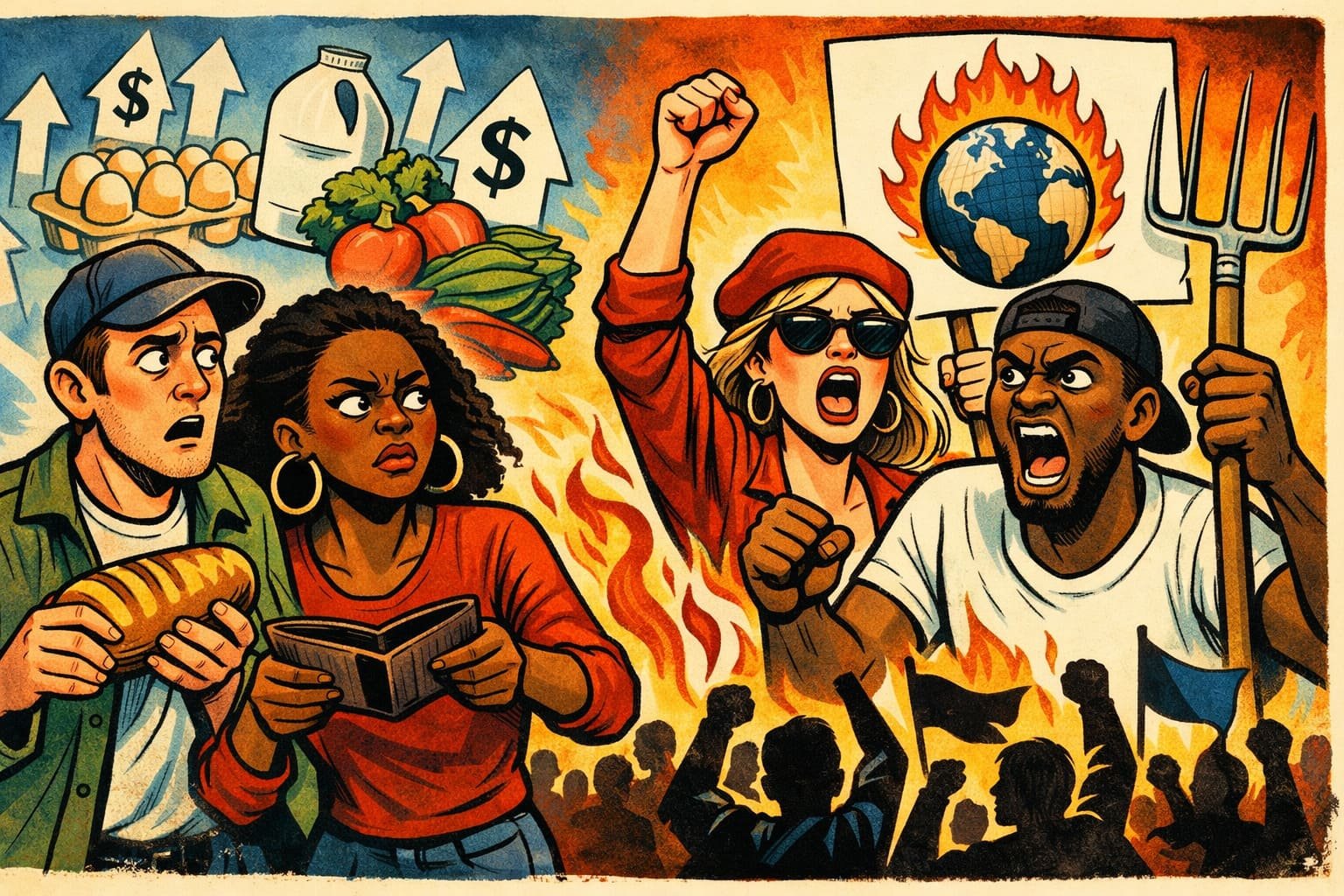
Bread cools behind a bakery window while a customer quietly returns one loaf to the shelf after counting coins twice. Nobody argues. Nobody raises a voice. Yet a decision lasting only seconds reveals more about an economy than a polished government speech. Food prices possess unusual political power because every household notices them immediately. Rising grocery bills do not remain economic statistics for long. They become conversations at dinner tables, campaign rallies, neighborhood markets, and cabinet meetings with remarkable speed.
Food inflation carries emotional weight unlike most other price increases because eating is unavoidable. Families may postpone vacations, delay purchasing electronics, or drive older vehicles, but groceries remain a daily necessity. When agricultural inputs, transport costs, fertilizer, labor, or currency pressures increase, food producers eventually pass those expenses through supply chains. Governments understand this well. Stable food prices often support social stability, while prolonged increases gradually erode public confidence in both markets and political leadership.
Egypt offers a powerful example. Bread subsidies have remained central to economic policy because affordable food plays an important role in maintaining social stability. A quieter story unfolded inside Mirela’s neighborhood grocery store. Suppliers increased wholesale prices repeatedly within a few months, leaving customers frustrated and suspicious despite her shrinking profit margins. Rather than reducing product quality, she introduced smaller package sizes alongside locally sourced alternatives. Trust remained intact because honesty proved more valuable than hiding unavoidable cost increases behind confusing pricing.
Financial markets watch food inflation carefully because it influences monetary policy, consumer confidence, and wage negotiations simultaneously. Central banks cannot increase harvests or lower rainfall shortages, yet persistent food inflation often shapes broader inflation expectations. Businesses also respond cautiously. Restaurants simplify menus, manufacturers reformulate products, and retailers renegotiate supplier contracts in search of operational savings. Inflation becomes more than rising prices. It quietly changes commercial behavior across entire industries before official statistics fully capture those adjustments.
Another lesson emerged inside Samuel’s family farm after fertilizer and transport expenses climbed sharply. Expanding production no longer guaranteed stronger earnings because operating costs absorbed much of the additional revenue. Instead of competing solely on volume, he partnered with nearby restaurants seeking premium locally grown produce. Customers willingly paid for freshness and traceability, allowing profitability to recover. Rising costs forced strategic repositioning rather than endless price competition, demonstrating that value often survives where scale alone begins to struggle.
Market stalls glow beneath hanging lamps as shoppers continue comparing prices with patient determination. Food has always carried meaning beyond nutrition because every meal reflects confidence, opportunity, and economic dignity. When prices rise faster than household comfort, frustration naturally extends beyond supermarket aisles into public debate and political pressure. Sustainable prosperity depends not only on producing abundant food but also on preserving affordability without weakening the farms, businesses, and supply chains feeding society. Every receipt tells a larger story than most economies are willing to admit.
