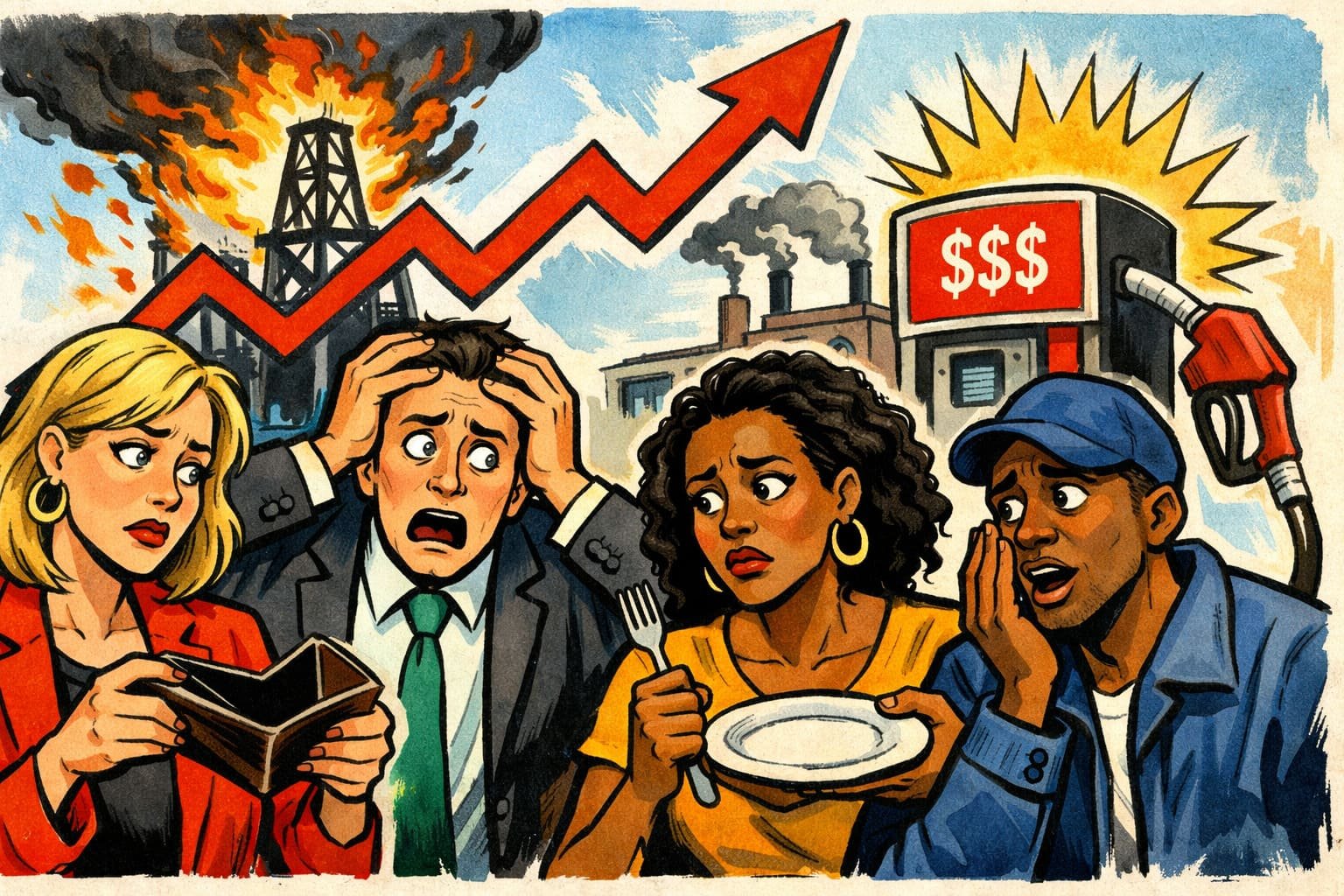
Blue flames dance beneath a restaurant stove while a chef pauses after reading another electricity bill. Nothing about the kitchen has changed. Every recipe still begins with familiar ingredients, every customer still expects dinner on time, yet every meal now carries a hidden energy cost that refuses to stay invisible. Markets understand this before families do. Rising energy prices rarely remain trapped inside utility statements. They travel through factories, farms, freight routes, financial markets, and grocery baskets with relentless determination.
Energy occupies a unique place within every economy because almost every product depends upon it before reaching consumers. Manufacturers power machinery, transport companies fuel delivery networks, retailers refrigerate inventory, and digital businesses rely on energy-hungry data centers operating around the clock. When energy becomes more expensive, production costs spread steadily across supply chains. Businesses eventually face difficult choices between accepting lower profits, increasing prices, delaying investment, or redesigning operations to consume fewer scarce resources.
The global energy disruption following Russia’s invasion of Ukraine demonstrated how quickly commodity markets can reshape business strategy. European manufacturers suddenly confronted soaring operating costs that challenged long-established production models. A different lesson unfolded inside Lucia’s family-owned greenhouse business. Heating expenses climbed sharply during colder months, threatening profitability. Instead of reducing production, she invested in insulation, energy-efficient equipment, and smarter scheduling. Harvest volumes remained stable while competitors relying on older systems struggled with shrinking margins and uncertain pricing.
Economists often describe energy as a foundational input rather than an ordinary commodity. That distinction matters because rising energy costs influence inflation across countless industries simultaneously. Airlines raise ticket prices, logistics firms adjust freight charges, and food producers pass higher processing expenses through retail shelves. Inflation becomes persistent when businesses expect elevated energy costs to continue, embedding higher prices into contracts, wage negotiations, and investment decisions. Expectations quietly become part of the inflation process itself.
Another story emerged inside Arjun’s ceramics workshop. Kilns consumed large amounts of electricity, making each price increase feel immediate and personal. Customers resisted repeated price adjustments, leaving profits under growing pressure. Arjun responded by producing smaller premium collections instead of high-volume inventory, emphasizing craftsmanship over quantity. Revenue stabilized because buyers valued distinctive design more than bargain pricing. Rising energy costs forced strategic creativity rather than simple cost cutting, revealing unexpected strengths hidden beneath operational pressure.
Stars appear above distant transmission towers carrying power across landscapes that rarely attract attention until uncertainty arrives. Energy has always been more than fuel flowing through wires and pipelines. It is confidence translated into economic activity, investment, and opportunity. When energy markets become unstable, inflation often follows with surprising persistence because every business depends upon reliable power to create value. Resilient organizations prepare before the next shock arrives, understanding that efficiency is strongest when stability can no longer be taken for granted.
