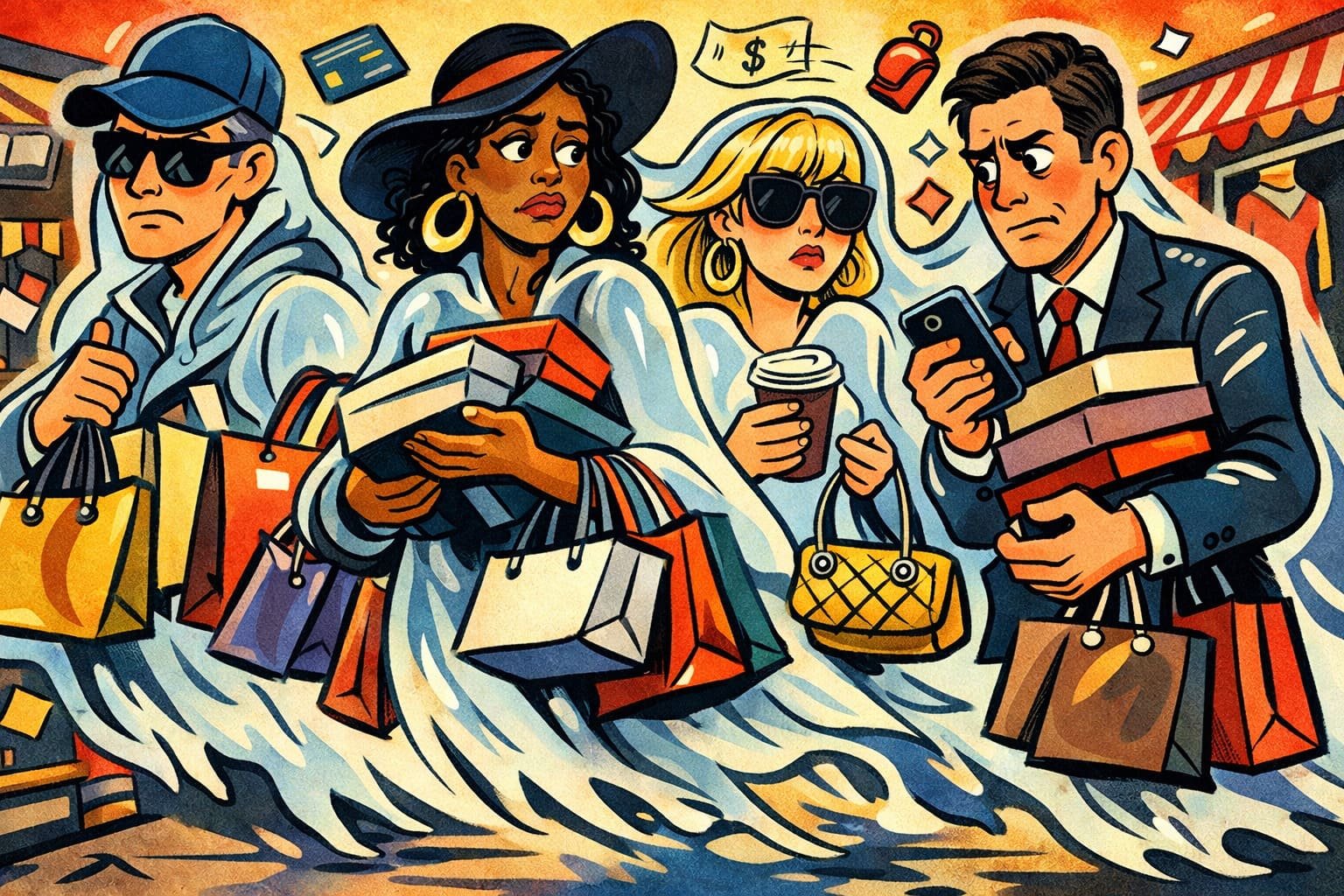
People still crowd cafés, airports still buzz, shopping carts still fill, and restaurants still post waiting lists. At first glance, everything looks reassuring, almost celebratory. Yet beneath those ordinary scenes sits a stranger reality, one that financial statements quietly expose long before dinner conversations ever do. Consumption has become a remarkable performance, allowing confidence to remain visible even while anxiety quietly moves backstage, shaping decisions that households rarely admit aloud.
Consumer spending often survives longer than confidence because habits change more slowly than emotions. Families postpone difficult adjustments, hoping tomorrow will restore yesterday’s certainty. Credit cards stretch budgets, savings cushions shrink, and subscription payments continue almost unnoticed because canceling them feels like admitting defeat. Economists sometimes describe consumption as a lagging indicator, but ordinary households experience it differently. Spending becomes a promise made to an uncertain future rather than a reflection of present financial comfort.
That contradiction explains why strong retail activity can exist beside growing financial stress. During periods of rising borrowing costs, many households continue purchasing familiar brands even while delaying retirement contributions or emergency savings. Companies such as Walmart have repeatedly observed customers shifting toward smaller package sizes or lower-priced alternatives instead of abandoning purchases altogether. Starbucks has similarly discussed consumers becoming more selective, visiting less frequently while still protecting small rituals that preserve a sense of normal life during uncertain economic periods.
One neighborhood accountant noticed a curious pattern among long-time clients. Holiday vacations stayed on family calendars, yet maintenance on aging vehicles kept getting postponed because immediate pleasures felt easier to justify than invisible repairs. That small decision echoed across thousands of balance sheets. Deferred maintenance, delayed healthcare appointments, and shrinking savings rarely appear beside shopping receipts, yet they quietly reshape household wealth over many years. Financial anxiety often hides inside choices that never become dramatic enough to attract headlines.
Businesses frequently misunderstand these signals. Executives sometimes interpret resilient sales as evidence of lasting demand when customers are actually financing stability rather than enjoying prosperity. Retailers that focus only on revenue may overlook deteriorating payment behavior, increasing credit balances, or changing purchasing patterns that reveal deeper stress. Financial markets eventually recognize those shifts because accounting records capture reality after optimism fades. Cash flow, unlike confidence, rarely participates in wishful thinking for very long.
Flickering checkout scanners continue singing familiar rhythms while invisible calculations unfold inside countless minds. Prosperity becomes harder to measure when confidence wears the costume of consumption and worry quietly signs every receipt. Markets eventually separate appearance from financial strength, but households experience that revelation first, often around kitchen tables rather than trading floors. Perhaps the most revealing economic indicator is not what people buy, but what sacrifices remain carefully hidden so those purchases can continue.
