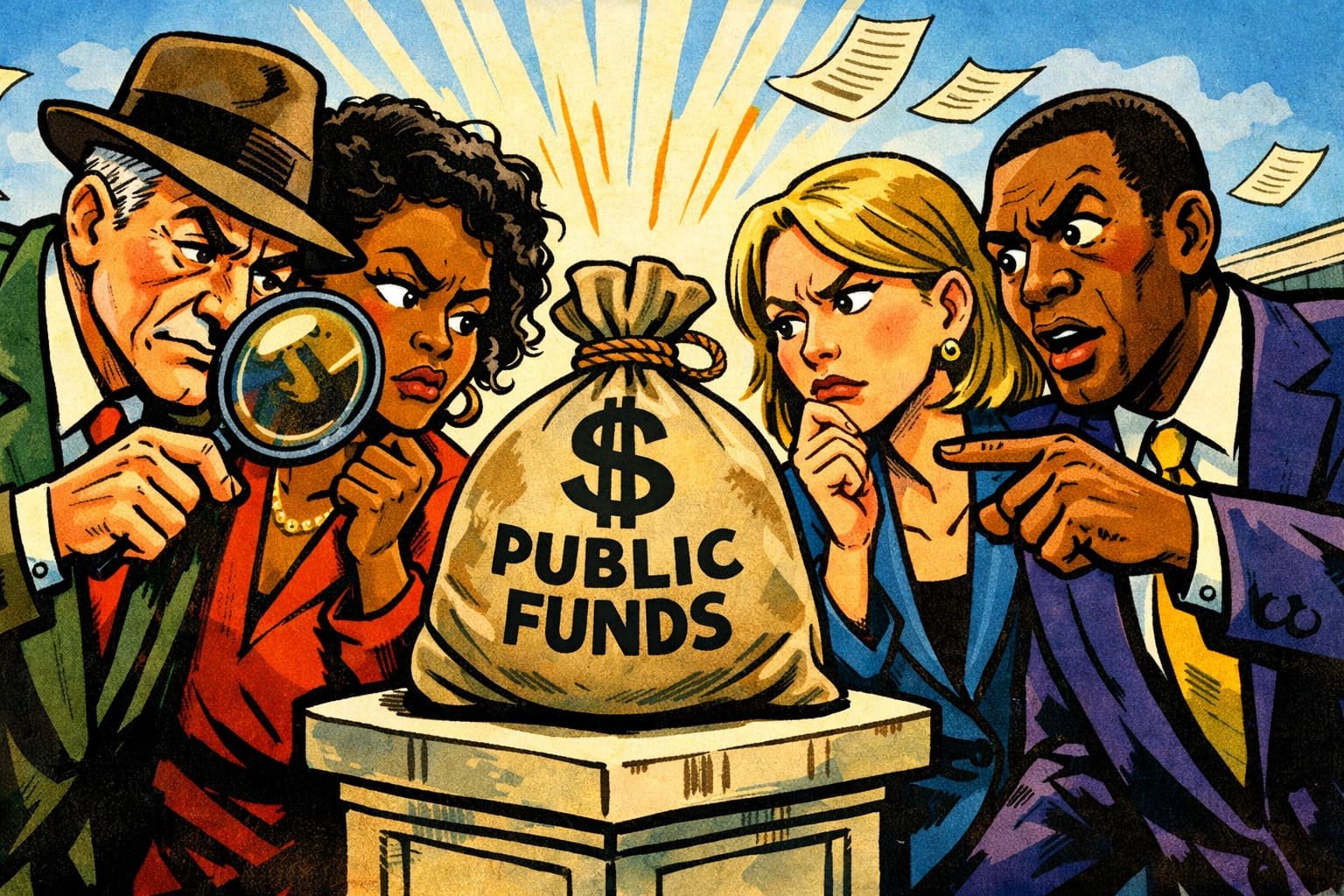
Trust in public finance does not break only when money is stolen. It breaks when the public starts feeling that official numbers are a stage set, polished from the front and hollow from the back. Citizens do not need to read every annex in a budget book to sense when something is off. They can feel it when taxes rise without visible service improvement, when projects are announced twice, when “temporary” levies never leave, or when every fiscal surprise somehow favors the same protected circles.
That is why public finance trust is so hard to win and so easy to lose. People are not merely asking whether governments can collect and spend. They are asking whether public money travels through the system honestly. Does the tax burden look fair. Are priorities explained plainly. Are promises followed by delivery. Is waste admitted, or simply renamed. In modern democracies, fiscal trust is not built by spreadsheets alone. It is built when spreadsheets align with lived experience.
OECD data and guidance show both the fragility of trust in government and the importance of transparency in public budgeting. The organization’s budget transparency toolkit says openness about how public money is raised and used fosters trust, while newer public trust indicators show that confidence in national governments remains weak in many places. That combination should sober any finance minister. People are not withholding trust out of ignorance. Many are withholding it because the system has not earned it.
The public’s demand has become more sophisticated. Citizens do not just want austerity or generosity. They want proof. Proof that taxes are not disappearing into elite fog. Proof that debt-financed spending improves real life. Proof that budget cuts are not selective morality. Proof that procurement is not a shadow welfare scheme for friends of power. The old habit of expecting deference to official accounts is dying. Good riddance.
A commuter standing on a broken station platform while hearing speeches about transport modernization experiences a form of fiscal truth no dashboard can erase. A parent dealing with drug shortages after reading about record health allocations experiences it too. These are not technical misunderstandings. They are trust events. Public finance becomes credible only when the citizen’s everyday encounter with the state begins matching the state’s self-description.
That is why communication matters, but not in the cynical sense. Governments often think better messaging can rescue weak trust. Messaging helps only if it rides on visible integrity. OECD work on public information and understandable financial communication points to a simple reality: if people cannot understand how economic decisions affect them, trust struggles to grow. Plain language does not replace good governance. It makes good governance legible.
Some of the strongest trust-building moves are surprisingly unspectacular. Publish contracts in accessible form. Explain deviations from budget clearly. Separate temporary windfalls from permanent spending. Show performance, not just appropriations. Admit mistakes quickly. Let independent bodies speak without punishment. These acts do not generate roaring applause. They do something better. They reduce the suspicion that public finance is a private game with public branding.
The contrarian point is that trust is not built by hiding bad news. It is often built by telling bad news early and honestly. A mayor who says a bridge project will cost more, take longer, and require cutting a lower-priority initiative may anger people in the moment. Yet that kind of candor can strengthen trust far more than a smoother lie. Citizens can handle hard choices better than many politicians think. What they cannot stand is being managed like children and billed like adults.
A good tax system also carries emotional weight. People do not ask only whether a tax raises money. They ask whether the burden feels proportionate, visible, and reciprocal. If elites evade, if loopholes bloom, if enforcement looks theatrical for the weak and flexible for the powerful, trust dissolves. In that climate, even sensible taxes become politically radioactive because the state has lost the moral authority to ask.
Norway’s management of oil wealth is often admired not just because of the fund itself, but because the institutional story around it tells citizens that windfall revenue is being handled for present and future generations rather than for short-term political bingeing. That is a trust narrative backed by structure, not by slogans. Other countries do not need to copy Norway exactly to understand the principle. Stewardship must be visible to be believed.
When trust in public finance erodes, the damage spreads beyond budgets. Compliance weakens. Reform becomes harder. Every proposal gets interpreted through suspicion. Conspiracy thrives where clarity is absent. Even worthy investments face public cynicism because the state has trained citizens to ask what scam is hiding in the footnotes. A government can survive low trust for a while. It cannot govern well there.
In the end, citizens are asking for something wonderfully reasonable and strangely rare. They want a state that shows its work. Not a flawless state. Not a painless tax system. Not a budget without trade-offs. Just a government that can explain what it is doing, demonstrate where the money goes, and accept accountability when reality diverges from promise. Trust does not demand perfection. It demands proof. Without that proof, public finance turns into a ritual nobody believes and everybody pays for.
