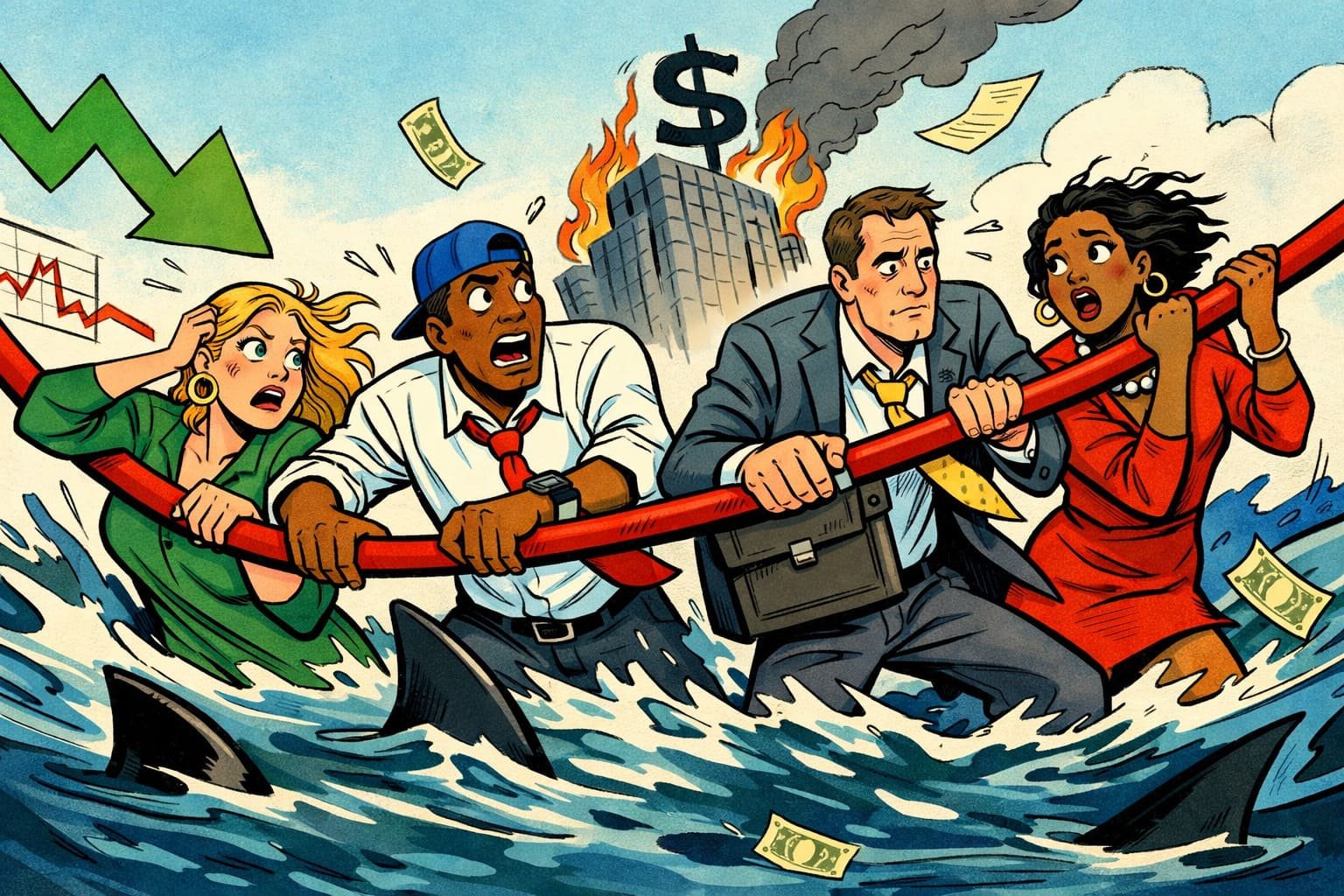
Lightning cracked across a skyline already thick with restless clouds, yet nobody in the dealing room looked outside. Every eye stayed locked on flickering price charts that rose and collapsed before a heartbeat finished. Coffee cooled unnoticed. Confidence did too. Markets possess a peculiar talent for feeling perfectly orderly until volatility returns, reminding every participant that calm is never a permanent feature of finance but merely an intermission between acts.
Volatility measures how sharply asset prices fluctuate over time, but its influence stretches far beyond technical charts. Pension funds rebalance portfolios, hedge funds adjust leverage, banks reassess collateral, and corporate treasurers reconsider financing plans whenever uncertainty accelerates. Higher volatility raises both opportunity and danger. Firms such as Citadel and Jane Street have built sophisticated trading businesses around rapid market movements, proving that instability punishes the unprepared while rewarding disciplined risk management and exceptional execution.
Adrian supervised trading operations for a midsized investment firm that had enjoyed months of remarkably stable markets. Younger traders began treating quiet conditions as normal, increasing position sizes because sharp reversals felt increasingly unlikely. Then an unexpected geopolitical announcement triggered violent price swings across currencies, equities, and government bonds within hours. Losses arrived quickly. The experience reshaped team culture, replacing overconfidence with structured risk reviews and renewed respect for uncertainty that spreadsheets alone could never teach.
Financial history repeatedly demonstrates that volatility rarely creates risk by itself. Instead, it exposes weaknesses already embedded inside portfolios, balance sheets, and decision-making processes. Nobel laureate Harry Markowitz built modern portfolio theory upon diversification because uncertainty cannot be eliminated, only managed intelligently. Markets reward preparation more consistently than prediction. Investors often spend enormous energy forecasting tomorrow’s headlines while neglecting whether their portfolios can withstand outcomes nobody expects until they suddenly arrive.
A commodity exporter named Selene discovered that lesson during a sudden currency shock affecting international contracts. Revenue projections that appeared comfortably profitable one week became dangerously thin after exchange rates shifted without warning. Rather than blame markets, management introduced disciplined hedging policies and diversified customer contracts across multiple regions. Future price swings remained unavoidable. Their financial consequences became far more manageable because resilience had quietly replaced optimism as the company’s preferred strategy.
Snow settles gently before avalanches remind mountains that balance always carries hidden tension. Financial markets behave with similar elegance, rewarding patience during calm and exposing complacency when uncertainty returns without invitation. Volatility will never disappear because changing expectations are woven into the fabric of economic life itself. Enduring investors understand that survival often becomes the greatest competitive advantage. Those who respect uncertainty rarely fear its arrival because preparation outlasts prediction.
