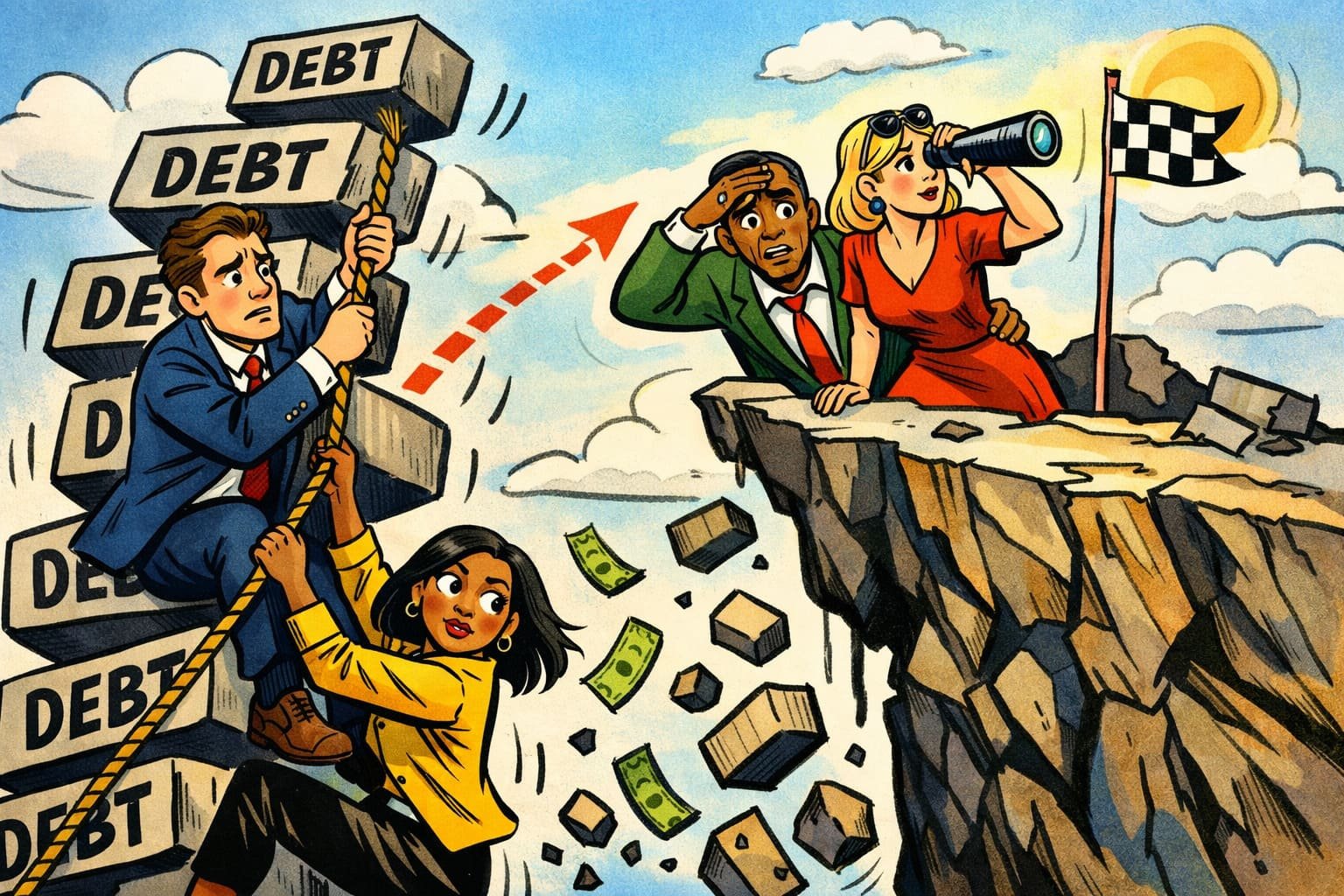
Debt-funded growth has a seductive plot. Borrow now, build now, expand now, prosper later. It flatters ambition because it turns time into leverage. Roads, ports, housing, technology parks, industrial corridors, energy systems, all can be accelerated through borrowing. In the right hands, that is sensible. The world would be poorer if every society waited to save every coin before building anything useful. Yet debt-financed momentum can quietly become a substitute for genuine productivity. That is where the limit appears.
The first phase always feels exhilarating. Construction cranes multiply. GDP gets a lift. Employment rises in visible sectors. Political messaging becomes triumphant. Borrowing is presented as confidence, and confidence can indeed be catalytic. The danger emerges when debt starts financing not capacity but mood. Projects become symbols rather than engines. Easy credit props up land speculation. Local authorities borrow against revenue that has not materialized yet. A country begins confusing movement with transformation.
The IMF has long stressed that debt can support investment and growth when it finances returns sufficient to service it, while debt-related risks can threaten stability and crowd out priority spending when they intensify. That distinction sounds obvious. It is routinely ignored. Not all growth produced by debt is equal. Growth that strengthens the future tax base is one thing. Growth built on inflated asset values, weak governance, or low-return prestige projects is another.
This is why so many borrowing booms age poorly. The borrowing itself is not the villain. The institutional quality around the borrowing is the real story. Can the state select projects with discipline. Can it maintain them. Can it collect enough future revenue from stronger productivity rather than from ever more borrowing. Can local governments resist using land booms as a fiscal narcotic. These questions decide whether debt becomes scaffolding or quicksand.
Recent World Bank material on subnational finance has underscored how quickly local government debt can swell under weak incentives and property-linked revenue stress. That is not just an accounting detail. It reveals a broader truth: growth models built on borrowed momentum are fragile when the cash flows beneath them depend on cyclical real estate or optimistic expectations rather than durable productivity. Momentum looks powerful until the refinancing meeting starts.
A provincial leader might borrow heavily to build ring roads, exhibition centers, logistics parks, and apartment districts. For a while, the skyline becomes proof of vision. Then warehouse demand disappoints. Land sales cool. maintenance costs rise. Private tenants fail to appear in the quantities imagined by the launch videos. The project was not useless. It was mistimed, oversized, and financed as if every optimistic assumption deserved legal protection. That is a common tragedy in public development, ambition outrunning absorption.
There is also a human reason debt-funded growth gets overused. It is emotionally cleaner than reform. Borrowing can purchase visible progress faster than fixing tax administration, zoning rules, school quality, or state capacity. Politicians prefer ribbon-cuttings to permit reform because concrete photographs better than competence. Credit therefore becomes a shortcut around the slow work of building institutions that generate organic growth without perpetual leverage.
The BIS has long treated debt servicing burdens as important indicators of stress in the real economy. That matters because the cost of past borrowing does not remain trapped in treasury documents. It seeps into everything. Firms pay more. households retrench. Governments lose room for social needs. Future investment is judged against old debt service. Yesterday’s momentum becomes tomorrow’s ballast.
The smart version of debt-funded growth is almost modest in temperament. It borrows in ways the economy can digest. It favors projects with clear spillovers, not just political glamour. It pairs borrowing with institutional upgrades, better procurement, maintenance discipline, and transparent reporting. It knows that debt is most useful when it buys time for real productivity gains to emerge. Debt is not development. It is a wager on future development.
A country that keeps borrowing to preserve the appearance of acceleration eventually enters a strange psychological loop. Slowing down feels like defeat, so borrowing rises to defend the image of unstoppable motion. The result resembles a bicycle speeding downhill because the rider is afraid of testing the brakes. That may look bold from the roadside. It is still panic with momentum.
True development can absorb pauses. False momentum cannot. That is one of the clearest ways to tell them apart. A healthy growth model can withstand stricter project selection, slower rollout, and harder scrutiny. A debt addiction cannot survive seriousness. It needs confidence theater, euphoric assumptions, and just enough external financing to keep the set standing.
At some point, every borrowing strategy must answer a rude question. Did the debt purchase future strength, or did it merely rent present applause. Once that question arrives, speeches lose their shine and the ledger starts speaking in a colder voice. Growth financed by debt can build a nation. It can also costume a weakness. The limit appears the moment momentum stops feeling like progress and starts feeling like pressure.
