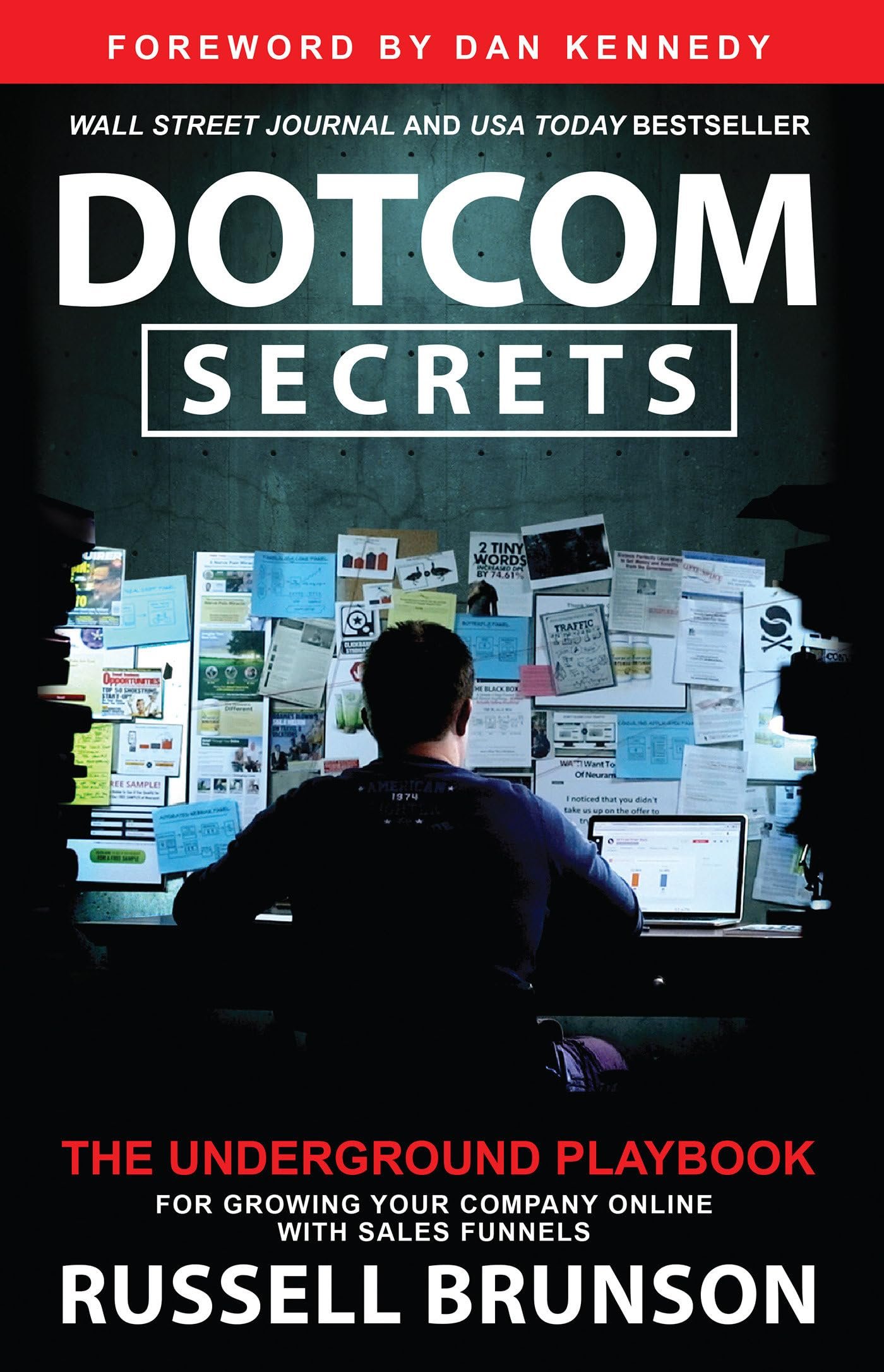
The glow from analytics dashboards painted the room electric blue while exhausted entrepreneurs refreshed conversion rates with the desperation of traders watching collapsing markets at midnight. Somewhere, another online business launched beneath motivational slogans and rented confidence, only to disappear quietly weeks later into the digital graveyard of abandoned domains and forgotten ambition. In DotCom Secrets, Russell Brunson—with a foreword by Dan Kennedy—steps directly into the chaotic machinery of internet business and reveals something many creators resist admitting openly: online success rarely belongs to the people with the best products alone. It belongs to the people who understand attention, psychology, narrative, and movement through systems.
The book arrives wrapped in marketing language, sales funnels, landing pages, and conversion mechanics. Yet beneath the tactical terminology sits a much deeper observation about modern human behavior. The internet did not remove ancient emotional instincts. It accelerated them. People still crave transformation, status, certainty, belonging, escape, identity, and emotional reassurance. Technology simply compressed the distance between impulse and transaction. Brunson’s genius lies in recognizing that digital marketing is not fundamentally about websites or software. It is about guiding emotional momentum deliberately.
The famous “sales funnel” concept becomes almost philosophical through this lens. A funnel is not merely a technical sequence. It is a behavioral journey. Cold strangers become curious observers. Curious observers become emotionally invested followers. Followers become customers because trust compounds gradually through strategic storytelling and repeated value exchange. Brunson repeatedly emphasizes that random traffic means little without intentional movement. That insight remains brutally relevant today, especially in an internet drowning in shallow visibility and fragmented attention.
A fitness entrepreneur named Elena Marques once launched an online coaching platform with exceptional training programs and terrible customer flow. Her website looked polished, her credentials impressive, yet almost nobody converted into paying clients. Frustrated, Elena studied behavioral marketing systems and realized she had been presenting information without emotional progression. Visitors arrived cold and left colder. She rebuilt the experience entirely. Instead of selling immediately, she offered free transformation guides, daily mindset emails, personal stories about recovering from burnout, and small interactive challenges. Revenue exploded months later. Elena eventually admitted something uncomfortable: “People weren’t buying workouts. They were buying hope structured clearly enough to trust.” Brunson’s philosophy lives inside that realization. Funnels succeed because they reduce emotional uncertainty step by step.
The book becomes especially revealing when discussing value ladders and customer journeys. Modern digital culture often glorifies viral explosions and instant monetization. DotCom Secrets argues the opposite. Sustainable online businesses emerge through relationship depth rather than isolated transactions. A free video leads to a newsletter. The newsletter leads to a low-ticket offer. That leads to trust. Trust leads to premium commitment. The structure resembles emotional architecture more than aggressive selling. Brunson understands that human beings rarely buy meaningful transformation impulsively. They buy progressively once belief solidifies.
There is also something strangely anthropological about the book’s treatment of communication. Brunson repeatedly emphasizes storytelling because stories bypass resistance more effectively than information overload. Facts explain. Stories move. This principle now dominates enormous sections of digital culture. Influencers, creators, brands, political campaigns, and media ecosystems all compete through narrative framing rather than technical superiority alone. A mediocre product wrapped in emotionally resonant storytelling frequently outperforms stronger competitors communicating like instruction manuals. That reality unsettles people wanting markets to operate rationally. Yet history keeps confirming it repeatedly.
A media consultant named Tariq Holloway once advised a struggling educational platform teaching financial literacy to young professionals. The content quality was extraordinary. The engagement remained terrible. During strategy sessions, Tariq noticed the company communicated like textbooks speaking to exhausted humans. Endless facts. Endless frameworks. No emotional entry point. He rebuilt the messaging around personal transformation stories instead: debt anxiety, family pressure, career insecurity, late-night fear about the future. Suddenly audiences connected. Sign-ups multiplied because the platform finally sounded emotionally human instead of academically distant. Tariq later remarked that digital audiences “scroll past information until emotion interrupts them.” That sentence captures the deeper pulse of DotCom Secrets perfectly.
The influence of Dan Kennedy also lingers strongly throughout the book. Kennedy’s philosophy shaped generations of direct-response marketers by insisting businesses must understand measurable persuasion instead of vague branding fantasy. That mentality gives DotCom Secrets its sharp operational edge. Brunson treats marketing less like artistic expression and more like engineered behavioral flow. Some critics find this approach manipulative. Yet the book becomes more interesting when readers acknowledge all systems influencing human behavior already operate through emotional design, whether openly admitted or not. Advertising campaigns. Political speeches. Streaming algorithms. Luxury branding. Social media platforms. All compete for attention through psychological architecture.
The book also quietly exposes why so many online entrepreneurs fail emotionally. They obsess over visibility before building systems capable of sustaining trust. They chase followers instead of customer journeys. They imitate tactics divorced from deeper strategy. Brunson repeatedly emphasizes consistency, audience understanding, and value sequencing because digital ecosystems reward structure more reliably than chaotic ambition. The internet appears random from the outside. Underneath, behavioral patterns remain surprisingly predictable.
A creator named Naomi Venter once spent years producing beautiful content across multiple platforms while earning almost nothing financially. She attracted attention repeatedly but lacked coherent pathways guiding audiences toward deeper engagement. After studying customer journey systems, she reorganized her ecosystem entirely. Essays connected to newsletters. Newsletters connected to workshops. Workshops connected to premium digital products. The shift felt less like “selling harder” and more like finally giving audiences a clear emotional route through her intellectual universe. Naomi later described funnels brilliantly: “People don’t disappear because they hate your work. They disappear because confusion interrupts momentum.” Brunson’s entire framework revolves around eliminating that confusion.
Late tonight another exhausted founder still watches traffic statistics climb without understanding why revenue remains emotionally out of reach. Somewhere else, a smaller creator quietly builds a loyal ecosystem because every interaction feels intentional instead of desperate. Screens glow softly against dark rooms while digital empires rise and collapse through invisible behavioral currents most people never fully notice. That is the enduring power beneath DotCom Secrets. The book reveals the internet is not truly a technology battlefield. It is a psychological landscape shaped by trust, narrative, sequencing, attention, and emotional movement. Platforms will evolve. Algorithms will mutate. Tools will disappear. Yet one truth remains undefeated beneath all digital change: human beings still follow the stories making them feel understood before they ever reach for their wallets.
Editorial Disclaimer: Whether a book is a work of fiction, a memoir, or inspired by real events, the ideas, actions, decisions, and behaviors discussed within are not intended to be encouraged, replicated, or endorsed in real-world situations. This review is published solely for educational, analytical, literary, and entertainment purposes, with the aim of examining the book’s themes, storytelling, characters, philosophies, and broader cultural or business insights. Any ethical or unethical viewpoints, practices, or conduct presented in the book do not necessarily reflect the views, values, or endorsements of ESYRITE.
