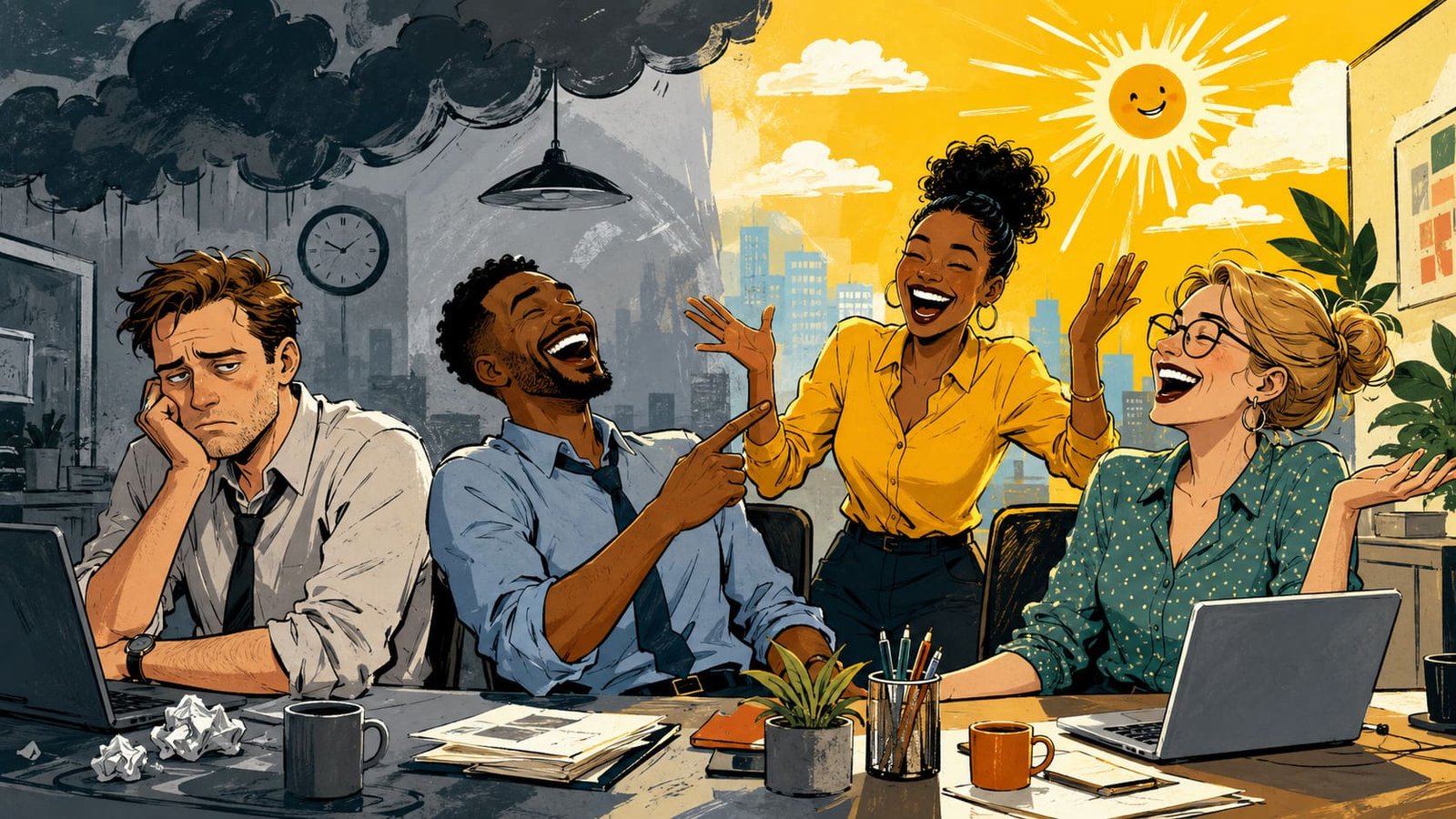
A burst of laughter escaped a meeting room just as anxious footsteps hurried past another corridor where conversations sounded painfully rehearsed. One room felt lighter without trying. Another carried polished professionalism that somehow made everyone seem older than the calendar suggested. Workplaces rarely lose talented people because challenges become impossible. They lose them when every day feels emotionally expensive, leaving joy outside the office entrance.
Humor is often dismissed as a pleasant extra, yet organizational psychologists have long understood that shared laughter strengthens trust, lowers tension, and makes collaboration easier under pressure. Naomi joined a finance department known for flawless reports and equally flawless awkward silences. During a demanding audit, she began opening morning meetings with harmless stories about everyday mishaps, including accidentally emailing herself reminders she immediately ignored. Smiles appeared first, honest conversations followed, and difficult work suddenly felt far less isolating.
Southwest Airlines built much of its customer experience around employees who were encouraged to show personality rather than perform scripted interactions. That freedom did more than entertain passengers. It reminded staff that authenticity could exist alongside operational excellence. Ethan managed a logistics team where stress usually peaked before product launches, yet he introduced informal celebration moments after every milestone, no matter how small. Momentum improved because people stopped treating success as merely another checkpoint before the next crisis.
An old neighborhood barbershop offered a curious lesson every Saturday afternoon. Customers arrived discussing deadlines, family worries, and unpaid bills, then somehow left smiling after ordinary conversations filled with playful teasing and unexpected warmth. Nothing magical happened inside those walls. People simply felt safe enough to laugh without worrying that someone might mistake humanity for weakness, and that feeling quietly restored energy before another demanding week.
Pixar has long emphasized environments where creative disagreement and playful interaction can comfortably coexist, recognizing that imagination flourishes where fear struggles to survive. Teams producing remarkable ideas often look surprisingly relaxed because curiosity grows faster than anxiety inside supportive cultures. Carla inherited a product design group recovering from several disappointing launches, then filled shared spaces with sketches, favorite movie quotes, and spontaneous brainstorming games that sounded ridiculous at first. Within months, colleagues challenged ideas more openly because relationships had become stronger than individual egos.
Twilight settled across office windows while distant echoes of cheerful conversation lingered long after computer screens slipped into darkness. Memorable organizations leave more than completed projects behind because people remember how workplaces made them feel during ordinary afternoons. Serious work has never required permanently serious faces. Perhaps tomorrow’s strongest team will not be built by another policy, but by one genuine laugh that reminds everyone they still enjoy building success together.
