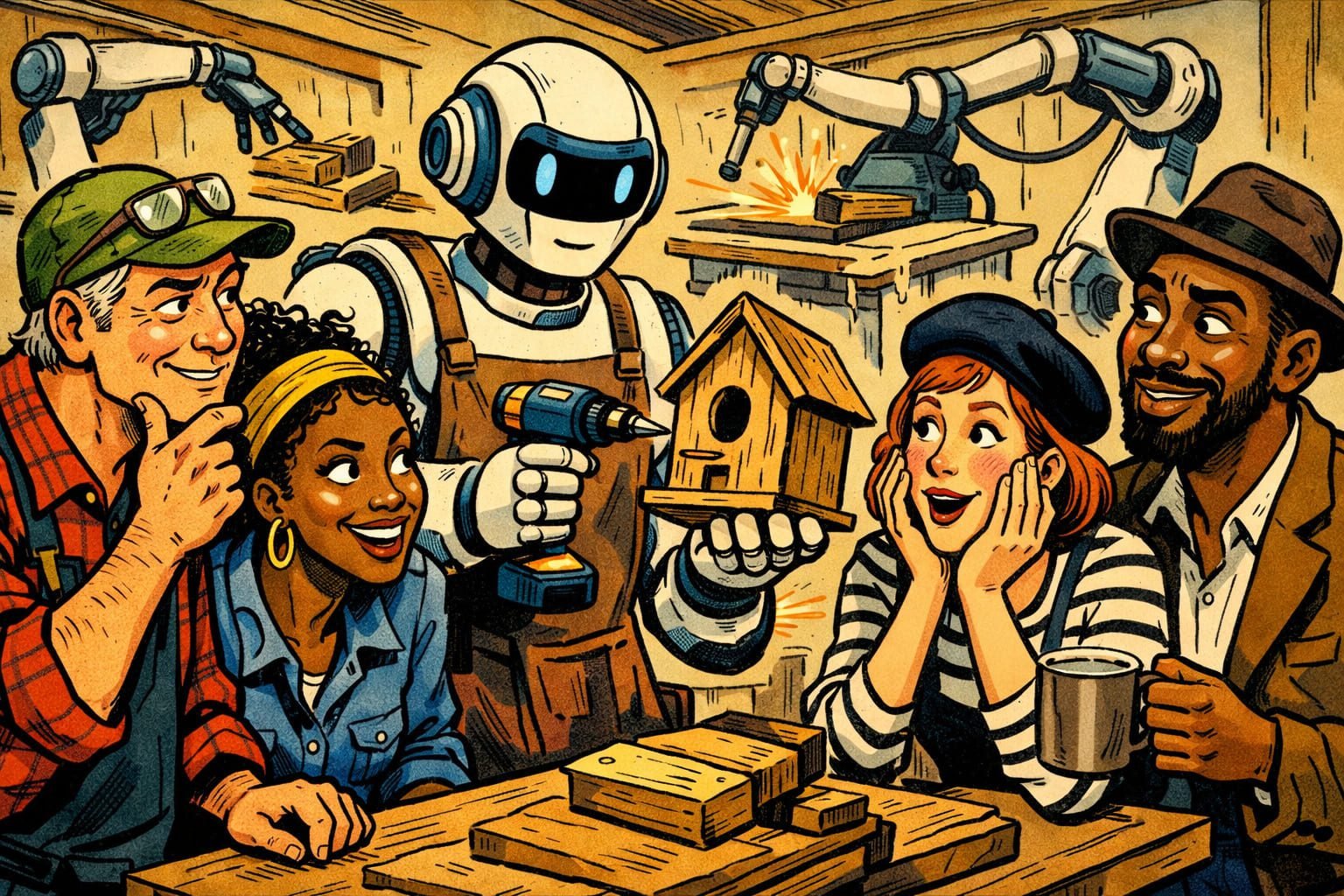
The scent of freshly cut timber drifted through the workshop long before sunrise. Sunlight filtered through high windows, catching tiny clouds of sawdust suspended in the air like golden mist. Nearby, robotic arms moved with astonishing precision, carving intricate patterns into hardwood while veteran craftsmen watched with folded arms and cautious curiosity. The scene felt almost impossible. Ancient craftsmanship stood shoulder to shoulder with intelligent machines. Instead of replacing tradition, technology had quietly become its newest apprentice, learning every movement while challenging old assumptions about what true craftsmanship really meant.
Woodworking has always demanded patience, precision, and deep respect for materials that refuse to behave exactly the same twice. Every grain tells a different story. Every knot introduces uncertainty. Customers expect flawless furniture while demanding faster delivery and competitive pricing. That combination creates enormous pressure for manufacturers. Businesses relying exclusively on manual production often struggle to scale without sacrificing quality. Automation offers a new possibility. It allows consistency to coexist with creativity instead of forcing companies to choose between them.
Many people assume robots remove artistry from woodworking. The strongest manufacturers have discovered the opposite. Intelligent cutting systems handle repetitive tasks with exceptional accuracy. Automated measuring equipment eliminates costly mistakes before they happen. Digital design platforms allow complex furniture designs to move seamlessly into production. Skilled craftsmen remain at the center of the process because technology cannot replace artistic judgment, material selection, or the subtle finishing touches that transform ordinary furniture into pieces customers proudly welcome into their homes.
Furniture entrepreneur Oliver experienced this transformation after demand for his handcrafted cabinets expanded beyond what his workshop could comfortably produce. Orders increased, yet delivery delays frustrated loyal customers. One experienced carpenter quietly admitted, “We’re spending more time measuring than creating.” That observation changed everything. Oliver introduced computer-controlled cutting systems while preserving hand-finishing techniques for every completed piece. Production accelerated dramatically. Craftsmen stopped repeating routine tasks and devoted their attention to design refinement, wood selection, and quality finishing that customers genuinely appreciated.
Manufacturers across the furniture industry continue embracing this balanced approach. IKEA has long invested in advanced manufacturing processes, digital design technologies, and production efficiency while maintaining consistent product quality across global markets. The lesson extends beyond large corporations. Small and medium-sized workshops increasingly discover that automation strengthens craftsmanship when implemented thoughtfully. Technology becomes a reliable assistant rather than an unwelcome replacement for skilled human hands.
The greatest change often appears inside workplace culture rather than inside machinery itself. Craftsmen begin mentoring younger employees instead of spending entire days performing repetitive cutting operations. Designers experiment with more ambitious ideas because production limitations gradually disappear. Factory managers shift attention from correcting preventable mistakes toward exploring new product opportunities. Confidence replaces constant urgency. Teams rediscover the creative satisfaction that first attracted them to woodworking because routine work no longer consumes their energy or imagination.
There is also a deeper lesson hidden inside modern woodshops. Businesses thriving in today’s manufacturing landscape refuse to see tradition and innovation as competing forces. They understand that lasting success comes from respecting history while embracing better tools for the future. The warmth of handcrafted furniture remains timeless. Intelligent automation simply provides the consistency, efficiency, and reliability needed to deliver that craftsmanship to more customers without compromising its character. Heritage grows stronger when it learns instead of resisting change.
Long after the machines fall silent and the workshop doors close for the evening, every finished table, cabinet, and chair carries a quiet story within its polished surface. It tells of skilled hands guided by experience and intelligent systems working together with remarkable harmony. The future of woodworking will never belong entirely to robots or entirely to artisans. It will belong to those wise enough to let craftsmanship and technology shape something greater than either could achieve alone. Ask yourself this: is your business protecting tradition by resisting change, or preserving it by helping it evolve?
