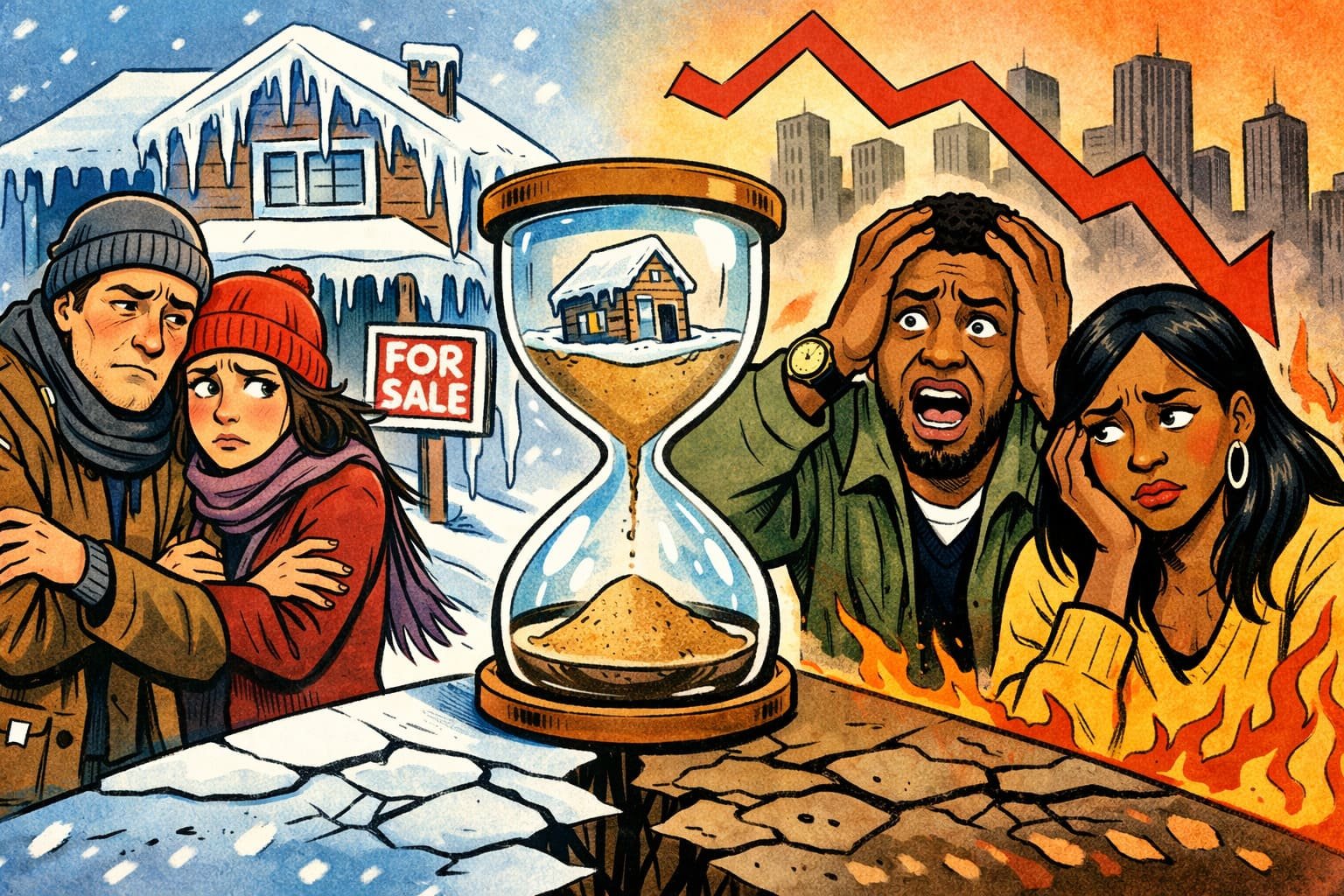
A row of immaculate houses waits behind polished fences, each wearing a bright “For Sale” sign like an actor trapped on stage after the audience has gone home. Windows gleam, gardens bloom, and everything appears healthy. Yet nobody moves. Property markets possess an unusual talent for looking alive while quietly losing momentum, creating an illusion that stability still exists even as confidence drains away. Housing rarely collapses overnight. Instead, transactions slow until silence becomes the loudest signal.
Executives often celebrate rising property values because appreciating assets strengthen household balance sheets and encourage consumption. That logic works beautifully until borrowing costs climb or uncertainty spreads across labor markets. Buyers hesitate. Sellers refuse to reduce expectations. Banks tighten lending standards without announcing dramatic changes. Activity freezes before prices fully adjust. Harvard economist Edward Glaeser has long argued that housing markets move differently from stock markets because homeowners resist accepting losses, allowing time itself to become another economic variable.
That resistance creates surprising business consequences extending well beyond real estate agencies. Furniture retailers notice fewer customers because fewer families relocate. Home improvement chains experience slower renovation demand as owners postpone ambitious projects. Mortgage lenders compete harder for shrinking pools of qualified borrowers while construction firms delay projects awaiting clearer demand. During previous market slowdowns, companies such as Home Depot and Lennar adapted by emphasizing renovation and disciplined investment rather than assuming rapid recoveries would immediately restore growth. Corporate strategy often changes long before neighborhood conversations acknowledge trouble.
A financial adviser named Miriam watched one couple visit the same house across several weekends. They loved every room and carefully measured each wall, yet never submitted an offer because interest rates transformed comfortable monthly payments into unsettling commitments. Months later, another family toured the identical property with equal enthusiasm before walking away for similar reasons. Nobody lacked desire. Confidence simply became too expensive. That quiet hesitation repeated across countless communities, creating a market defined less by rejection than prolonged indecision.
Accounting records eventually reveal what emotions conceal. Real estate companies begin reporting slower transaction volumes before dramatic price declines dominate headlines. Developers preserve cash, investors delay acquisitions, and financial institutions strengthen provisions against future credit risks. Healthy-looking property valuations therefore deserve careful interpretation because market liquidity often matters more than headline prices. An expensive home that attracts no buyer contributes little to economic dynamism. Capital trapped inside inactive assets cannot circulate through businesses, entrepreneurs, or expanding communities with the same productive force.
Streetlights continue reflecting across empty driveways while unlocked front doors patiently await footsteps that never arrive. Housing has always represented more than shelter because every purchase carries expectations about tomorrow’s income, opportunity, and security. Frozen markets therefore describe emotional caution as much as financial calculation. Every unopened contract whispers a difficult truth: prosperity is measured not only by what people own, but by the confidence that persuades them to move forward.
