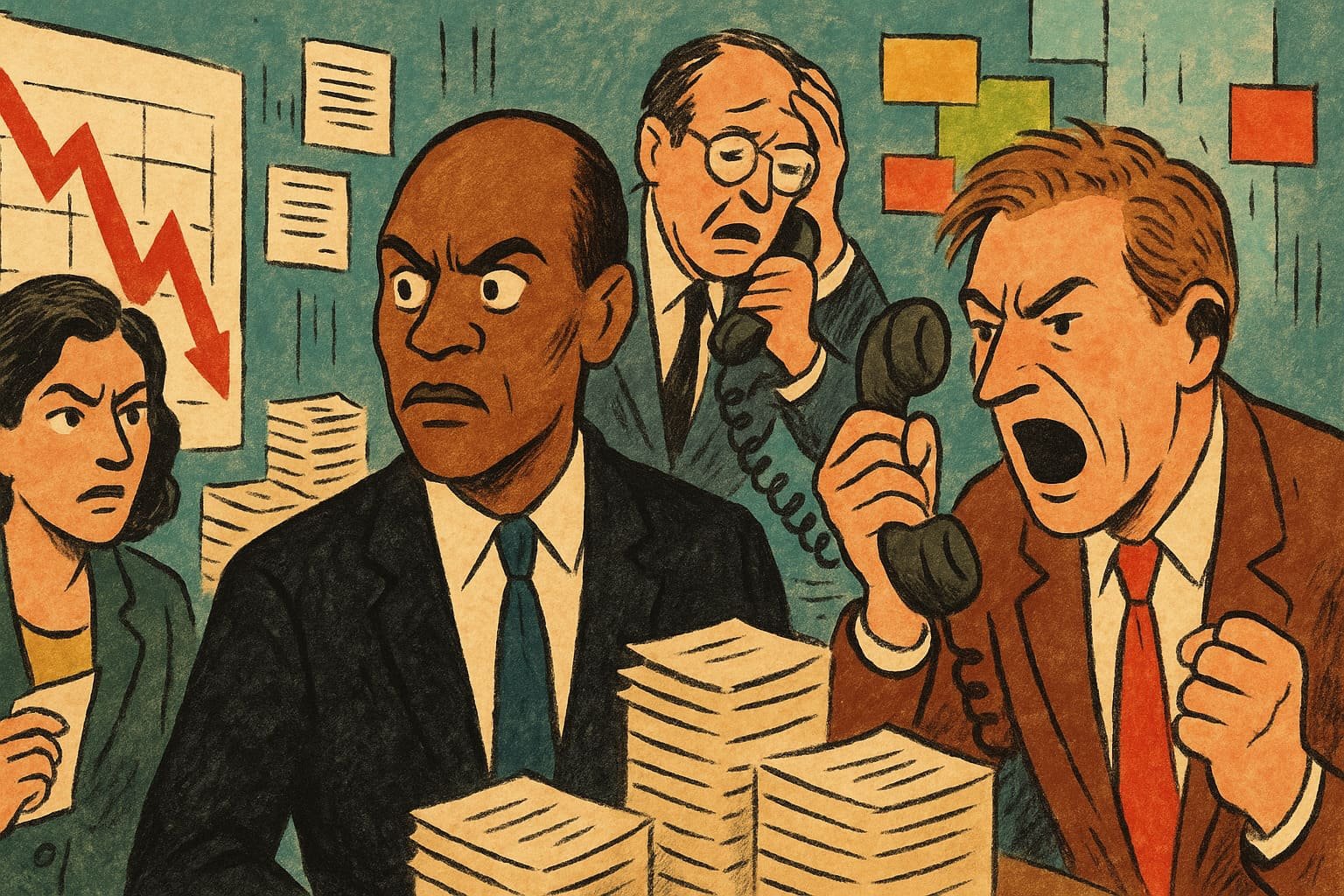
Attention has become one of the most profitable extraction industries in modern life. Not oil. Not data, though data certainly helps. Human concentration. The quiet, finite ability to think clearly for sustained periods has been carved into tradable fragments by platforms, workplace habits, and entire business models built around interruption. What used to feel like a personal discipline problem increasingly resembles market warfare. Focus is no longer merely about self-control. It is about defending cognitive territory from systems specifically engineered to occupy it.
Social media perfected the business model long ago, but the logic now bleeds directly into workplaces. A software product director named Kaevra joined a firm where internal communication resembled digital weather gone feral. Messages arrived across multiple channels with emotional urgency wildly disconnected from actual importance. Tiny interruptions accumulated into strategic erosion. Nobody could sustain thought long enough to solve difficult problems because every attempt at concentration got mugged by a notification. Leadership complained that innovation had slowed while actively constructing the exact environment required to suffocate serious thinking. The contradiction would be funny if it were not so common.
Managers routinely underestimate the cost of fragmentation because interruption creates the appearance of productivity. Motion feels alive. Responsiveness looks collaborative. Rapid replies flatter organizational anxiety. Yet cognition does not work that way. Task switching leaves residue. Context reconstruction consumes invisible energy. Deep work is not precious intellectual vanity. It is the operating condition required for complex judgment, original problem-solving, and strategic clarity. Nobody would interrupt a surgeon mid-procedure with trivial updates simply to demonstrate communication culture. Knowledge organizations often replicate the cognitive equivalent with surprising enthusiasm.
An operations executive named Mireth inherited a professional services team drowning in what she privately called performance messaging. Clients praised responsiveness. Staff looked perpetually available and increasingly depleted. Deliverables became thinner because meaningful concentration had become culturally impossible. Mireth introduced protected quiet blocks, asynchronous communication expectations, and clearer escalation rules. Resistance arrived instantly. Some employees felt abandoned by reduced immediacy. Others feared visibility loss. Months later, output improved and emotional exhaustion eased. The organization learned something uncomfortable: much of what it called engagement had actually been institutionalized anxiety.
Popular culture spent years glamorizing multitasking as executive sophistication. The entrepreneur with six screens, simultaneous calls, and caffeinated chaos looked aspirational for far too long. Even entertainment trained shorter attention loops until boredom became culturally intolerable. Business absorbed the aesthetic and mistook it for operational excellence. Then leaders began wondering why strategic thinking felt shallow. The answer is painfully straightforward. Minds trained for reaction become excellent at reaction. They become far less reliable at reflection. An ecosystem designed around interruption cannot suddenly produce contemplative brilliance on command.
There is a darker layer beneath all this. Some organizations structurally reward distraction because distraction is easier to monitor than thought. Message activity can be measured. Presence can be observed. Quiet concentration looks suspicious to leaders who mistake visibility for contribution. A consultancy manager named Orev admitted privately that constant internal chatter reassured executives because silence looked like inactivity. That single sentence explains a remarkable amount about modern organizational dysfunction. If management cannot distinguish thinking from disengagement, the problem is managerial illiteracy, not employee weakness.
This is not an argument against collaboration or responsiveness. Certain environments genuinely require rapid coordination. Crisis response demands immediacy. Customer-facing teams cannot vanish into contemplative monasteries. The real question is architectural. Which work requires interruption? Which work demands protection? High-performing organizations design around cognitive realities instead of pretending human minds behave like infinitely parallel machines. Focus is no longer a soft productivity preference. It is strategic infrastructure. Companies that fail to treat it that way will increasingly confuse busyness with intelligence.
A person staring at an overflowing inbox while struggling to remember what uninterrupted thought even feels like is not experiencing a private character flaw. They are standing inside a marketplace designed to auction off fragments of their attention to the highest bidder. The brutal trade is elegant in its cruelty: surrender focus in exchange for the illusion of relevance. Serious work requires something rarer than speed now. It requires defended mental territory. The next competitive advantage may belong not to whoever shouts loudest, but to whoever still remembers how to think without being interrupted every six minutes.
