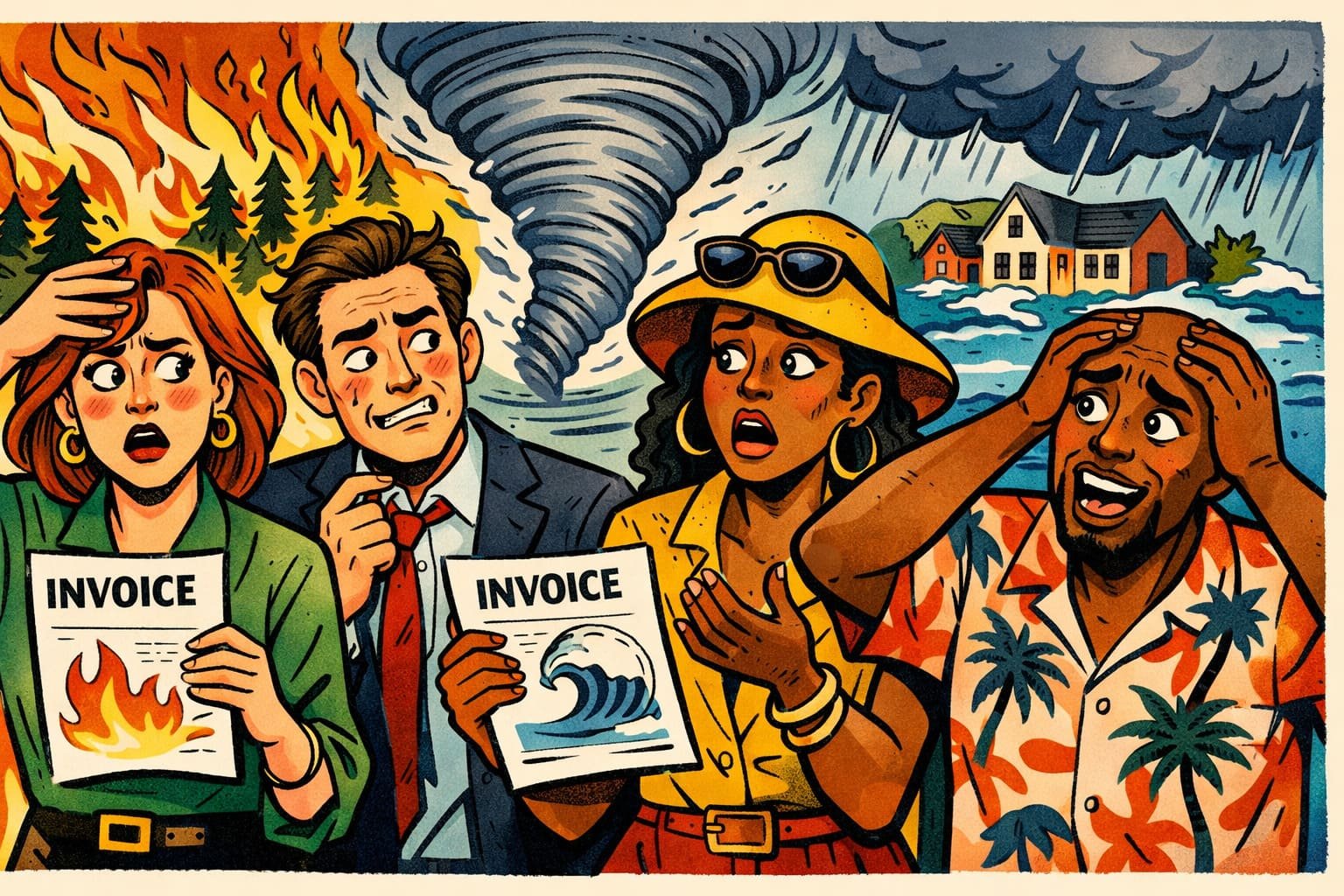
Rain hammered rooftops with mechanical precision while emergency crews worked through streets that had flooded before anyone expected another season of repairs. Storefront lights still glowed, traffic slowly returned, and neighborhoods appeared remarkably resilient. Then renewal notices arrived. Calm gave way to disbelief because the true cost of extreme weather rarely arrives with the storm itself. Insurance has become the quiet messenger delivering climate’s financial bill long after the skies have cleared.
Insurance works because uncertainty is shared across many policyholders, allowing rare losses to remain manageable. That balance weakens when severe weather becomes more frequent, more expensive, and increasingly difficult to predict. Insurers respond by raising premiums, limiting coverage, or withdrawing from high-risk regions altogether. Those decisions can feel harsh, yet they reflect accounting realities rather than corporate indifference. Risk cannot disappear simply because customers wish affordability would return.
Major insurers have already reshaped their strategies in regions facing repeated wildfire, flood, and hurricane losses. Companies have reduced new business in parts of California and Florida after confronting mounting claims that challenged long-term profitability. Reinsurers, the firms that insure insurance companies, have also demanded higher prices to absorb growing catastrophe risks. Every adjustment travels through financial markets like a chain reaction. Banks reassess mortgage exposure, developers reconsider projects, and local governments confront shrinking tax expectations as property markets absorb new costs.
Clara owned a bakery that had survived recessions, supply disruptions, and changing consumer tastes without losing her optimism. A single insurance renewal changed that confidence. Premiums climbed sharply, forcing difficult choices between hiring another employee, replacing aging equipment, or accepting thinner profits. Customers noticed only slightly higher prices on pastries. They never saw the spreadsheet where climate risk quietly competed against payroll, investment, and expansion. Financial pressure often hides inside ordinary transactions that seem unrelated to weather.
Business leaders increasingly recognize insurance as more than a protective expense. It has become a strategic signal about future investment, capital allocation, and operational resilience. Companies choosing factory locations now examine flood maps alongside labor markets and transportation networks. Investors ask tougher questions about environmental exposure because insurance availability influences long-term asset values. Climate risk therefore migrates from sustainability reports into boardroom discussions, balance sheets, and lending decisions, reshaping finance before public perception fully catches up.
Heavy clouds drift away with surprising grace, leaving streets washed clean and almost peaceful. Ledger books tell another story. Every premium adjustment, withdrawn policy, and revised valuation quietly redraws the economic map without moving a single building. Markets can rebuild structures with remarkable speed, yet rebuilding confidence takes far longer because trust is harder to insure than property. Every renewal notice now asks a deeper question: what happens when tomorrow’s greatest financial liability arrives disguised as yesterday’s predictable weather?
