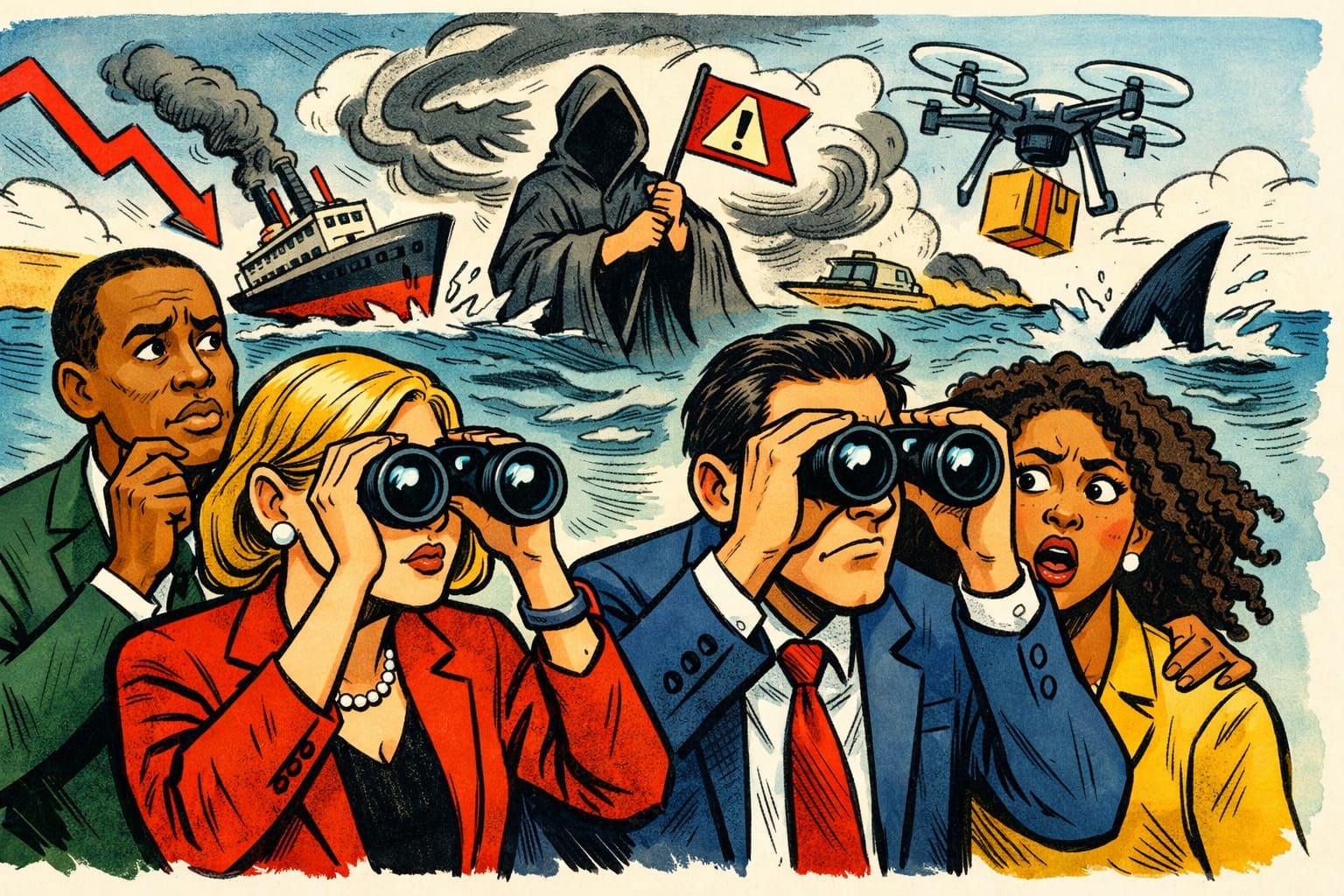
The market almost never kicks the door down first. It prefers subtler theater. A strange shift in customer language. A supplier suddenly becoming evasive. A competitor hiring in a pattern that feels oddly specific. Pricing pressure arriving from directions that do not quite make sense yet. Most strategic threats begin life looking harmless, even boring. That is what makes them dangerous. Businesses are rarely destroyed by invisible danger. They are far more often damaged by visible signals leadership chose to classify as background noise because paying serious attention would have required uncomfortable reinterpretation of a comforting story.
Arieth launched a successful industrial supply business that looked structurally stable by almost every internal measure leadership cared to present. Renewal rates held firm. Revenue felt respectable. Teams moved with the kind of practiced confidence that makes weak assumptions feel sophisticated. Then peculiar signals began surfacing. Procurement conversations slowed in tone rather than substance. Clients asked oddly precise questions about material alternatives and digital fulfillment capabilities. A regional competitor began hiring technical specialists with suspicious urgency. No single event looked dramatic. Together, they formed the outline of a market shift leadership would have missed entirely had one operations manager not grown curious enough to ask inconvenient questions.
Internal performance can become a dangerous narcotic. Revenue reviews, staffing demands, operational friction, investor expectations, and endless managerial maintenance consume executive attention until the outside world becomes something observed episodically rather than studied continuously. That is where strategic blindness grows comfortable. Kodak did not suffer from a lack of signals. Nokia did not collapse because reality forgot to leave clues. The issue was interpretation. Gathering information is the easy part. Reframing identity around what that information implies is where organizations begin emotionally resisting their own survival.
A logistics operator led by Vensora encountered this before customer churn made the threat obvious. Contract discussions felt subtly colder. Prospects began asking less about reliability and more about predictive visibility, integration capabilities, and operational responsiveness. A younger competitor with modest scale started attracting disproportionate attention. Leadership initially dismissed it as startup theater. Smaller players always make noise. One commercial director noticed something stranger than pricing pressure: the language itself had changed. Clients were no longer buying dependable transport. They were buying intelligence wrapped in logistics. That observation altered strategy before market punishment became unavoidable.
External signals come from peculiar places if leadership learns how to read them properly. Supplier hesitation can hint at category pressure before public pricing shifts arrive. Job listings can reveal competitor pivots more honestly than executive interviews ever will. Customer objections often contain tomorrow’s strategic requirements disguised as today’s sales friction. Regulatory murmurs reshape economics long before enforcement headlines appear. Cultural shifts, investor narratives, adjacent industry experiments, even subtle search behavior changes can act as early warning instruments. Strategic literacy requires curiosity disciplined enough to notice weak signals without descending into paranoia.
Human psychology complicates this beautifully. People love coherent stories, especially flattering ones. Weak signals are irritating because they resist certainty. It feels emotionally easier to wait for cleaner proof. Unfortunately, strategic proof often arrives after strategic optionality has narrowed. Organizations that survive change cultivate environments where awkward observations can surface without ridicule. The junior analyst noticing strange customer phrasing may be more strategically useful in that moment than the executive delivering confident quarterly optimism with expensive vocabulary.
Signal reading also demands restraint. Not every anomaly deserves corporate reinvention. Markets generate endless noise, false starts, temporary weirdness, and competitor theatrics designed to provoke reaction. Strategic maturity lives in pattern recognition, not impulsive overcorrection. One unusual customer conversation means little. Repeated behavior across segments matters. One competitor hire means little. Coordinated capability-building aligned with broader market language deserves attention. Leadership must remain alert without becoming emotionally jumpy. Discipline, not anxiety, is what makes signal intelligence commercially useful.
The companies that move early rarely look prophetic in the moment. They often look mildly paranoid, inconveniently observant, or socially annoying for asking questions others would rather postpone. Time usually makes them look wiser than they felt. Markets do not reward those who collect the most information. They reward those disciplined enough to reinterpret reality before the old story becomes financially expensive to defend. Somewhere outside every leadership meeting, the future is already speaking in fragments. The real risk is not that the message is hidden. It is that comfort keeps translating it incorrectly.
