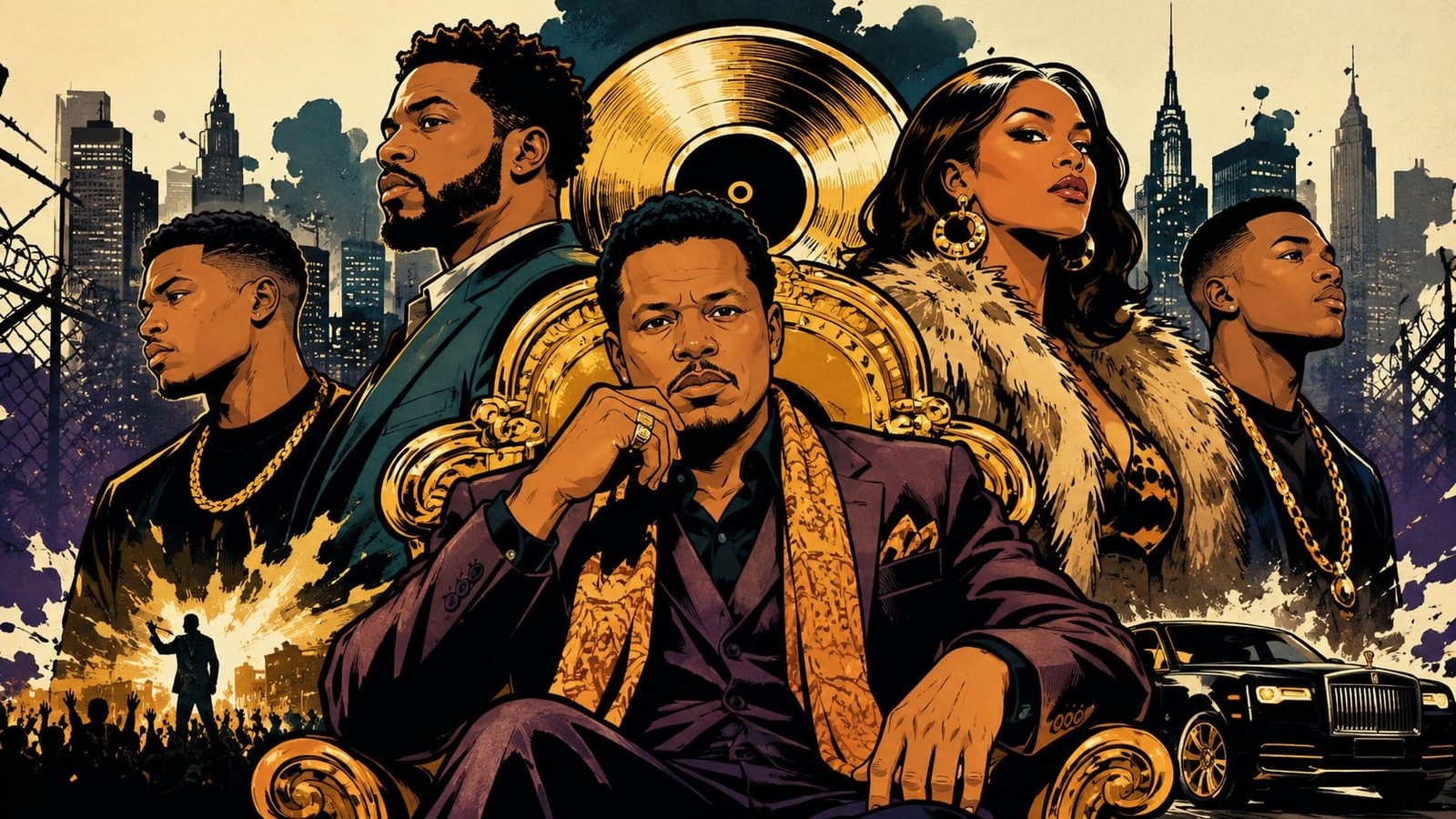
Gold records gleamed beneath nightclub light while expensive champagne fizzed beside conversations sharp enough to draw blood. Somewhere in the distance, bass lines shook the city like a heartbeat refusing to slow down. Inside Empire, success never arrives quietly. It storms into rooms wearing fur coats, diamond watches, and unresolved trauma. The series understands something painfully true about modern celebrity culture: power becomes most dangerous when it mixes with family wounds, public validation, and the intoxicating belief that attention can replace love. Every episode feels like a symphony conducted at gunpoint.
Lucious Lyon operates like a corporate emperor raised inside emotional warfare. He built Empire Entertainment from violence, instinct, charisma, and ruthless strategic thinking. Yet the higher he climbs, the more fragile his kingdom becomes. That contradiction powers the entire show. The series refuses the fantasy that wealth heals psychological damage. Lucious commands boardrooms and recording studios with terrifying confidence, yet remains haunted by insecurity, survival trauma, and obsession with legacy. He behaves less like a father and more like a king terrified history will forget his name. Watching him maneuver through betrayal and succession battles feels eerily similar to observing real entertainment moguls balancing genius against paranoia.
Cookie Lyon storms through the series with one of television’s most magnetic forms of emotional intelligence. Fresh out of prison, she enters rooms already understanding what everyone else is pretending not to feel. Cookie recognizes talent instantly because she helped build the empire before the public ever saw its shine. Her presence disrupts the polished mythology Lucious constructed around himself. The brilliance of the character lies in how she weaponizes honesty inside environments built on performance. Music executives, investors, and artists all attempt to manage perception. Cookie tears directly through illusion. That energy gives the show much of its emotional electricity.
A music producer named Rashad Cole once described watching a young artist implode emotionally after a viral breakthrough turned him into an overnight sensation. Labels flooded him with contracts. Friends became opportunists. Family expectations multiplied instantly. During one recording session the artist suddenly stopped mid-verse and asked a haunting question: “If everybody needs me winning, who gets to see me tired?” Rashad later admitted the room fell silent because nobody had an answer. Empire understands this emotional burden deeply. Fame expands visibility while shrinking privacy. Success creates dependency networks. Everyone eats from the machine until the person at the center forgets whether affection is genuine or transactional.
The show also captures the brutal mechanics of succession inside family-run empires. Lucious constantly tests his sons through humiliation, manipulation, and emotional scarcity because he mistakes toughness for leadership development. Andre seeks validation through corporate competence. Jamal fights for artistic authenticity and personal acceptance. Hakeem chases approval through spectacle and impulsive dominance. Their rivalry feels painfully human because it mirrors how many institutions reward competition while quietly poisoning intimacy. The boardroom scenes often resemble family therapy sessions interrupted by stock negotiations. Every business disagreement carries emotional history beneath it.
Music inside Empire functions almost like emotional warfare. Songs become declarations of identity, revenge, grief, ambition, and survival. That artistic layer separates the series from ordinary corporate dramas. Characters do not simply negotiate through spreadsheets and contracts. They perform themselves into existence. A concert can suddenly feel like a coronation ceremony. A recording booth confession can hit harder than physical violence. The show recognizes something many industries now understand instinctively: storytelling drives power. Brands, politicians, influencers, and celebrities all compete to control narrative before someone else weaponizes it first.
A talent manager named Selene Baptiste once recalled managing two siblings signed to the same label in Atlanta. Early success bonded them tightly until executives began positioning one as the commercial favorite. Small tensions escalated rapidly. Interviews became passive-aggressive competitions. Award nominations created private resentment nobody addressed honestly. One backstage argument erupted minutes before a major televised performance, leaving makeup artists and security guards frozen in uncomfortable silence. Selene later admitted the industry rarely destroys artists directly. It amplifies existing emotional fractures until collapse becomes inevitable. That observation sits at the center of Empire. The entertainment machine feeds on vulnerability while pretending to celebrate talent alone.
Long after the music fades and the cameras stop flashing, empty studios still hum softly beneath neon light while exhausted artists stare at their reflections wondering whether success expanded their identity or consumed it entirely. Somewhere nearby, another ambitious performer rehearses greatness while quietly fearing irrelevance more than failure. City lights flicker against dark windows. Champagne glasses sit abandoned beside contracts stained by ego and desire. That is where Empire leaves its audience, suspended between glamour and emotional ruin. The series reveals a timeless truth hiding beneath celebrity culture and business mythology alike: people do not merely fight for money or applause. They fight for permanence, for recognition, for proof their existence echoed loudly enough to survive the silence waiting beyond the spotlight.
Editorial Disclaimer: Whether a TV Show is rooted in fiction or inspired by real events, the actions, decisions, and behaviors portrayed within are not intended to be encouraged, replicated, or endorsed in real-world settings. This review exists solely to analyze the storytelling, characters, themes, and business dynamics presented in the TV Show for educational, analytical, and entertainment purposes. Any ethical or unethical conduct depicted in the TV Show does not reflect the views, values, or endorsements of ESYRITE.
