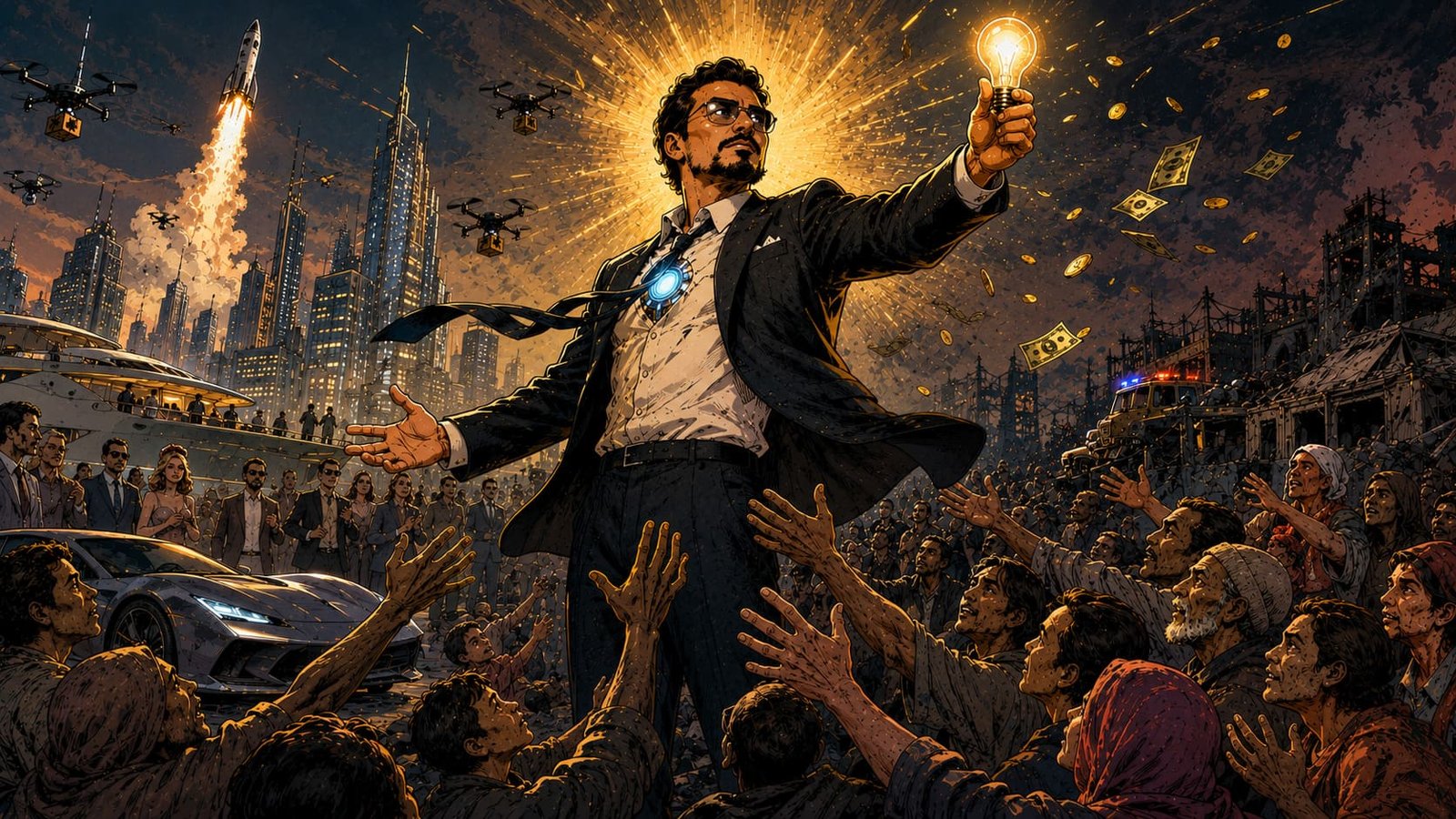
The desert burned beneath a sky so bright it looked artificial, the kind of heat that makes metal feel alive and morality feel negotiable. Somewhere between exploding weapons and polished corporate presentations, a billionaire engineer discovered the terrifying difference between innovation and consequence. Iron Man arrived disguised as a superhero spectacle, yet its real achievement was stranger and far more dangerous. Jon Favreau created a story about capitalism discovering its own reflection inside a missile casing. Long before cinematic universes became assembly lines for global entertainment, this film understood a cultural shift quietly reshaping the modern world: society had begun replacing philosophers with founders, presidents with CEOs, and moral authority with technological charisma. Tony Stark does not simply become a hero. He becomes the prototype for the modern innovation messiah.
Robert Downey Jr. plays Tony Stark with the seductive confidence of a man who believes intelligence can outrun accountability. The performance works because it mirrors a recognizable archetype that dominates boardrooms and startup conferences alike. Wealthy disruptors often frame recklessness as vision. Arrogance becomes branding. Emotional detachment becomes efficiency. A robotics entrepreneur named Nathan Vale once unveiled an autonomous security drone system during a private demonstration in Singapore. Investors applauded while orchestral music echoed through the convention hall. One engineer later admitted the product had not passed critical safety tests. Nobody wanted to interrupt the momentum because momentum itself had become the commodity. Iron Man taps directly into that psychological ecosystem. The film understands that modern culture often mistakes spectacle for leadership because spectacle feels emotionally easier than ethical complexity.
The cave sequence remains one of the sharpest origin stories in blockbuster history because it strips Stark of every comforting illusion. Wealth cannot negotiate with mortality. Charm cannot disarm trauma. The man who once sold weapons through cocktail-party confidence suddenly confronts the physical reality of what his empire actually produces. That transformation lands harder today because audiences increasingly live inside economies disconnected from consequence. Consumers tap screens without seeing factory conditions. Investors celebrate growth without understanding human fallout. A venture capitalist named Serena Kline once confessed during a late-night panel discussion that her firm avoided researching labor practices because “friction slows conviction.” The room laughed nervously while waiters carried miniature desserts across polished marble floors. That uncomfortable silence exists throughout Iron Man. The movie keeps asking whether intelligence without conscience eventually becomes indistinguishable from destruction.
Tony Stark’s evolution also reflects a deeper crisis surrounding identity and masculinity. He begins as a performance. Every joke functions like armor plating. Every public appearance resembles a nightclub magician distracting audiences before the real trick appears. Modern corporate culture rewards this theatrical confidence relentlessly. Founders learn to speak in declarations. Executives learn to smile through exhaustion. Public personas become strategic assets. Yet the film gradually reveals how fragile those identities truly are once stripped of applause and access. Stark builds the first suit not from ego but survival. That distinction matters. Real transformation rarely begins through inspiration alone. It usually begins when denial finally collapses under pressure.
Jeff Bridges’ Obadiah Stane represents another fascinating layer within the story. He embodies institutional greed disguised as mentorship. The character understands how corporations absorb morality until ethical compromise starts feeling procedural rather than personal. That dynamic appears everywhere in modern business ecosystems. A pharmaceutical executive named Julian Mercer once defended aggressive pricing strategies by describing them as “shareholder-aligned necessity.” Employees reportedly repeated the phrase so often that it became internal office slang. Nobody paused to ask what it actually meant anymore. Iron Man captures this erosion of moral language brilliantly. Evil rarely introduces itself dramatically. More often it arrives through polished rationalizations delivered in calm conference-room voices beside untouched bottled water and quarterly growth projections.
The film’s humor remains essential because it prevents the story from collapsing into self-seriousness. Stark jokes constantly because humor softens fear. Entire industries operate this way. Tech culture especially wraps existential ambition inside hoodies, memes, and ironic self-awareness. It becomes easier to ignore ethical contradictions when everyone sounds amused by them. Yet beneath the wit sits loneliness. Stark’s mansion feels enormous and emotionally vacant, like a luxury showroom designed by someone terrified of silence. There is a brief tenderness in the scenes with Pepper Potts because she recognizes the frightened human being hidden beneath the machinery of performance. Gwyneth Paltrow plays those moments with understated precision. Her calmness cuts through the noise like a steady heartbeat inside a collapsing casino.
Visually, the film balances industrial grit with futuristic elegance in ways that still feel influential. Sparks erupt through dim workshops. Metal crashes against concrete floors. Prototype failures leave smoke curling through expensive architecture. Unlike many later superhero films obsessed with digital excess, Iron Man keeps returning to tactile details. Audiences feel the weight of engineering. The machinery looks dangerous because invention itself is dangerous. Elon Musk’s cultural rise later intensified the film’s relevance. Society increasingly romanticized the billionaire innovator capable of reshaping civilization through sheer intellect and theatrical confidence. Tony Stark became less fantasy and more prophecy. That shift explains why the movie still resonates far beyond comic-book fandom.
Near the emotional core of the story sits a contradiction modern culture still struggles to resolve. Human beings admire power even while fearing what power does to morality. Stark’s redemption feels compelling because it remains incomplete. He does not suddenly become pure. He becomes conscious. That awareness changes everything. Somewhere between the glowing arc reactor and the collapsing corporate empire, Iron Man reveals how innovation can either deepen human responsibility or anesthetize it completely. The film leaves behind the metallic taste of ambition mixed with regret, like standing alone inside a silent workshop after midnight while unfinished machines blink softly in the dark. And long after the explosions fade, one unsettling truth keeps humming beneath the surface: the future rarely belongs to the smartest people in the room, but to the ones willing to confront what their brilliance is actually building.
Editorial Disclaimer: Whether a film is rooted in fiction or inspired by real events, the actions, decisions, and behaviors portrayed within are not intended to be encouraged, replicated, or endorsed in real-world settings. This review exists solely to analyze the storytelling, characters, themes, and business dynamics presented in the film for educational, analytical, and entertainment purposes. Any ethical or unethical conduct depicted in the film does not reflect the views, values, or endorsements of ESYRITE.
