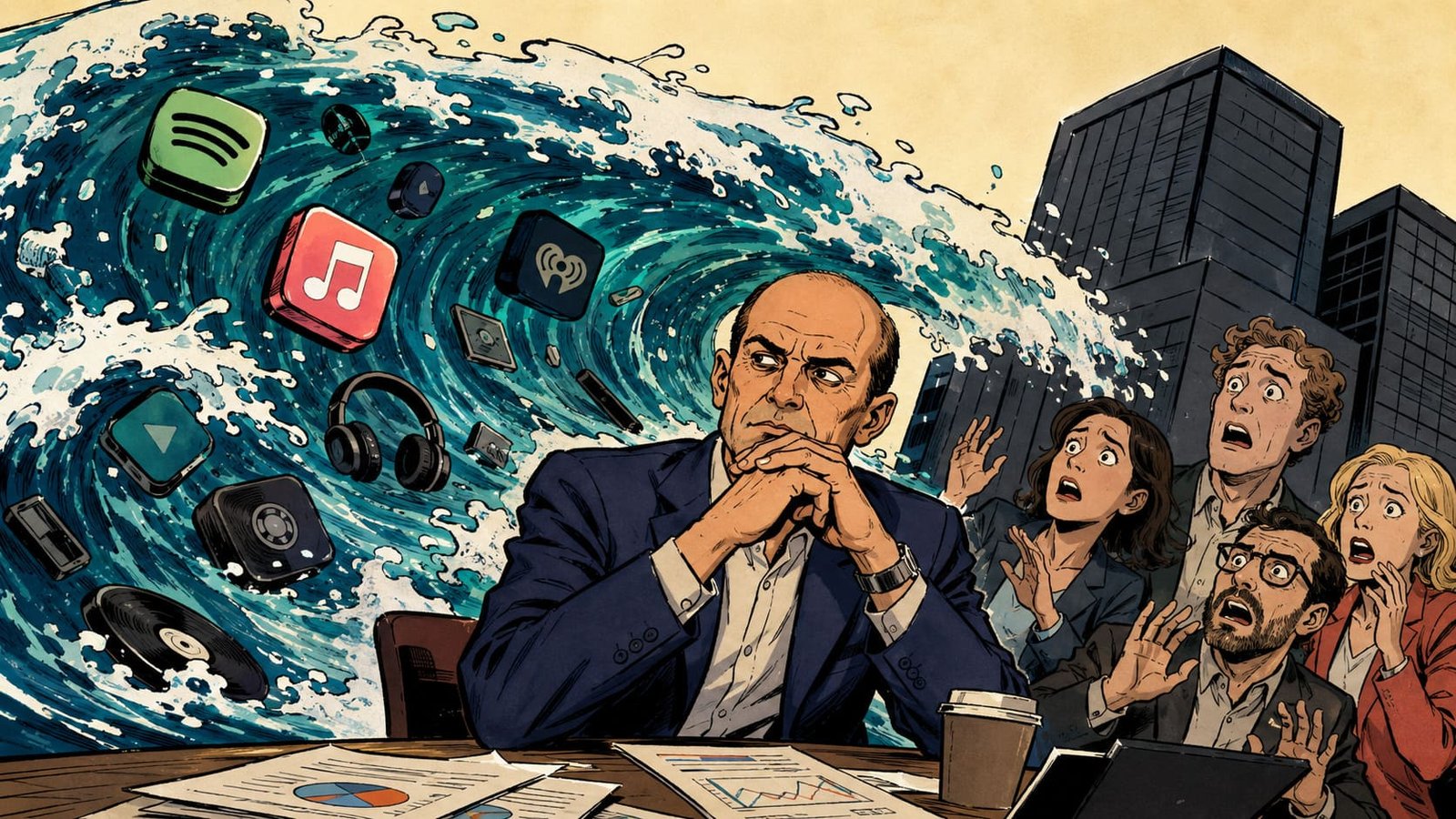
Stockholm glows cold and restless in The Playlist, a city where snow gathers quietly outside glass offices while young programmers argue about piracy, ownership, and the future of music with the feverish intensity of people trying to redesign civilization before sunrise. Laptops hum beside half-finished coffee cups. Investors pace through minimalist conference rooms smelling faintly of ambition and stress. Somewhere inside this digital storm, a radical idea begins reshaping global culture forever: what if access mattered more than possession? The series starts as a startup story about Spotify
, then slowly transforms into something much larger. A meditation on how technology reorganizes art, identity, labor, and human attention itself.
Edvin Endre’s Daniel Ek moves through the series with the focused detachment of someone who sees systems before he sees emotions. That quality makes him fascinating rather than conventionally charismatic. Daniel understands a brutal truth the music industry resisted for years: convenience defeats ideology almost every time. Consumers loved artists, certainly, but they also loved frictionless access. Piracy exploded because technology evolved faster than institutions emotionally adapted. The Playlist captures this collision beautifully. Record executives behave like aristocrats protecting old kingdoms while internet culture quietly detonates the walls surrounding them.
The brilliance of the series lies in its refusal to paint simple heroes and villains. Spotify emerges as both savior and disruptor simultaneously. Musicians gain unprecedented global reach while also confronting uncomfortable new economic realities. Record labels lose traditional dominance yet retain enormous structural influence. Consumers celebrate affordable access while unknowingly training themselves to experience music as endless digital flow rather than treasured artifact. The show understands that technological revolutions rarely arrive cleanly. Progress redistributes power unevenly. Somebody always pays emotionally for convenience.
One independent musician named Nia once described uploading her first songs to streaming platforms from a tiny apartment in Nairobi while neighbors argued loudly outside and motorcycles rattled through the street below. Months later, listeners from cities she had never visited started messaging her online. “Streaming made the world feel strangely close,” she admitted during a late-night radio interview. Then her expression shifted. “But closeness doesn’t always pay rent.” That contradiction sits at the emotional center of The Playlist. Technology democratizes visibility while simultaneously compressing financial value.
The storytelling structure deserves enormous praise because each episode reframes the rise of Spotify through different perspectives. Lawyers. Artists. Engineers. Executives. Users. This fragmented narrative mirrors the internet itself, where no single viewpoint fully explains systemic transformation anymore. Modern culture operates through overlapping incentives constantly colliding. Daniel Ek believes he is rescuing music from piracy. Artists worry about survival. Investors chase scale. Consumers chase accessibility. Everyone feels partially correct and partially trapped.
There is a remarkable sequence involving licensing negotiations that feels less like entertainment and more like geopolitical warfare conducted through contracts. The music industry behaves exactly like old empires confronting industrial change throughout history. Newspapers fought digital publishing. Taxi companies resisted ride-sharing platforms. Hollywood battled streaming services. Institutions built around scarcity panic when abundance suddenly becomes technologically possible. The Playlist exposes that fear with unusual sophistication. Control becomes harder once distribution escapes traditional gatekeepers permanently.
A marketing strategist named Farid once worked for a major media company in Dubai during the collapse of physical CD sales. Executives held endless meetings trying to preserve outdated revenue models while younger audiences streamed music illegally without guilt. “The company kept talking about protecting art,” he recalled quietly over grilled fish after an industry conference. “Most people were really protecting old business structures.” The Playlist channels that tension relentlessly. Nostalgia often disguises economic self-interest more elegantly than people admit publicly.
Visually, the series captures startup culture with icy realism. Sparse offices glow beneath fluorescent lighting while exhausted coders chase impossible deadlines fueled by caffeine and existential urgency. Stockholm itself feels emotionally symbolic. Clean. Efficient. Quietly intense. The atmosphere resembles a laboratory where human behavior gets reorganized through software architecture. Even music itself changes meaning throughout the series. Songs stop feeling like owned objects and start behaving like streams of emotional data moving endlessly across invisible networks.
The show also asks deeper philosophical questions about attention. Streaming platforms did not merely change distribution. They transformed listening habits psychologically. Albums lost dominance to playlists. Discovery accelerated while patience shortened. Algorithms began shaping taste subtly. The Playlist understands this shift profoundly. Technology increasingly mediates emotional experience itself now. Recommendation systems decide what people hear, watch, read, and eventually remember. That influence carries enormous cultural consequences because whoever controls discovery quietly influences identity formation at scale.
One songwriter named Clara described staring at streaming analytics late at night after releasing an album she spent years crafting carefully. Instead of discussing melodies or lyrical meaning, managers focused entirely on skip rates and playlist positioning. “It felt like my music had entered a casino built from data,” she admitted during a podcast interview later. That haunting observation lingers throughout the series. Art becomes measurable in ways previous generations never imagined possible. Creativity starts negotiating constantly with algorithms.
Toward the end, glowing screens illuminate tired founders and uncertain artists while millions of listeners stream songs effortlessly across continents without considering the invisible systems carrying every note. Daniel Ek stands inside an empire built partly from idealism and partly from disruption’s collateral damage. That contradiction gives The Playlist its lasting emotional power. It understands that technological revolutions rarely destroy culture outright. They reorganize its economics, rhythms, rituals, and emotional texture until ordinary life itself starts feeling different. Somewhere between piracy forums, startup offices, and late-night licensing battles, the modern world quietly traded ownership for access and permanence for endless flow. The haunting question left behind echoes softly long after the credits fade: when art becomes infinitely available, does humanity value it more deeply, or simply consume it faster before moving on to the next song?
Editorial Disclaimer: Whether a TV Show is rooted in fiction or inspired by real events, the actions, decisions, and behaviors portrayed within are not intended to be encouraged, replicated, or endorsed in real-world settings. This review exists solely to analyze the storytelling, characters, themes, and business dynamics presented in the TV Show for educational, analytical, and entertainment purposes. Any ethical or unethical conduct depicted in the TV Show does not reflect the views, values, or endorsements of ESYRITE.
