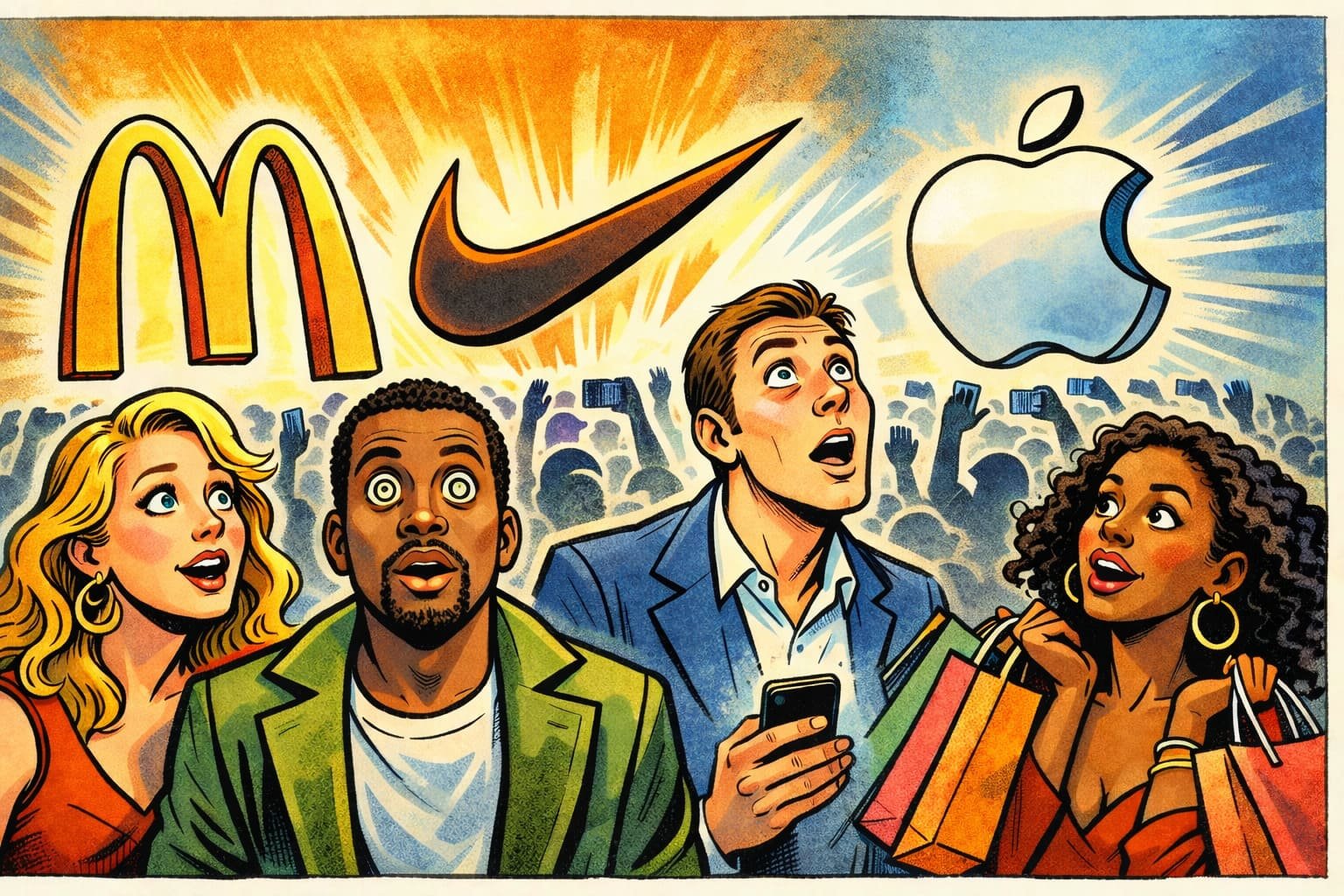
Cheers erupted across a packed stadium before the winning goal even reached the net. One supporter had started singing. Another answered. Soon thousands moved with astonishing unity, convinced the moment belonged to them alone. Markets behave with similar choreography. Attention rarely spreads because facts overpower emotion. Crowds move when shared signals create momentum faster than skepticism can interrupt. That explains why ordinary products sometimes become cultural events while objectively stronger alternatives remain unnoticed, admired quietly yet purchased far less often.
Many executives imagine marketing as a communication department working downstream from product development. Reality runs in the opposite direction. Marketing shapes perception before products enter public conversation, influencing expectations that later color every experience. Behavioral economist Robert Cialdini demonstrated how social proof quietly guides human judgment, especially during uncertainty. Brands mastering collective attention understand they are not merely informing audiences. They are orchestrating environments where people naturally imitate one another without recognizing the invisible choreography surrounding their decisions.
Red Bull built an empire by attaching itself to daring experiences rather than sugary beverages. Energy became secondary. Adventure became unforgettable. Supreme followed another route, transforming scarcity into a cultural ritual where long queues became part of the product itself. Entrepreneur Nadia Ibrahim noticed a similar pattern while launching an independent fitness studio. Instead of advertising discounted memberships, she invited local members to bring friends to sunrise rooftop workouts. Shared experiences generated conversations no promotional campaign could have purchased.
A curious scene unfolds whenever street musicians attract an audience. Passersby rarely stop because music begins. They stop because others have already stopped. Attention behaves like gravity, gathering strength as more people enter the orbit. During a campaign review, strategist Owen Gallagher removed polished testimonials from a landing page and replaced them with candid customer discussions collected from community forums. Conversion improved because genuine dialogue felt less like persuasion and more like discovering a conversation already worth joining.
Technology has accelerated this ancient human instinct rather than replacing it. TikTok trends, viral memes, and unexpected product sensations spread because participation often matters more than ownership. Marketing professor Jonah Berger has argued that ideas travel when they carry social currency, emotional resonance, or practical value people enjoy sharing. Successful brands engineer those conditions deliberately. They create moments audiences want to repeat, reinterpret, and pass forward, allowing customers to become voluntary distributors of attention instead of passive recipients of advertising.
Crowds slowly disperse after every spectacle, yet stories continue circulating long after lights fade and stages fall silent. Brands remembered decades later rarely purchased attention forever. They inspired people to carry fragments of the experience into ordinary conversations, workplaces, kitchens, and friendships. Lasting influence emerges when marketing feels less like interruption and more like shared culture taking shape in real time. Before launching another campaign, ask whether people will merely notice your message or eagerly bring someone else along to experience it.
