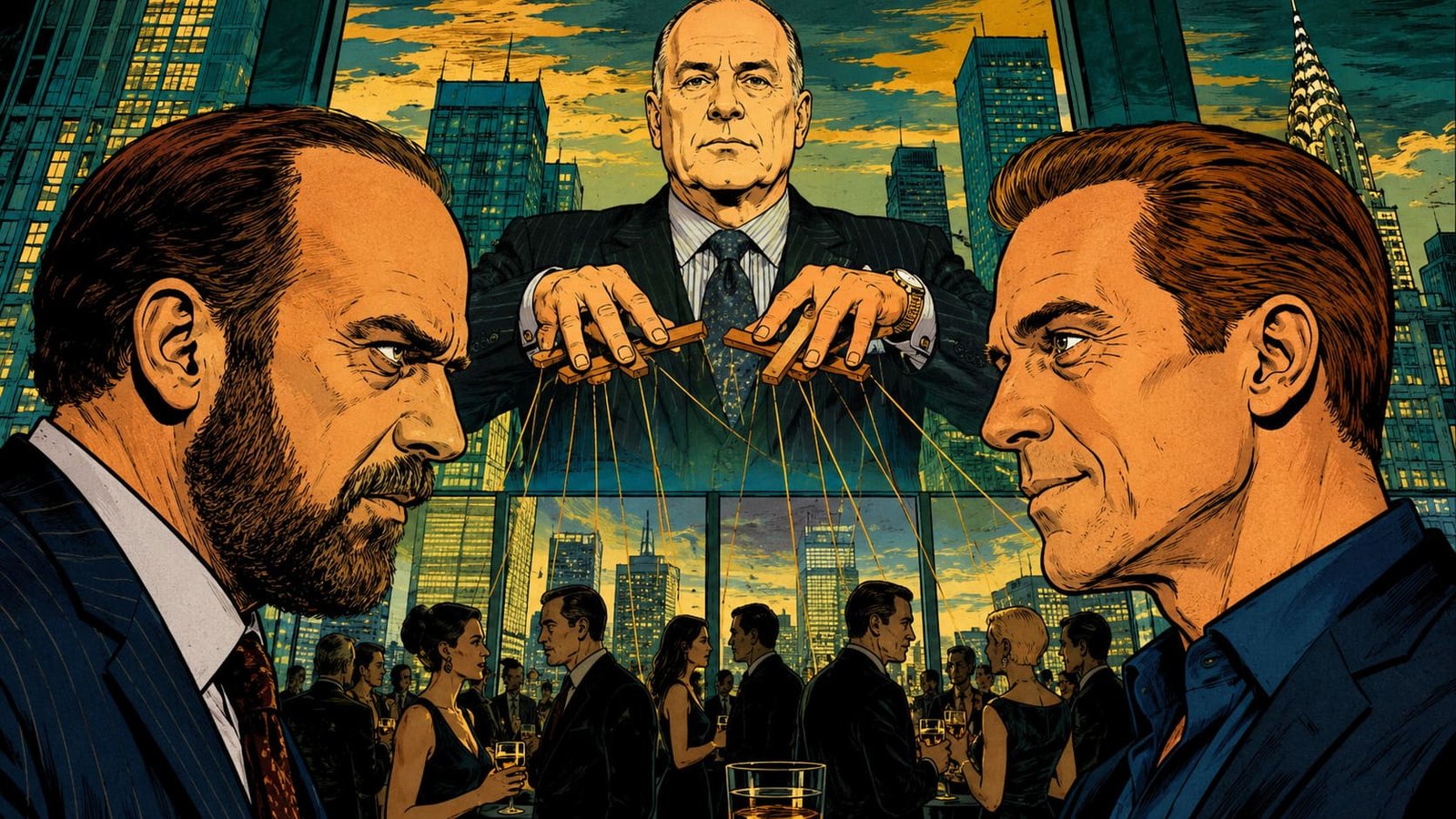
Helicopter blades chopped through the skyline while Manhattan glittered below like circuitry inside a machine built to monetize human instinct. Inside private offices wrapped in glass and arrogance, fortunes shifted with a sentence, a rumor, a nervous glance across a trading floor. Billions enters this world not as a simple finance drama but as a philosophical war between appetite and restraint, dominance and legitimacy, performance and truth. The series understands something most corporate mythology hides beneath polished branding: modern power rarely belongs to the most ethical person in the room. It belongs to whoever best understands leverage.
Bobby Axelrod moves through the show with the predatory confidence of a man who survived chaos and decided never to feel powerless again. His hedge fund empire is built not only on financial intelligence but emotional velocity. Axe reads weakness quickly. He studies fear the way elite athletes study movement. Yet beneath the swagger sits a deeper hunger. He wants validation as much as victory. The show wisely avoids portraying him as merely villainous because real capitalism rarely operates through cartoon morality. Axelrod genuinely rewards loyalty. He protects his inner circle fiercely. He also destroys obstacles with terrifying efficiency once they threaten his identity or status.
Chuck Rhoades functions as the series’ moral counterweight, though even that description becomes unstable over time. As a U.S. Attorney, Chuck frames himself as defender of fairness against financial excess. Yet the deeper the conflict grows, the more personal obsession infects his mission. Billions excels because it refuses clean ideological comfort. Regulators crave power too. Prosecutors manipulate systems strategically. Wealthy elites exploit legal gray zones while institutions tasked with policing them quietly perform their own forms of domination. The audience eventually realizes both men are addicted to control, just expressed through different languages.
A portfolio manager named Stefan Müller once described a midnight meeting during a collapsing commodities trade in Zurich. Senior executives sat around a polished oak table pretending calm while millions evaporated by the minute. One trader calmly ordered espresso while another quietly vomited in a nearby restroom before returning to the meeting without comment. Stefan later admitted the experience permanently changed how he viewed high finance. Publicly, elite investors projected intellectual mastery. Privately, entire fortunes often rested on emotional improvisation under unbearable pressure. Billions captures that atmosphere brilliantly. Beneath the tailored suits and strategic jargon lives raw human volatility.
The series becomes especially fascinating when it explores performance psychology. Everyone inside this world performs identity constantly. Traders project certainty even while drowning in doubt. Politicians perform virtue while negotiating compromises behind closed doors. Billionaires rehearse authenticity for public appearances while orchestrating ruthless strategies privately. Wendy Rhoades sits at the emotional center of this machinery because she understands something deeper than finance itself. Human beings rarely collapse from lack of intelligence alone. They collapse when insecurity mutates into identity. Her coaching sessions often resemble psychological warfare disguised as therapy, revealing how ambition and emotional instability frequently travel together.
There is also a strange sensuality attached to power throughout the series. Expensive whiskey. Silent elevators. Designer suits stitched with quiet intimidation. Billions understands that wealth operates emotionally before it operates numerically. People crave not only money but proximity to influence, exclusivity, and symbolic superiority. One scene involving a private dinner negotiation can feel more sexually charged than romance because dominance itself becomes currency. That observation lands sharply in modern culture where status signaling increasingly shapes social behavior, professional identity, and even morality. People do not merely want success anymore. They want visible proof of exceptionalism.
A corporate strategist named Priyansh Vadera once advised a tech founder during acquisition talks with a global investment firm. Publicly the negotiations appeared cordial. Privately executives weaponized timing, silence, and selective leaks to destabilize one another psychologically. During one especially tense evening, the founder admitted he no longer knew whether he wanted the deal or simply wanted to avoid looking weak. Priyansh later reflected that many elite negotiations stop being about economics surprisingly fast. Ego enters the room and logic quietly leaves through another door. That emotional shift defines much of Billions. Characters repeatedly confuse conquest for fulfillment while institutional systems reward the confusion.
The show also functions as a broader critique of meritocracy mythology. Society loves pretending wealth naturally reflects wisdom or discipline. Billions dismantles that fantasy repeatedly. Luck matters. Access matters. Timing matters. Networks matter. Even genius requires opportunity structures most people never receive. Axe’s rise from working-class roots complicates the narrative further because it exposes how survival mentality can evolve into permanent aggression. Once scarcity shapes identity deeply enough, abundance rarely creates peace. It often creates paranoia disguised as strategic thinking.
Far above the city tonight, trading screens still glow inside dark offices while exhausted analysts chase signals capable of moving markets before dawn arrives. Somewhere else, another executive rehearses confidence before entering a negotiation that may quietly consume pieces of their humanity in exchange for prestige. Champagne chills beside private regrets nobody discusses publicly. The skyline shimmers like a monument built by ambition and loneliness together. That is where Billions leaves its audience, staring into the seductive machinery of modern capitalism and realizing how easily intelligence becomes self-justification once power starts rewarding appetite faster than conscience. The numbers rise. The influence expands. Yet somewhere beneath the victory, the soul keeps sending invoices nobody wants to read.
Editorial Disclaimer: Whether a TV Show is rooted in fiction or inspired by real events, the actions, decisions, and behaviors portrayed within are not intended to be encouraged, replicated, or endorsed in real-world settings. This review exists solely to analyze the storytelling, characters, themes, and business dynamics presented in the TV Show for educational, analytical, and entertainment purposes. Any ethical or unethical conduct depicted in the TV Show does not reflect the views, values, or endorsements of ESYRITE.
