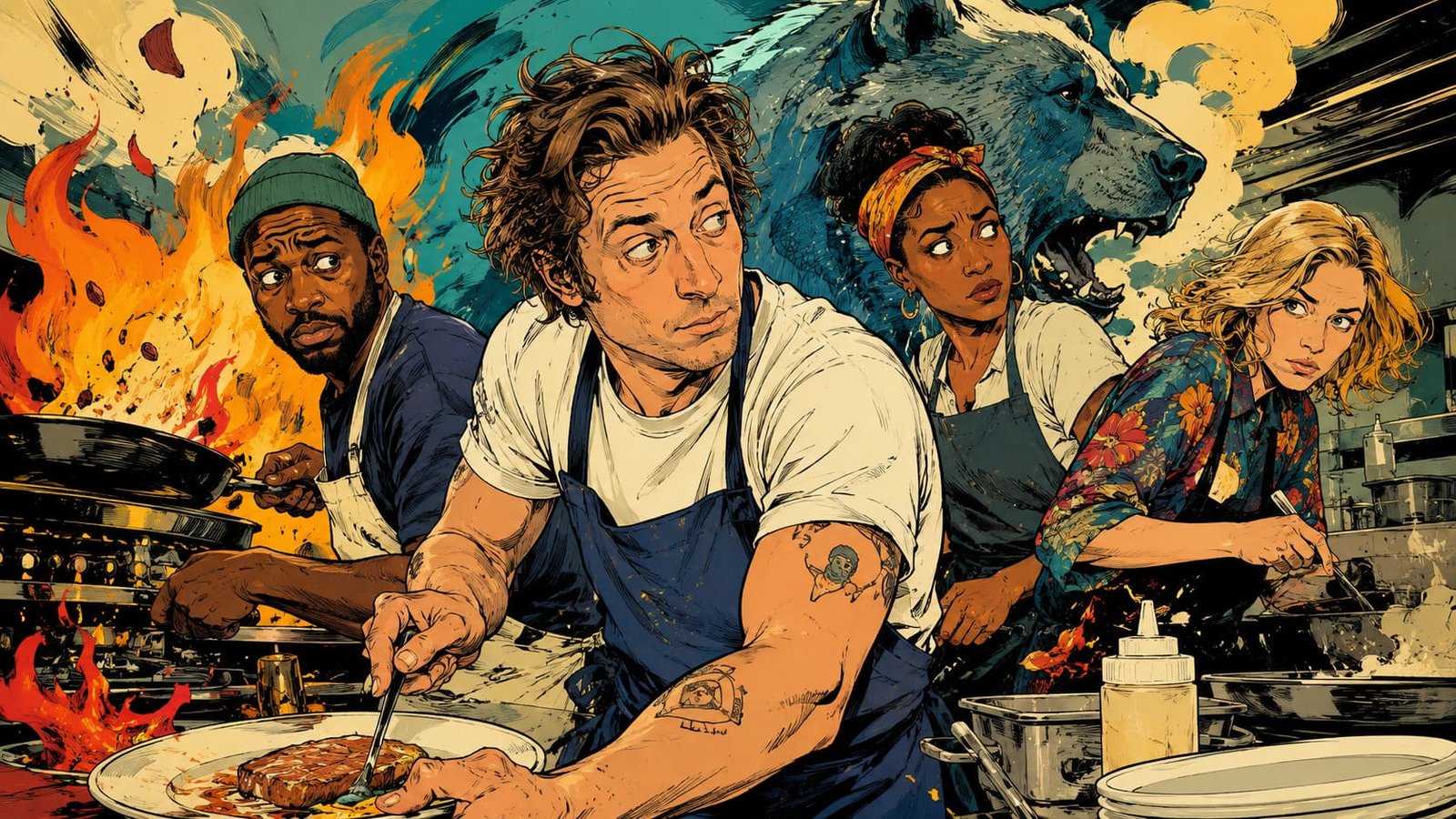
The kitchen sounded like a collapsing stock market trapped inside a steel box. Knives struck cutting boards with surgical violence. Ticket printers screamed without mercy. Steam rose from boiling pots like ghosts escaping industrial machinery. Somewhere between the smell of burnt onions and unpaid grief, The Bear became one of the most emotionally accurate portraits of modern work ever placed on television. Not because it romanticizes hustle culture, but because it exposes the hidden psychological cost of competence inside systems permanently operating at the edge of breakdown. The series understands a truth many ambitious people carry silently through crowded cities and sleepless nights: excellence often grows beside emotional ruin like ivy climbing cracked concrete.
Carmen “Carmy” Berzatto enters the story already spiritually exhausted. Jeremy Allen White plays him with the haunted precision of a man whose nervous system never learned how to power down. Carmy is a culinary prodigy shaped by elite kitchens where perfection became survival language. Yet the deeper conflict has little to do with food itself. The real battle concerns identity. Who does a person become after years inside environments where worth depends entirely on output? That question reaches far beyond restaurants. Investment bankers, startup founders, surgeons, designers, consultants, athletes, all recognize the emotional architecture instantly. The modern economy rewards high performers while quietly consuming the emotional infrastructure required to remain human.
What makes The Bear extraordinary is its refusal to flatten chaos into easy inspiration. Most workplace dramas eventually drift toward motivational fantasy. This series stays brutally intimate with dysfunction. Employees interrupt one another constantly. Trauma leaks into ordinary conversations. Financial instability hangs over every interaction like humidity before a thunderstorm. The restaurant itself behaves almost like a living organism absorbing collective anxiety. A small disagreement about kitchen procedures can suddenly explode into emotional warfare because nobody inside the building is truly arguing about procedures alone. They are arguing about respect, exhaustion, invisibility, fear. That detail gives the writing its frightening realism.
Sydney represents one of the show’s most fascinating studies in ambition. Intelligent, disciplined, creatively gifted, she enters the restaurant believing skill alone can organize disorder. Then reality hits. Systems resist change. Leadership fractures under pressure. Human beings carry emotional histories into professional environments whether organizations acknowledge them or not. Nadia, who managed a boutique hospitality group in Cape Town, once described crying in a walk-in freezer after a disastrous dinner service while simultaneously calculating payroll in her head. She later admitted the strangest part was returning to the dining room seconds later smiling politely at guests discussing wine pairings. The Bear understands that split-screen emotional existence perfectly.
The series also functions as a sharp critique of contemporary hustle mythology. For years, popular culture treated burnout like evidence of seriousness. Sleep deprivation became branding. Emotional neglect masqueraded as discipline. The Bear dismantles that fantasy plate by plate. Carmy’s brilliance does not protect him from panic attacks, isolation, or inherited trauma. In fact, his talent often intensifies the damage because expectations rise faster than emotional resilience. There is a devastating honesty in how the show portrays professional mastery as both gift and prison. The kitchen rewards precision while simultaneously eroding the psychological stability required to sustain it.
Visually, the series feels claustrophobic in a deeply intentional way. Cameras hover too close to faces. Conversations overlap chaotically. Hallways narrow into emotional choke points. Even moments of silence feel electrically charged. Watching the show can resemble standing inside a crowded subway car after midnight while everyone silently negotiates invisible personal catastrophes. That atmosphere matters because it mirrors modern urban existence itself. Many professionals now move through life in permanent low-grade crisis mode. Notifications replace reflection. Productivity replaces emotional processing. Meals become fuel stops between obligations rather than experiences connected to memory, culture, or intimacy. The Bear quietly mourns that loss.
Then comes the deeper emotional revelation beneath all the shouting and shattered plates. The restaurant survives not through flawless strategy, but through imperfect forms of care. Characters fail each other repeatedly. They also return repeatedly. Richie transforms from chaotic self-destruction into something unexpectedly tender after discovering dignity in service. Tina rediscovers confidence after years of emotional stagnation. Marcus approaches pastry creation with the reverence of someone trying to repair loneliness through beauty itself. Those arcs matter because they reject the modern fantasy that individual success alone creates fulfillment. Human beings require belonging as desperately as achievement, perhaps more.
Near the emotional edge of the series sits a haunting realization about contemporary ambition. Many people spend years trying to build extraordinary lives while quietly forgetting how to inhabit ordinary moments. The restaurant glows under harsh fluorescent light. The freezer hums softly in the background. Outside, Chicago keeps moving with indifferent momentum. Inside, exhausted people keep cooking because feeding others remains one of the oldest human rituals against despair. The Bear never pretends that passion automatically heals trauma or that hard work guarantees meaning. Its wisdom is stranger and more painful than that. Sometimes survival itself becomes sacred. Sometimes the most radical form of leadership is learning how to stay emotionally present inside systems designed to fragment attention, identity, and love. Somewhere beyond the noise of collapsing kitchens and anxious ambition waits a difficult truth modern culture keeps trying to outrun: success tastes strangely empty when nobody remembers how to sit down long enough to feel alive while eating it.
Editorial Disclaimer: Whether a TV Show is rooted in fiction or inspired by real events, the actions, decisions, and behaviors portrayed within are not intended to be encouraged, replicated, or endorsed in real-world settings. This review exists solely to analyze the storytelling, characters, themes, and business dynamics presented in the TV Show for educational, analytical, and entertainment purposes. Any ethical or unethical conduct depicted in the TV Show does not reflect the views, values, or endorsements of ESYRITE.
