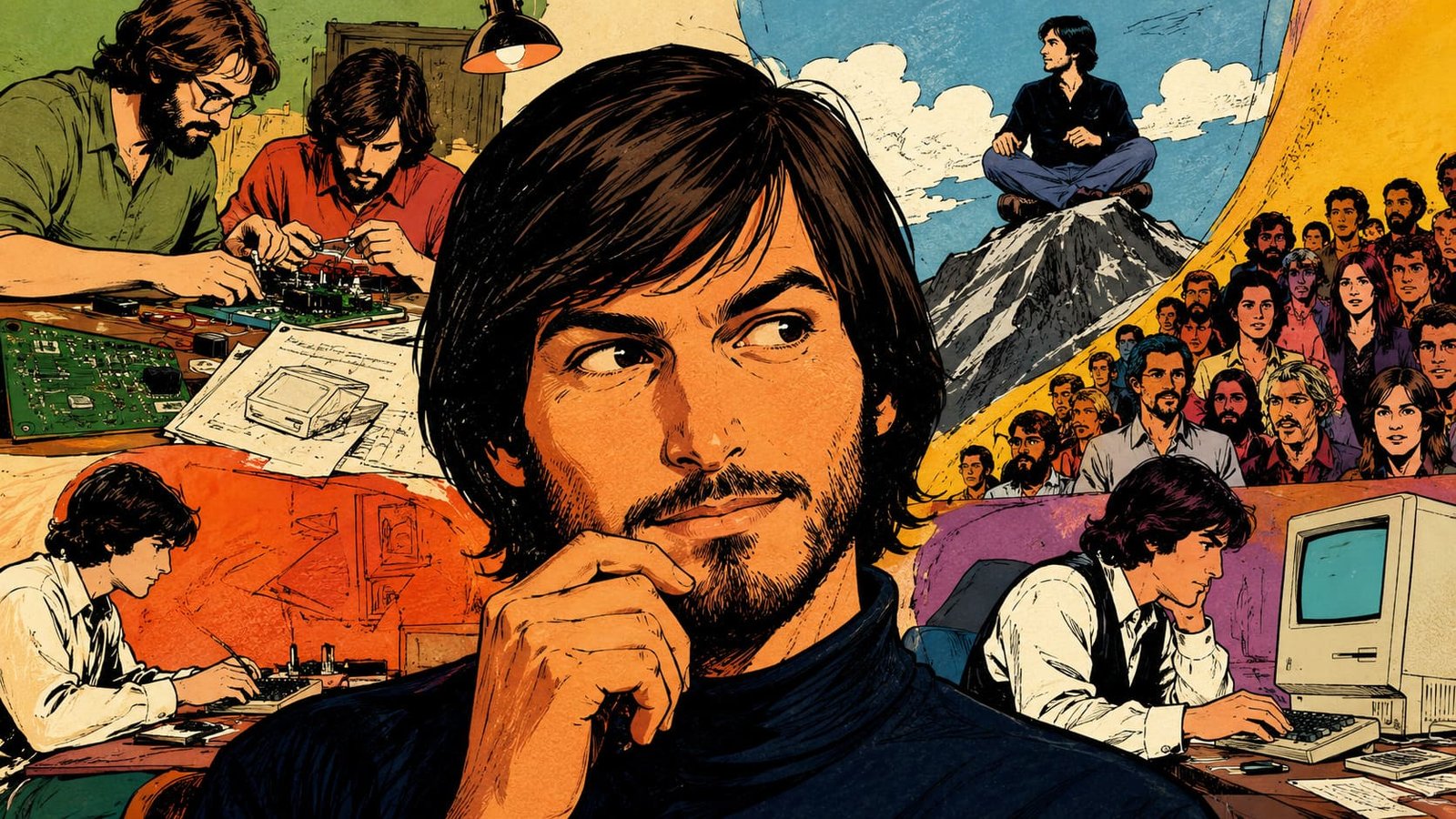
Fluorescent lights trembled above cluttered garage tables while young men with impossible ambition spoke about computers as though discussing religion after midnight mass. Empty soda bottles crowded beside loose circuit boards. Sleeplessness hung in the air like incense from a new kind of cathedral. Outside, California looked ordinary. Inside, history was quietly being rearranged by people too obsessed to recognize how strange they already sounded. Jobs is not truly about technology. It is about seduction. The seduction of vision. The seduction of genius. The seduction of believing a single human being can bend reality hard enough to leave fingerprints on civilization itself. Ashton Kutcher’s portrayal of Steve Jobs captures something uncomfortable beneath the mythology: charisma can inspire brilliance and emotional destruction simultaneously. The film understands that innovation rarely arrives wrapped in kindness. Sometimes it storms into rooms carrying beauty in one hand and emotional wreckage in the other.
Most corporate dramas sanitize ambition until it resembles motivational wallpaper. Jobs refuses that temptation. The film presents vision as something closer to appetite. Steve does not merely want success. He wants control over meaning itself. Product design becomes philosophical warfare. Typography matters because identity matters. Simplicity becomes a weapon against mediocrity. Watching early Apple meetings feels less like observing business development and more like witnessing an underground artistic movement accidentally collide with capitalism. That collision gives the story electricity. A young designer named Felix once described startup culture as “a place where people use caffeine and certainty to disguise existential panic.” Steve embodies that contradiction perfectly. He speaks like a prophet while behaving like an emotionally unavailable band leader convinced history will forgive collateral damage if the final album changes culture permanently.
The film grows sharper whenever Steve enters conflict with ordinary human limitations. Friends become obstacles. Employees become instruments. Relationships fracture beneath the pressure of impossible standards. One of the movie’s most revealing tensions sits inside Steve’s obsession with perfection. Perfection sounds noble from a distance. Up close, it often behaves like fear wearing expensive clothing. Fear of irrelevance. Fear of mediocrity. Fear of becoming ordinary inside a world already crowded with forgettable people. The film subtly exposes how visionary leadership can mutate into emotional tyranny when identity fuses too tightly with achievement. Entire industries celebrate this behavior because results create moral camouflage. Silicon Valley spent years romanticizing founders who treated empathy like operational inefficiency. Jobs quietly questions that mythology without fully condemning it. That ambiguity makes the film more interesting than simplistic hero worship.
Steve Wozniak functions as the emotional counterweight throughout the story. Their dynamic resembles the ancient tension between craftsmanship and conquest. Woz values creation itself. Steve values transformation at scale. Neither man alone could have built Apple’s mythology. Together, they generated cultural electricity precisely because their instincts collided constantly. Every organization contains versions of this struggle. The builder versus the storyteller. The engineer versus the strategist. The idealist versus the expansionist. A product lead named Renata once watched her startup collapse after investors pushed growth faster than infrastructure could handle. “The company stopped loving the thing it originally made,” she admitted later while sitting inside a nearly empty coworking space smelling faintly of burnt espresso and stress. That sentence could sit comfortably inside Jobs. The movie understands how scaling vision can slowly poison the purity that made the vision compelling initially.
There is also something eerily spiritual about Steve’s relationship with aesthetics. He treats design almost like moral philosophy. Clutter becomes ethical failure. Elegance becomes proof of intellectual discipline. That mindset transformed consumer technology permanently because it shifted computers from industrial machinery into emotional objects. Yet the film also hints at the danger inside aesthetic absolutism. Beautiful systems can still wound people. Clean products can emerge from chaotic leadership. Modern culture often confuses refinement with goodness because polished surfaces feel emotionally reassuring. Steve weaponized that instinct masterfully. Apple products became symbols of aspiration precisely because they sold identity alongside functionality. The devices whispered sophistication, rebellion, creativity, belonging. The movie captures this psychological mechanism brilliantly. Steve does not simply build machines. He manufactures emotional ecosystems people willingly enter.
The firing sequence lands with unusual emotional force because it exposes a brutal truth about institutions: founders often become incompatible with the very systems they create. Apple evolves into a corporation requiring predictability, diplomacy, and operational stability. Steve remains volatile, instinctive, almost artistically combustible. Boards prefer manageable leadership over mythological energy once markets mature. That pattern repeats across history. Revolutionary figures struggle inside bureaucracies because bureaucracies fear unpredictability more than stagnation. A media executive named Laurence once described executive culture as “an elaborate ritual for removing difficult visionaries before they embarrass shareholders.” The line feels ruthless because it feels accurate. Steve’s exile from Apple transforms the film from triumph narrative into existential study. Without Apple, who exactly is Steve Jobs? Strip away the stage, the applause, the machinery of influence, and the question becomes terrifyingly human.
Then comes return. Reinvention. Resurrection through necessity. Apple’s decline creates space for Steve’s impossible intensity again because crisis changes organizational tolerance dramatically. Failing systems suddenly rediscover appreciation for radical thinking once stability stops working. The irony is almost Shakespearean. The same qualities once labeled dangerous become essential under pressure. Steve reenters Apple carrying sharper instincts, greater focus, and deeper understanding of narrative power. Product launches begin resembling theatrical performances more than technical presentations. Black turtlenecks become symbolic armor. The company evolves into a cultural myth-making engine. Watching these moments now feels uncanny because modern founder culture copied this blueprint obsessively. Visionary CEOs became celebrity philosophers. Keynotes became secular sermons. Personal branding fused with corporate identity until consumers struggled separating leader from product entirely.
Beneath the innovation and spectacle, the movie carries a quieter sadness that lingers longer than its triumphant moments. Steve repeatedly struggles with intimacy because obsession narrows emotional bandwidth. Relationships require patience. Empires reward urgency. The film never fully redeems him emotionally because reality rarely offers neat redemption arcs. Instead, it presents a more unsettling possibility: extraordinary achievement may coexist permanently beside personal damage. Society prefers cleaner stories because contradiction feels uncomfortable. Yet history’s most transformative figures often leave behind both inspiration and emotional debris. Jobs refuses to flatten that complexity into easy moral lessons. The movie recognizes that brilliance can illuminate entire industries while leaving individual people standing alone in emotional darkness.
In a dim auditorium glowing beneath stage lights, a thin man stood before a silent crowd holding a machine small enough to fit inside human hands yet powerful enough to reorganize modern life itself. Faces in the audience reflected awe, hunger, devotion, and something dangerously close to faith. Somewhere behind the applause sat old betrayals, abandoned friendships, and years of emotional wreckage disguised as progress. That tension is what makes Jobs endure. The film understands that civilization often advances through deeply flawed individuals capable of seeing futures others cannot yet imagine. The cost of that vision remains harder to calculate. Every beautiful device carries fingerprints invisible to consumers. Every revolution leaves private scars behind public mythology. And somewhere beneath the glow of every screen, a quieter question still flickers stubbornly: how much of a human soul should ambition be allowed to consume before success stops feeling like victory at all?
Editorial Disclaimer: Whether a film is rooted in fiction or inspired by real events, the actions, decisions, and behaviors portrayed within are not intended to be encouraged, replicated, or endorsed in real-world settings. This review exists solely to analyze the storytelling, characters, themes, and business dynamics presented in the film for educational, analytical, and entertainment purposes. Any ethical or unethical conduct depicted in the film does not reflect the views, values, or endorsements of ESYRITE.
