The office looked like a digital casino designed by people who hated silence. Notifications flashed across screens like emergency flares. Slack messages multiplied faster than coherent thought. Half-drunk coffees gathered beside laptops humming with exhaustion while employees toggled between spreadsheets, meetings, emails, podcasts, and performative multitasking. Everyone appeared busy enough to impress strangers. Almost nobody appeared mentally present. Modern work had become a theater production where distraction masqueraded as productivity and burnout dressed itself in premium corporate vocabulary.
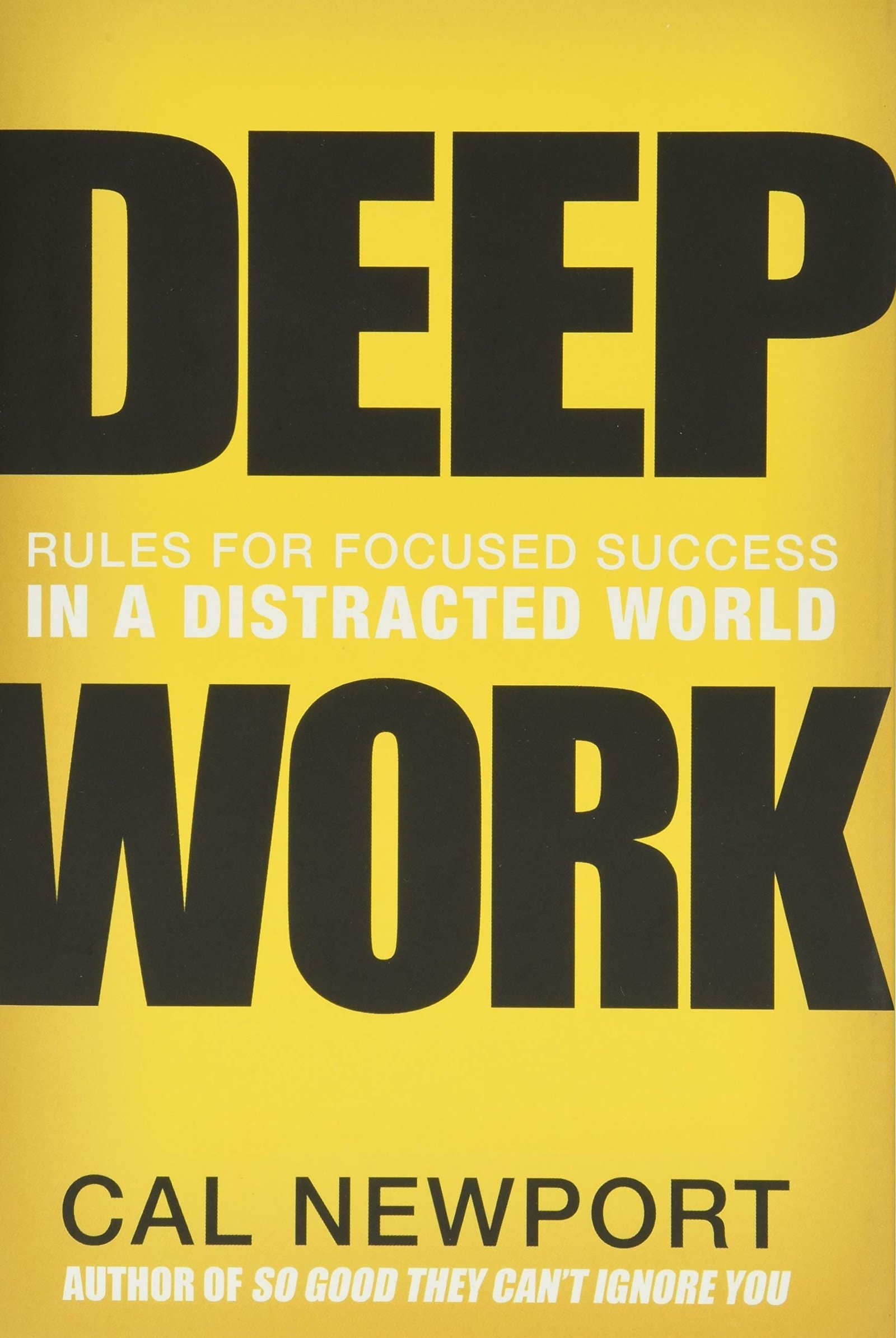
Deep Work: Rules for Focused Success in a Distracted World arrives inside that chaos with the emotional force of a monastery door slamming shut against the noise. Cal Newport argues something increasingly radical in the algorithmic age: the ability to focus deeply without distraction is becoming both extraordinarily rare and extraordinarily valuable. The book does not merely defend concentration. It treats sustained attention as a form of economic power, psychological dignity, and intellectual survival.
That argument feels almost confrontational now because modern systems profit directly from fractured focus. Social platforms monetize interruption. Corporations reward visible responsiveness. Entire industries compete aggressively for fragments of human cognition. Newport recognizes this clearly. Shallow busyness creates the illusion of movement while slowly hollowing out the capacity for meaningful thought. The tragedy is not simply reduced productivity. It is spiritual erosion. People lose intimacy with their own minds gradually enough not to notice the theft while it happens.
A software engineer named Ravi discovered this after joining a fast-growing startup celebrated for its “high-energy culture.” Translation: endless notifications, emergency meetings, and Slack messages arriving like digital mosquitoes at all hours. Ravi initially mistook exhaustion for importance. The company praised hyper-responsiveness publicly while complex engineering problems remained unsolved privately because nobody could sustain uninterrupted concentration long enough to think clearly. One weekend he disappeared offline entirely and completed more meaningful work in six silent hours than during the previous chaotic month combined. The realization unsettled him deeply. Most workplace urgency had been emotional theater.
That emotional theater sits at the center of Deep Work: Rules for Focused Success in a Distracted World. Newport understands that modern culture increasingly rewards visible activity over invisible cognition. Deep thinking looks suspiciously unproductive from the outside because concentrated work rarely generates constant external signals. A writer staring silently at a paragraph appears idle. A programmer pacing alone while solving systems architecture appears detached. Yet breakthroughs often emerge from exactly those periods society now interrupts relentlessly.
The book becomes especially sharp when examining attention as a status symbol. Historically, wealth signaled freedom from physical labor. Today, uninterrupted concentration signals freedom from digital fragmentation. Executives retreat to luxury wellness resorts promising “mindfulness” while ordinary workers drown beneath communication overload engineered by the same economic systems. Newport exposes this contradiction elegantly. The distracted worker becomes easier to control because shallow attention weakens independent thought. A fragmented mind reacts constantly. A focused mind evaluates.
A documentary editor named Celeste learned this during production of a streaming series assembled almost entirely through remote collaboration. Notifications flooded her devices from producers, marketers, clients, executives, and algorithmic analytics dashboards measuring audience behavior obsessively. Her creative instincts deteriorated under constant interruption. Scenes lost emotional coherence. Edits became mechanically competent yet emotionally dead. One evening she shut every device except the editing software and worked alone through the night beside cold noodles and dim desk lamps. The finished sequence later became the project’s defining emotional moment. Concentration had restored texture to perception itself.
That restoration matters because Newport frames deep work not merely as productivity optimization but as human reclamation. Modern attention economies thrive by training people toward compulsive partial engagement. Scroll. Click. Refresh. React. Repeat. The mind becomes conditioned toward novelty instead of depth. Newport pushes back against this conditioning with almost philosophical severity. Great work, meaningful insight, and genuine mastery require boredom tolerance strong enough to survive without constant stimulation.
There is also a subtle ethical dimension running beneath the book. People unable to focus deeply become increasingly vulnerable to manipulation. Political outrage cycles, sensational media ecosystems, algorithmic recommendation engines, and performative internet culture all depend on shortened attention spans. Newport rarely dramatizes this overtly, yet the implication remains haunting. Protecting concentration increasingly resembles protecting autonomy itself. A society incapable of sustained thought becomes emotionally programmable.
A legal researcher named Imani experienced this shift after spending years juggling constant digital communication inside a prestigious law firm. Her days dissolved into fragmented reactions. Emails bred more emails. Meetings produced more meetings. At home she could barely finish novels anymore because her concentration had become chemically dependent on interruption. One winter she began scheduling isolated reading hours without devices. The practice initially felt unbearable. Then something returned gradually: patience, memory retention, conceptual depth, even emotional calm. Friends described her differently afterward. Less frantic. More grounded. The change frightened her because it revealed how profoundly distraction had altered personality itself.
The deeper brilliance of Deep Work: Rules for Focused Success in a Distracted World lies in how it reframes discipline. Popular culture often portrays discipline aesthetically through motivational slogans, fitness routines, or performative hustle rituals. Newport presents discipline structurally. Environment shapes cognition. Habits shape attention. Attention shapes output. Output shapes identity over time. Deep work becomes less about heroic willpower and more about designing life carefully enough that concentration can survive modern chaos.
The book also carries a strangely melancholic undertone. Many readers recognize pieces of themselves inside Newport’s diagnosis. The inability to sit quietly. The reflexive phone checking. The growing discomfort with uninterrupted thought. The sensation of being mentally crowded even during physical stillness. Deep work feels appealing partly because distraction has become exhausting. People crave mental spaciousness without always possessing language for the hunger.
Late one rainy evening inside a near-empty commuter train, a financial analyst named Noor stared at her reflection in the darkened window while thumb-scrolling through six apps simultaneously without consciously processing any of them. Across the carriage sat an elderly man reading a thick paperback novel with calm concentration despite the flickering fluorescent lights and metallic screech of the tracks. Noor watched him for several minutes with strange envy. The man looked almost rebellious. Not because he was consuming information, but because nothing appeared capable of pulling him away from his own mind.
That image lingers after finishing Deep Work: Rules for Focused Success in a Distracted World. The book is not simply about productivity. It is about preserving cognitive sovereignty inside systems engineered to monetize distraction endlessly. Newport suggests that focus is becoming a form of quiet resistance against cultural fragmentation. The idea feels increasingly urgent because shallow attention now surrounds modern life like atmospheric pollution.
Across offices, classrooms, apartments, airports, cafés, and sleepless bedrooms tonight, millions are still mistaking constant stimulation for meaningful engagement while their capacity for deep thought erodes silently beneath notification storms. Some will continue living inside permanent interruption until exhaustion feels normal. Others may rediscover the unsettling freedom hidden inside sustained concentration. Because somewhere beneath all the noise, a terrifying possibility waits patiently: the life most people call busy may actually be the very thing preventing them from thinking clearly enough to live at all.
Editorial Disclaimer: Whether a book is a work of fiction, a memoir, or inspired by real events, the ideas, actions, decisions, and behaviors discussed within are not intended to be encouraged, replicated, or endorsed in real-world situations. This review is published solely for educational, analytical, literary, and entertainment purposes, with the aim of examining the book’s themes, storytelling, characters, philosophies, and broader cultural or business insights. Any ethical or unethical viewpoints, practices, or conduct presented in the book do not necessarily reflect the views, values, or endorsements of ESYRITE.
