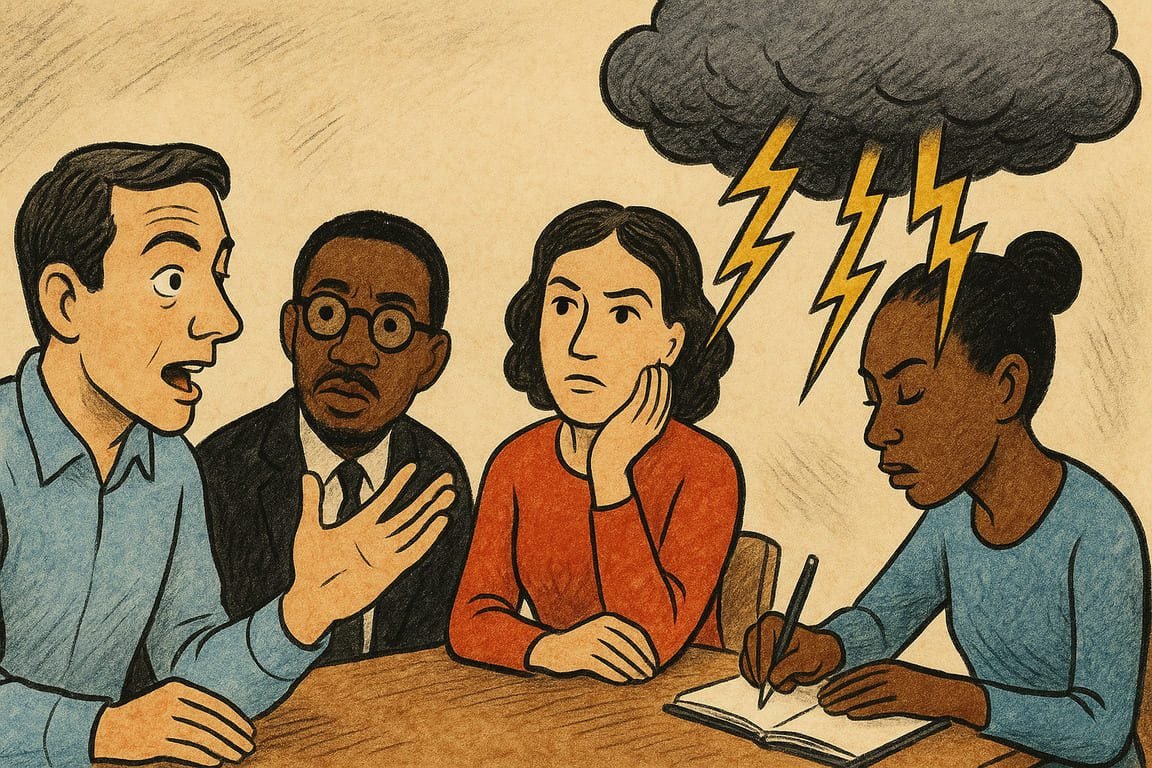
The lights flicker in a repurposed warehouse, long tables littered with post-it notes and tangled laptop chargers. The scent of markers hangs in the air, mixing with late-night coffee and nervous ambition. Here, designers, strategists, and accidental creatives huddle around whiteboards, voices buzzing with possibility. Someone throws out a wild idea, and another sketches it in the margin of a handout. Workshops don’t whisper—they crackle. Every surface begs to be drawn on, every mind hums with the anticipation of breakthroughs. In this space, the act of thinking and making is inseparable, and for a few charged hours, the world’s problems seem vulnerable to real solutions.
Workshops are where ideas that couldn’t survive alone find a second life in collaboration. It’s not just theory. When Shopify’s product team hit a creative wall, they ditched the slides and met in a basement studio, covering every inch with flowcharts and napkin doodles. Within a day, a breakthrough navigation feature was born—now central to millions of users. These mindstorms spark transformation, turning individuals into teams and teams into engines of change.
You know the feeling: a room full of strangers, uncertainty thick in the air, until the first exercise lowers the stakes. A round of crazy eights, a lightning sketch, or a no-bad-ideas brainstorm. Hesitation melts, replaced by laughter, groans, and the urgent scrawl of markers. Someone proposes a solution that seemed absurd an hour ago, and suddenly, it’s the linchpin everyone rallies behind. In workshops, permission to fail is permission to soar.
Workshops shatter hierarchy. The most junior voice in the room can suddenly redirect an entire strategy with a single post-it. At a fintech hackathon, an intern’s question—“Why not do the opposite?”—reversed a project’s assumptions and saved a product doomed by groupthink. That same intern now leads a cross-functional design squad. In the right environment, titles evaporate and meritocracy takes over.
The best workshops blur boundaries between roles. Engineers draw wireframes, designers analyze user journeys, CEOs stick dots on the craziest ideas. Every perspective becomes raw material. The creative director at a media agency once said, “If you want real innovation, invite the person least likely to call themselves creative.” They did—and their award-winning campaign started as a logistics manager’s offhand joke.
You learn the value of constraints. Timeboxing forces decisions, sticky notes force clarity, and strict frameworks force focus. Design sprints compress months of debate into five days. A team at an edtech startup used a single workshop to prototype a new app interface—cutting months off their roadmap and attracting their biggest client yet. In these mindstorms, speed is not the enemy of quality but its greatest ally.
Workshops also surface what no one dares say aloud. Retrospectives let teams voice hidden frustrations, post-mortems reframe failures as springboards, and empathy maps let users’ pain become visible. A nonprofit once rebuilt their entire volunteer system after a workshop surfaced a single overlooked pain point: “No one ever tells us when the schedule changes.” That note became the trigger for a new notification feature and a spike in volunteer retention.
Remote workshops, once seen as a pale imitation, now spark global mindstorms. Tools like Miro, Figma Jam, and Zoom breakout rooms erase borders. A distributed design team at Omnix ran a 24-hour workshop across time zones, building and voting on ideas as the sun chased night around the planet. The final product was richer, stranger, and more resilient than any single team could have crafted alone.
The energy of live collaboration lingers. Workshop outputs become the artifacts of innovation—sketches pinned to walls, digital boards full of “aha” moments, a new shorthand for risk and ambition. Teams who make workshops a habit build cultures of momentum, where every setback is the start of a new round, not the end.
Workshops are also engines of inclusion. Voices that go unheard in meetings find their power with a marker in hand. Tasha, a junior designer, barely spoke in weekly reviews, but in a sticky-note storm, her visual thinking unlocked a stalled brand refresh. Her insights didn’t just improve the product—they changed how the team saw each other.
If you want to change your work, change how you gather. Workshops are not about finding the one genius idea but surfacing a thousand possible ones and testing them fast. In a world that rewards speed and reinvention, workshops become the crucible where creative resilience is forged.
The warehouse empties as dawn edges through the skylights. Tables littered with sketches and neon notes bear witness to a night when minds collided and something new sparked in the mess. The silence afterward feels sacred—a promise that the next breakthrough is just one gathering away.
Every revolution in design starts with a room full of questions and the courage to speak up. Will you show up to the mindstorm, ready to risk and rethink, or will you stand back, letting others shape what comes next? The future is built by those who step into the chaos.
Partnered. Provocative. Worth Your Scroll.
This is a Promoted Post by ESYRITE—yes, it’s paid, but never filtered. Our voice stays raw, real, and razor-sharp. We team up with bold ideas, game-changers, and stories that spark something real. If it’s here, it earned its place—no fluff, just impact. We don’t just promote—we provoke. Stay sharp. Dive deeper.
