The nightclub looked less like a business event and more like civilization overheating. Neon spilled across velvet walls. Expensive watches flashed beneath low amber light like tiny distress signals from men pretending certainty. Founders floated through the room reciting growth metrics the way medieval priests once recited scripture. Nobody admitted fear directly. They disguised it as networking. Somewhere near the bar, a startup operator whispered that customer acquisition costs were “getting weird again,” which sounded suspiciously like a pilot calmly announcing engine failure at thirty thousand feet.
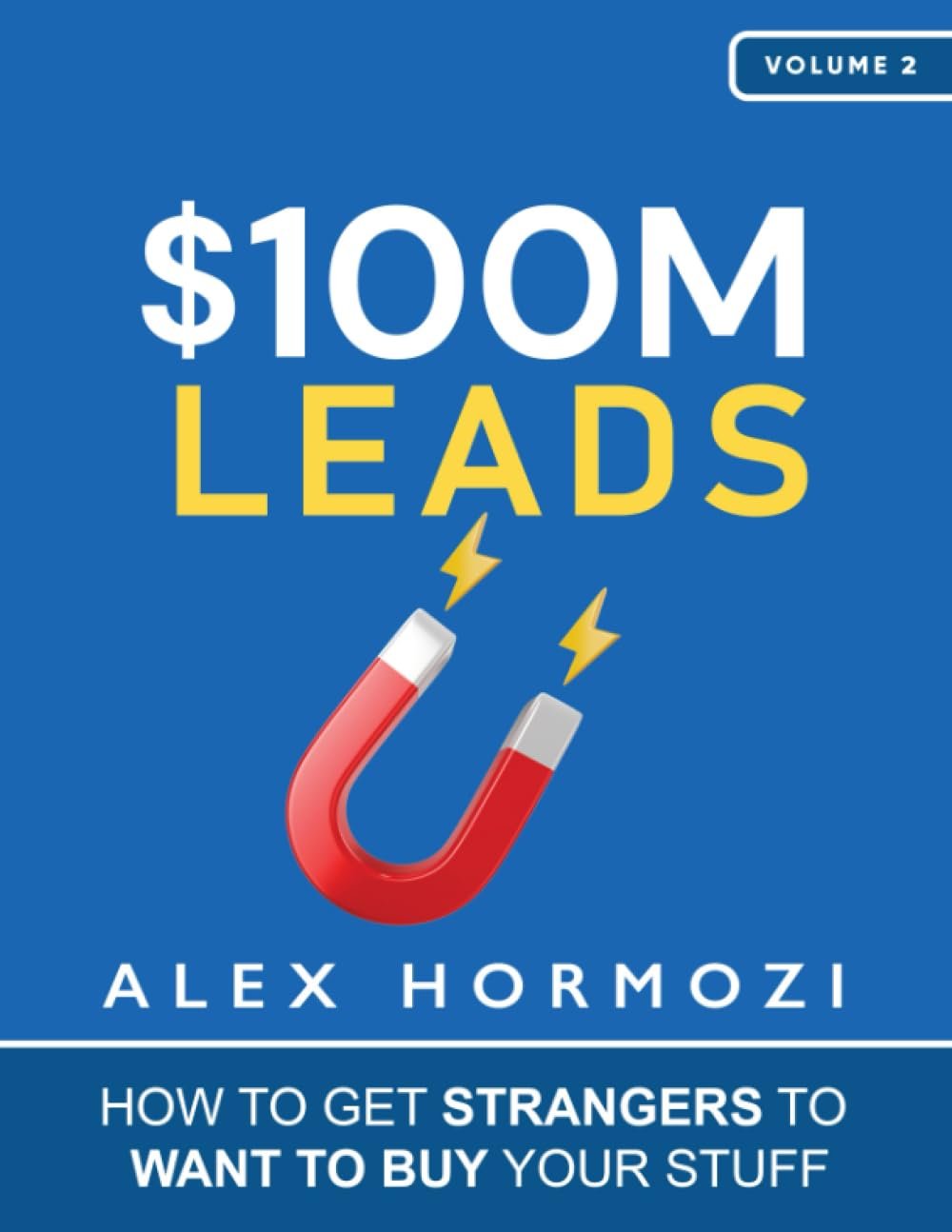
Then came the deeper realization infecting modern commerce: attention had become the planet’s most hunted resource. Not oil. Not gold. Human focus. $100M Leads: How to Get Strangers To Want To Buy Your Stuff enters that battlefield like a tactical field manual written by someone who understands that markets are not built from products first. They are built from desire, insecurity, curiosity, loneliness, envy, boredom, and hope arranged into systems sophisticated enough to feel invisible. Hormozi does not treat lead generation as marketing theater. He treats it like behavioral architecture.
That distinction matters because most businesses still approach visibility like anxious street performers banging cymbals in crowded intersections. More content. More noise. More desperate choreography. Hormozi slices through that illusion with almost surgical coldness. People do not buy because something exists. They buy because something interrupts a private emotional tension already unfolding inside them. A lead is not a click. A lead is a moment of psychological vulnerability colliding with perceived opportunity. That insight changes the entire moral atmosphere of selling.
A fitness coach named Rowan discovered this after spending months posting beautifully edited motivational videos that generated applause but almost no clients. His content looked cinematic. Drone shots. Intense music. Inspirational captions floating across sunsets like perfume advertisements for ambition. Revenue remained embarrassingly flat. One exhausted evening he scrapped the aesthetic performance and uploaded a blunt story about helping a divorced accountant regain confidence after years of emotional collapse and stress eating. The response detonated overnight. Messages flooded in. Not because the production improved, but because people recognized themselves inside the pain.
The book understands something many modern marketers secretly avoid admitting: consumers are rarely logical. Human beings buy emotionally first, then hire logic afterward like a defense attorney cleaning up the scene. Entire billion-dollar industries survive on this truth. Luxury fashion sells insecurity wrapped in fabric. Productivity apps sell the fantasy of personal reinvention. Political campaigns sell emotional belonging disguised as ideology. Hormozi simply strips away the euphemisms. His frameworks expose how persuasion operates beneath polite corporate language. That honesty feels dangerous because it reveals how much modern society runs on engineered craving.
A publishing executive named Naila once watched two nearly identical business newsletters launch during the same season. One focused on information density and polished expertise. The other leaned into emotional tension, exposing workplace exhaustion, status anxiety, and ambition fatigue with uncomfortable precision. Guess which one people obsessed over. Readers did not merely consume it. They evangelized it like survivors carrying forbidden scripture. Facts matter. Emotional recognition spreads faster. Netflix learned this years ago. So did tabloid media. Outrage, aspiration, and identity travel through culture with frightening velocity because they make people feel visible.
Beneath the marketing advice sits a larger commentary about modern identity itself. Social platforms have quietly transformed ordinary people into miniature broadcasting corporations competing inside algorithmic gladiator arenas. Every founder now performs partially as entertainer, philosopher, psychologist, and propagandist. The entrepreneur no longer sells only products. The entrepreneur sells narrative gravity. Hormozi understands this mutation deeply. Attention flows toward clarity, confidence, conflict, and emotional precision. Vague brands disappear into the digital swamp like forgotten civilizations swallowed by jungle vines.
The truly unsettling layer emerges when the book explores repetition and omnipresence. Most businesses vanish because they underestimate how distracted people really are. Modern life bombards individuals with enough stimuli to fracture concentration into glittering dust. Hormozi argues that trust is built through repeated contact strong enough to survive distraction cycles. That sounds simple until one notices how deeply repetition shapes culture itself. Pop stars dominate playlists through saturation. Political slogans become reality through constant exposure. Even personal insecurities grow stronger through repeated internal narration. Attention is less democratic than people imagine. Familiarity quietly rigs perception.
A jewelry founder named Tomori learned this after nearly bankrupting her online brand chasing constant reinvention. Every month brought new logos, new campaigns, new messaging. Customers remained confused. One mentor advised something painfully unglamorous: repeat the same core emotional message until boredom sets in internally, because the audience is only beginning to notice it externally. She resisted. Then sales tripled after committing to a singular narrative around craftsmanship and emotional permanence. The lesson bruised her ego. Creativity often craves novelty while markets reward recognition.
What gives $100M Leads: How to Get Strangers To Want To Buy Your Stuff unusual weight is its refusal to romanticize audiences. Many books treat consumers like rational scholars carefully evaluating merit. Hormozi understands people more like overwhelmed travelers stumbling through psychological weather systems. Timing matters. Framing matters. Trust matters. Emotional state matters. The right message delivered during personal uncertainty can alter financial destinies overnight. That is not manipulation alone. It is human behavior functioning exactly as it always has, merely accelerated by digital infrastructure.
The book also quietly dismantles the moral vanity surrounding “authenticity” culture. Entire industries now worship curated vulnerability while hiding strategic intent beneath soft lighting and casual podcasts. Hormozi skips the performance entirely. His approach feels closer to direct-response advertising from old newspaper eras than modern influencer spirituality. Results matter. Clarity matters. Offers matter. The bluntness feels refreshing precisely because contemporary branding often resembles emotional cosplay designed by committees terrified of offending strangers online.
Late one evening inside a dim convenience store glowing beneath flickering fluorescent light, a rideshare driver named Mateo scrolled endlessly through advertisements promising transformation. Wealth. Freedom. Influence. Discipline. Escape. Every screen carried another guru smiling with suspicious serenity beside rented supercars or minimalist office furniture. Then he encountered a far simpler message from a local business coach explaining exactly how small service companies could attract customers consistently without pretending to become celebrities first. Mateo screenshot the page immediately. The promise felt smaller. It also felt believable. In an economy addicted to spectacle, realism suddenly looked revolutionary.
That is the strange power hidden inside $100M Leads: How to Get Strangers To Want To Buy Your Stuff. Beneath the tactical systems sits a deeper cultural confession about modern loneliness. Most people do not merely want products. They want orientation. They want relief from confusion. They want signals guiding them through economic chaos loud enough to drown reason itself. Businesses that understand this become magnetic. Businesses that ignore it become decorative.
Across thousands of glowing screens tonight, exhausted entrepreneurs are still shouting into the digital storm, hoping volume alone will rescue invisibility. Some will burn out chasing algorithms that never loved them back. Others will discover the quieter truth hiding beneath Hormozi’s frameworks: people rarely follow the loudest voice. They follow the clearest signal in the fog. And sometimes the most profitable sentence in business is simply the one that finally makes another human feel unmistakably understood.
Editorial Disclaimer: Whether a book is a work of fiction, a memoir, or inspired by real events, the ideas, actions, decisions, and behaviors discussed within are not intended to be encouraged, replicated, or endorsed in real-world situations. This review is published solely for educational, analytical, literary, and entertainment purposes, with the aim of examining the book’s themes, storytelling, characters, philosophies, and broader cultural or business insights. Any ethical or unethical viewpoints, practices, or conduct presented in the book do not necessarily reflect the views, values, or endorsements of ESYRITE.
